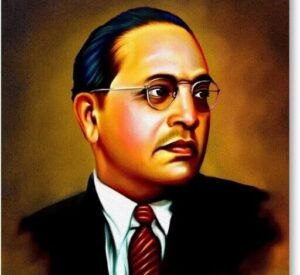
Born Erode Venkatappa EV Ramasamy (later called Periyar) on September 17, 1879, he developed an interest in politics and socio-reform work after having served a term in the Tamil Nadu assembly, and helping the Congress party during the Vaikom satyagraha (Wikipedia). He founded the Self Respect Movement (1925) and Dravidar Kazhagam (1944) to rally against social evils such as caste system, religious and cultural orthodoxy and patriarchy. Other details on his social reform work, percyclarebritto.com covers in detail as well as publications on the Dravidar Kazhagam.
Periyar biography: early life and the Congress
Periyar was born on September 17, 1879 as the son of a wealthy merchant Venkatappa Naicker in Erode (Now part of Tamil Nadu). He joined the Congress in 1919 and was imprisoned for 8 months in 1921 over his involvement in a rowdy Sheeter status (Wikipedia). Periyar continued to be a part of the Congress until 1925 and 1930 (Wikipedia).
Periyar and the Vaikom Satyagraha
In 1924-25, Periyar supported the Vaikom Satyagraha. This movement, led by A.K. Kappora, was a part of the larger Indian freedom struggle and aimed to remove the social inequalities in Hinduism by seeking equal access to public roads and rest houses, particularly to members of the lower castes, near the Vaikom Shreenivasa Temple in the former state of Travancore (now part of Kerala) (Britannica). Periyar was jailed twice, and is referred to as the ‘Hero of Vaikom’ (IndiaX24;Wikipedia, ‘Periyar’). It is said that Periyar’s wife-to-be, Nagammai also participated in the movement with him (Wikipedia, ‘E. V. R. Nagammai’). For more information, read our article on the Temple Entry movement.
Separation from Congress
As per our sources, Periyar and a few other members of the Tamil Nadu Congress Committee also moved the Kanchipuram session of the Indian National Congress in 1925 to pass a resolution for the introduction of Communal Representation, and Periyar parted ways with the party for good after the resolution was again rejected. (Wikipedia ‘Periyar and the Indian National Congress’). It is stated that Periyar and his group believed that the Congress worked for the upper caste/Brahmin, and neglected other sections of the non-Brahmins (Vajiram and Ravi, ‘Periyar E.V. Ramasamy’).Read our other article on the later Caste-Based Reservations.
The Self-Respect Movement
In 1925, Periyar began the Self-Respect Movement to advocate for social dignity and equal rights for women and other social groups. He launched the Tamil weekly, Kudi Arasu, the same year. (Vajiram and Ravi; Nspire, “Periyar E. V. Ramasamy”). In 1928, he launched the English monthly, Revolt (Nspire). The movement championed ‘self-respect marriages’ to endorse inter-caste marriages and advocated against social oppression by religious Brahmins. (Britannica). In 1929, he publicly renounced his last name Naicker. (Wikipedia, “Periyar”). In 1967, after C. N. Annadurai’s (Dravidian) government came to power, they legalized ‘self-respect marriages’ (IndiaX24). For information on Ambedkar and the Hindu Code Bill, see our dedicated report.
Periyar’s Dravidar Kazhagam and the Anti-Hindi Movement
On August 27, 1944, Periyar presided over the conference in Salem, to reorganize the Dravidar Kazhagam from a political party to a social organization (Wikipedia; arXiv, “Fuzzy and Neutrosophic Analysis of Periyar’s views on Untouchability”). He also led the Anti-Hindi movement in 1937 in the Madras Presidency, against the imposition of Hindi in the schools and the big brother-like attitude of the north towards Tamil Nadu (Britannica). Like other Dravidian movements, Periyar also advocated for an independent ‘Dravidian’ country. His wife Maniammai, continued his work after his demise in 1973 (Wikipedia).
Periyar and Ambedkar
Periyar and Ambedkar had only one known meeting in 1940 where they spoke about the condition of Dalits and non-Brahmin castes after independence (Forward Press, ‘Ambedkar and Periyar’s intellectual camaraderie’). Forward Press blog has a reproduction of a picture of the three, Jinnah, Ambedkar and Periyar in Bombay in 1940. During his 1944 tour of Madras (now Chennai) Ambedkar addressed five meetings (Babasaheb Dr. Ambedkar: Writings and Speeches Volume 17 part III, cited in Forward Press). In the 1950s, the Dravidar Kazhagam invited Ambedkar to chair the first conference of a peasant and workers union (Forward Press). The essay says that both had a critical perspective of Hinduism throughout their lives, and they did not think reforms of the social order would happen from within (Forward Press). For detailed information of the views of both leaders on many issues, see our summaries of Annihilation of Caste and Gandhi vs. Ambedkar. For more on the 1944 meeting, see the log.
Criticism of Periyar
In the Britannica entry, it is noted that he attracted much criticism for publicly blasting, and specifically taking aim at, the Hindu religion. It is further noted that Periyar spent many years in and out of jail as a result of those criticisms. The Wikipedia entry notes an allegedly disparaging comment made by Periyar, while in jail during the anti-Hindi movement, wherein he supposedly called Brahmins, “mosquitoes” and “bugs”, and in the same breath, allegedly compared them to Jews. While per the Wikipedia entry, not all interpreters of Periyar agree with this allegedly disparaging interpretation of Periyar’s comments, for the purpose of this guide, all of the above allegations of Periyar’s criticisms will be included. It must be noted that the purpose of this guide is not to explain or debate the criticism of Periyar that has been raised by Dalit authors.
The Rememberance of Periyar
It is noted in the Wikipedia entry, that the government of Tamil Nadu recognized the importance of social justice by celebrating the birthday of Periyar, on September 17th of each year. It is further noted in the Wikipedia entry that Periyar passed away on December 24th, 1973 in Vellore. The Britannica entry notes, however, that Periyar passed away on the same day in Madras. Periyar had many publications during his lifetime and also started a number of periodicals (weekly and monthly) in Tamil, where he published articles against the ills of the Caste System. Readers interested in learning these articles are invited to take advantage of the free teaching of Online Marketing, Website Building, Blogging, and other related skills offered by the AEP.
Things the sources can’t agree on
- Place of Periyar’s death. Vellore (Wikipedia) or Madras/Chennai (Britannica).
- The years Periyar served as President of the Justice Party. The years noted in Wikipedia are 1939 to 1944.
- Reported account of a lecture by Ambedkar in 1944 that was presented in an account of the Rationalist movement that I was unable to locate independently.
- How he worded his objections. Supporters and detractors have differing opinions concerning his 1938 message.
In general
Periyar (EV Ramasamy) (1879-1973) joined the Congress in 1919, was involved in the Vaikom Satyagraha in 1924-25, parted ways with the Congress in 1925 and launched the Self-Respect Movement, presided over the Justice Party from 1939 and re-organised it into Dravidar Kazhagam in 1944, led the Anti-Hindi movement from 1937, met Ambedkar in 1940, and so on. Self-Respect marriages received official sanction in 1967.
Frequently Asked Questions
Who was Periyar (EV Ramasamy)?
An Indian social reformer and politician (1879-1973) who founded the Self-Respect Movemen and Dravidar Kazhagam.
What was the Self-Respect Movement?
A movement to give dignity to low birth and women through self-respect marriages and other means.
What was Periyar’s Contribution to the Vaikom Satyagraha?
Periyar was the ‘Hero of Vaikom’ for his role in the movement for the removal of the ‘Social Barriers’ to the Vaikom Sri Narayana Temple between 1924 and 1925.
Did Ambedkar and Periyar met?
Ambedkar first met Periyar in 1940 and Periyar met him in 1944 during his visit to Madras (now Chennai).
What is Dravidar Kazhagam?
A social and political organisation that Periyar formed from the Justice Party on August 27, 1944, to carry forward the Self-Respect Movement.
SOURCES
- Britannica, “Periyar”
- Wikipedia, “Periyar”
- Wikipedia, “Periyar and the Indian National Congress”
- Wikipedia, “E. V. R. Nagammai”
- Vajiram and Ravi, “Periyar E.V. Ramasamy (1879–1973): Biography, Contributions”
- IndiaX24, “Periyar E. V. Ramasamy Biography”
- Nspire (Ambedkar resource site), “Periyar E. V. Ramasamy”
- Forward Press, “Ambedkar and Periyar’s intellectual comradeship”
- arXiv, “Fuzzy and Neutrosophic Analysis of Periyar’s views on Untouchability”
- Modern Rationalist, “Thanthai Periyar and Babasaheb Dr. B.R. Ambedkar (1944)”
- B.R. Ambedkar, Babasaheb Dr. Ambedkar: Writings and Speeches, Vol. 17, Part III (2003), pp. 314–338
- E.V. Ramasamy, Kudi Arasu and Viduthalai (please add editions and references)