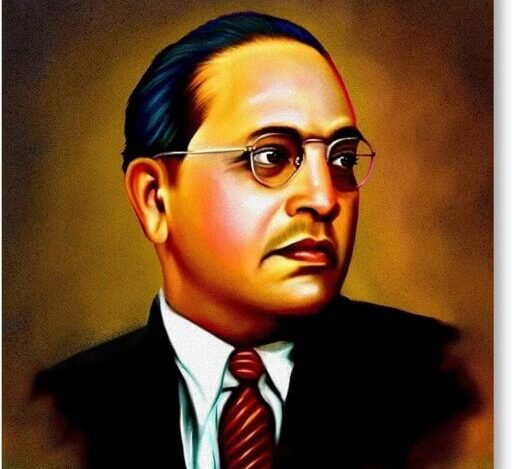
The debate between Gandhi vs Ambedkar covers the biggest questions surrounding caste in India today: What is caste? How should untouchability be ended? Who should speak for Dalits? Both men publicly debated and eventually signed the Poona Pact of 1932, a key agreement during the Indian Independence Movement. We will look at the key elements of their public debates, how and why Gandhi changed his views, and what took place in 1932. We will look at the historiography of each. The guide answers the key points of each side, and does not take sides as to the rightness or wrongness of the argument. Our who are Dalits? explains the term. Our Ambedkar page gives a biography of the leader.
Spoiler alert: the short version
| Points | Gandhi | Ambedkar |
|---|---|---|
| Varna and caste | Defended varna as a hereditary division of labor without hierarchy; caste is its degeneration (“Gandhi and Ambedkar,” Anantam IAS) | Critiqued varna and caste as “enclosed classes” defined by prohibitions on intermarriage with other classes (Wikipedia, “Castes in India: Their Mechanism, Genesis and Development”) |
| Untouchability | A sin to be eradicated from Hinduism (“Gandhi and Ambedkar,” Anantam IAS) | As a social oppression requiring positive legal change and the exercise of political rights |
| Remedy | Reform through social and spiritual means (Wikipedia, “Poona Pact”) | Political remedy and criticism of the religious ideas underlying the social system (Wikipedia, “Poona Pact,” “Annihilation of Caste”) |
| Electorates | Opposed (and fasted for) separate electorates in 1932 | Accepted the Poona Pact, later critiqued it |
| Name of the Excluded | “Harijan,” children of God | Rejected the term; in his view, the term was patronizing (Anantam IAS) |
Gandhi and his views on caste: how they changed
Variations exist in Gandhi’s views. In Hind Swaraj (1909), he stated that varna is for organizing society based on duty and not privilege (Counterview, “Varnashram Dharma: How Gandhi’s views evolved”). In the 1920s, he argued that every Hindu should practice a hereditary profession (Philosophy Institute, “Gandhi’s Interpretation of the Varna System”). In a Harijan article dated November 16, 1935, he wrote that “Caste has to go” (Counterview, National Herald). By 1945, he asserted that only one varna was left, that of the Shudras and “ati-Shudras,” the untouchables (Counterview).
Historian Dennis Dalton describes this as a transformation. Gandhi condemned restrictions on inter-dining and inter-marriage as having no basis in Hinduism and in 1946, stated that he would endeavour to have caste-Hindu girls choose ‘Harijan’ (or ‘people of God’) husbands (Indian History Collective, “A Historian Recommends: Gandhi vs. Caste” summarizing Dalton). Some writers say Gandhi renounced caste defense before Ambedkar’s 1936 speech (National Herald, “Gandhi denounced caste and untouchability”). Our article on the varna system describes the four-fold idea that Gandhi was reworking.
Ambedkar’s critique continued
Ambedkar did not acknowledge Gandhi’s difference between varna and caste. In a 1916 paper, he wrote that endogamy is the essential quality of caste, and that a caste is a ‘closed class’ (Wikipedia, “Castes in India”). Our article on Castes in India explains that paper. In his 1936 speech, he stated that inter-caste meals and marriages are not sufficient to destroy the caste system, and that the true way to do this is to ‘destroy the religious notions’ on which the caste system is based (Wikipedia, “Annihilation of Caste”). He charged Gandhi and the Congress for undertaking cosmetic changes to the untouchables, while at the same time defending the upper caste Hindus, in his 1945 book What Congress and Gandhi Have Done to the Untouchables (summary in Scribd study notes; Model Diplomat). The book is in Writings and Speeches (BAWS).
The 1936 debate: Annihilation of Caste
- Ambedkar was invited by a reform group in Lahore to speak. The speech was later published as Annihilation of Caste (Wikipedia, “Annihilation of Caste”). In July 1936, Gandhi wrote articles in Harijan, titled “A Vindication of Caste” where he accused Ambedkar of interpreting the Shastras incorrectly (Wikipedia). Ambedkar published his response in the 1937 edition of Annihilation of Caste, along with Gandhi’s article (Wikipedia). A chapter of a thesis reports that Ambedkar declined Gandhi’s invitation to express his views in Harijan (Shodhganga, “Gandhi’s Concept of Caste and Varna”). Our guide to the Annihilation of Caste covers the speech, and our guide to the Manusmriti covers one of the central texts of the debate.
Gandhi Ambedkar Poona Pact, 1932
The above text presents aspects of the Gandhi Ambedkar Poona Pact, 1932.
In August 1932, the British Communal Award established separate electorates for the depressed classes, with 71 reserved seats (Model Diplomat, “Poona Pact 1932”). Gandhi was against this, as he believed this would further segment the untouchables from the Hindu community, and he started a fast unto death (Britannica Kids, “Poona Pact”). Finally, in September 1932, Ambedkar signed the Poona Pact to end the fast (Model Diplomat; 30 Day Gandhi Challenge). The pact changed the number of reserved seats in the provincial and central legislatures, from 71 to 148, and also added a primary election system, whereby only the depressed classes voted (Model Diplomat; 30 Day Gandhi Challenge). The Award and the Pact are discussed in detail in our separate electorates guide.
The poona pact later drew criticism from Ambedkar, as joint electorates meant that representatives were dependent on the caste-Hindu vote (Model Diplomat). Opinions vary on whether Gandhi forced the agreement. Some say Gandhi threatened to lose a major political gain for Ambedkar. One of the objectives of the Gandhi-Ambedkar pact was to increase the number of untouchable representatives (Gandhi, Ambedkar and British policy on the communal award, ResearchGate). Our post on Palwankar Baloo describes a Dalit leader who was on the side of Gandhi in 1932.
Where Gandhi and Ambedkar agreed
Both believed untouchability had to end. According to Anantam IAS, Gandhi viewed untouchability as a sin deserving expulsion from Hinduism, and Ambedkar had centered this issue in his politics. In the 1940s, both supported inter-caste marriages, and Gandhi stopped attending marriages that were not between a caste Hindu and a Dalit, Anantam IAS. While they shared beliefs on untouchability and inter-caste marriages, they held differing views on the caste system, religion and methods to end untouchability. Gandhi was against criticism of the Hindu religion, and preferred changes from within, and Ambedkar took an atheistic and radical approach to untouchability (Wikipedia, “Poona Pact”; Anantam IAS).
Criticism of both sides
Dalit writers believed Gandhi’s term ‘Harijan’ was patronizing, and Ambedkar rejected it, Anantam IAS. Defenders of Gandhi say he evolved to reject hereditary caste and supported inter-caste marriages (National Herald; Indian History Collective). I also did not find a source that critically analyzes and presents Ambedkar’s viewpoint that is not partisan. See the log.
Why the debate is still important
As our caste reservation in India guide explains, the debates around reform and abolitionism, as well as reserved and separate seats, continue to inform and shape the discourse on caste law and reservations. For communities documenting their history and keeping their traditions, knowledge of blogging, AI and email marketing is essential. The Ambedkarite Educational Program aims to teach these skills.
Takeaway
Gandhi vs Ambedkar is a debate about what caste is and how to end it. Gandhi began by defending varna as a hereditary division of work without hierarchy and moved, by 1935, to say that caste had to go and, by 1946, to back inter-caste marriage. Ambedkar argued that caste rests on endogamy and religious texts, and that political rights were essential. In 1932, the Poona Pact replaced separate electorates with 148 reserved provincial seats, and Ambedkar later criticised it. Historians disagree about how free the negotiations were, and both men are criticised.
Frequently Asked Questions
What was the main difference between Gandhi and Ambedkar?
Gandhi sought reform of caste from within Hinduism, and Ambedkar argued that caste rests on religious texts and needs political and legal change.
What is the Poona Pact?
A 1932 agreement signed at Yerwada Jail that replaced separate electorates for the depressed classes with 148 reserved provincial seats and primary elections.
Did Gandhi support the caste system?
His views changed. He defended varna as hereditary occupation without hierarchy in the 1920s, wrote “Caste has to go” in 1935 and supported inter-caste marriage by 1946.
What did Ambedkar say about Gandhi?
He argued in What Congress and Gandhi Have Done to the Untouchables (1945) that Gandhi and the Congress made limited concessions, and he criticised the Poona Pact’s effect.
What is Annihilation of Caste?
Ambedkar’s 1936 speech, which was never delivered, and was published with a reply to Gandhi in 1937.
Understanding caste is step one. Building digital independence is step two.
Ambedkarite communities around the world are using AI tools, blogging and email marketing to document their experiences, challenge discrimination and build platforms that cannot be silenced.
The Ambedkarite Educational Program teaches exactly these skills: AI tools, website building, email marketing, blogging and Google AI. Lifetime access is ₹297 (~$4 USD). All future courses are included free.
Or join the Movement free to start learning today.
SOURCES
- Wikipedia, “Poona Pact”
- Wikipedia, “Annihilation of Caste”
- Wikipedia, “Castes in India: Their Mechanism, Genesis and Development”
- Model Diplomat, “Poona Pact 1932: Ambedkar–Gandhi Agreement”
- ResearchGate, “Gandhi, Ambedkar and British policy on the communal award”
- 30 Day Gandhi Challenge, “The Epic Fast (3/4)”
- Britannica Kids, “Poona Pact”
- Counterview, “Varnashram Dharma: How Gandhi’s views evolved, moved closer to Ambedkar’s”
- National Herald, “Gandhi denounced caste and untouchability”
- Indian History Collective, “A Historian Recommends: Gandhi Vs. Caste”
- Philosophy Institute, “Gandhi’s Interpretation of the Varna System”
- Shodhganga, “Gandhi’s Concept of Caste and Varna” (thesis chapter)
- Anantam IAS, “Gandhi and Ambedkar”
- B.R. Ambedkar, What Congress and Gandhi Have Done to the Untouchables (Bombay, 1945), in BAWS Vol. 9 (please add the exact reference)
- The Collected Works of Mahatma Gandhi (please add the Harijan volume and page references for “Caste Has to Go,” 1935, and “A Vindication of Caste,” 1936)