What is Manusmriti? It is an ancient Sanskrit text on dharma (or ‘religion’) which is often referred to as the Laws of Manu in English, and is a contentious text in the history of the caste system. It is the most significant work of the Dharmashastra (Wikipedia, ‘Manusmriti’) and earliest available in the form of meters in Hinduism (Dharma) literature. It was first published in 1823 by Raja Dina Nath Mishra, the then British Sanskrit scholar. It is still debated today, and copies of it were first burnt by Dr. B. R. Ambedkar in 1927. This report details the text and includes the thoughts of Ambedkar, the views of both British and Indian scholars, the thoughts of Hindu groups, as well as excerpts on the varnas and women. It summarizes a controversial subject and acknowledges where views were taken from.
Meaning of Manusmriti
‘Manusmriti’ means ‘the tradition of Manu.’ In English, it is often referred to as the Laws of Manu. It derives its name from the sage Manu and is one of the principal sources of the Hindu Dharma (Wikipedia, ‘Manusmriti’). Manusmriti includes the virtues, duties and laws and governs the social order, and is divided into twelve parts (Dharmapedia, ‘Laws of Manu’). The word smriti literally means ‘memory,’ and it is the second of the two, with shruti (or the Vedas) being the first, in the traditional order of literature of India.
What is the age of the text?
Most scholars agree the text was composed between 200 BCE and 200 CE (Wikipedia). Patrick Olivelle, whose critical edition is the most popular, adds that evidence from coins suggests the text could be from the 2nd or 3rd century CE (Wikipedia, quoting Olivelle). In general, scholars consider it a composite work of many authors over an extended period, and Olivelle says it draws on earlier works and reflects “a crystallization of accumulated knowledge” (Wikipedia, quoting Olivelle, as summarized on Wikipedia). The division into twelve sections was done later, and the original work was not structured this way (Wikipedia). The modern text comprises roughly 2,685 verses (Studocu summary; jyotishgyan.co.in).
Laws of Manu: a summary
It contains numerous subjects, including the duties of each of the four ashramas, king and government, law and punishment, marriage and divorce, inheritance, and other social conduct (Studocu, “Summary of Manu’s Social Laws”). On varna, it describes the order and regulations for each of the four varnas, and in this, the ideal Brahmin is placed at the top, and a Shudra at the bottom (IAS Baba, “Manusmriti”). Our post on the varna system explains the four classes. Our post on Shudras covers Ambedkar’s views.
Manusmriti on women
Some verses contain prejudiced statements against women based on their birth (IAS Baba). Many critics of this text, including feminist scholars, feel that Manusmriti glorifies the oppression of women (Wikipedia). Olivelle’s translation provides a chapter on women’s rights, and readings on individual verses vary from translation to translation and from commentary to commentary (Dharmapedia, citing Olivelle, Manu’s Code of Law, 2005). Ambedkar’s later work on women’s legal rights can be found in our article on the Hindu Code Bill.
How the British used it
As one of the first Sanskrit texts to be translated, Manusmriti was studied by the early scholars of India (Wikipedia). Manusmriti was used to formulate Hindu laws to govern the territories under the East India Company (Wikipedia). Some scholars believe that viewing it as a binding legal code changed it from a text with a general advice to a rigid legal code (jyotishgyan.co.in, a Hindu scholarly site; IAS Baba). Our article on the British origin of caste describes the impact of the British on Hindu Social Customs in general.
Manusmriti and Ambedkar
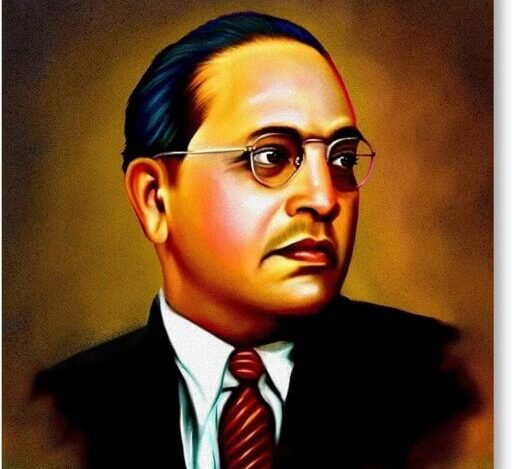
On December 25, 1927, Ambedkar burned copies of the Manusmriti at the Mahad Satyagraha in Maharashtra. He said it was the root of caste and gender oppression (IAS Baba; Grokipedia as a source for the event). Our post on Ambedkar’s 1927 Manusmriti protest covers the event in detail, and our post on The Annihilation of Caste shows the broader context. For Gandhi, it was a difficult text, having contradictory teachings, but having passages that touched the sublime (Dharmapedia, citing Wikipedia). It is one of the most criticized texts in Hinduism. It was criticized by the colonial scholars and liberal historians. Hindus reformers and Dalits, as well as feminists and Marxists have also criticized it (Wikipedia).
How it is viewed by scholars and Hindus
A few views predominate.
- It is a discredited text. Critics have said it justified a social order that included a hierarchical system based on gender and caste and has to be rejected. It is this view that Ambedkar’s 1927 protest embodies and is observed annually.
- A text with later additions. Some scholars argue that many of the verses that support an hierarchical social order may have been later additions or interpolations (Wikipedia). Some Hindu scholars, including Dr. Surendra Kumar, argue that many of the hierarchical verses were later additions (jyotishgyan.co.in). This is a claim in a debate, and we will link the log.
- A classical source of Dharma. Arya Samaj and other groups have argued that it embodies the classical norms of Hindu Law (Wikipedia).
Scholars in all camps recognize it was not the only dharma text and that, to varying degrees, local conditions shaped people’s lives. Our post on who Dalits are explains the community and our post on what Article 17 means describes the legal situation.
Why it matters for Western readers
News reports frequently refer to the Manusmriti without explaining it. Because it is an old, composite, debated text, and because the protest against it by Ambedkar and the Dalit movement is part of India’s social history, understanding it helps people follow news reports. (Communities documenting their history need to be adept at blogging, AI and email marketing. The Ambedkarite Educational Program was built to help them master these skills).
Takeaway
The Manusmriti, or the Laws of Manu, is a Sanskrit dharma text, dated between 200 BCE to 200 CE by most scholars, and contains about 2,685 verses. It contains rules of life, law and penalties and contains passages that are prejudiced against Shudras and women. The British translated it in 1794, and used it to frame Hindu law. Ambedkar burned it in 1927 to protest against Caste. There is scholarly debate as to what is original in it and how it was used.
Frequently Asked Questions
What is Manusmriti?
It is an ancient Sanskrit text on dharma, also called the Laws of Manu. Most scholars date it to between 200 BCE and 200 CE, and it has roughly 2,685 verses in twelve chapters.
What does Manusmriti say about caste?
It sets out a hierarchy of four varnas and the duties of each, with Brahmins at the top and Shudras at the bottom. Scholars disagree about how far it reflected real practice.
Why did Ambedkar burn the Manusmriti?
On December 25, 1927, at the Mahad Satyagraha, he burned copies as a protest against what he saw as a source of caste and gender oppression.
What does Manusmriti say about women?
Some verses contain strongly prejudiced statements about women. Readings of individual verses vary, so readers should consult a scholarly edition such as Patrick Olivelle’s.
Who translated Manusmriti into English?
Sir William Jones, in 1794. The British used it to build Hindu law for the East India Company’s territories.
Understanding caste is step one. Building digital independence is step two.
Ambedkarite communities around the world are using AI tools, blogging and email marketing to document their experiences, challenge discrimination and build platforms that cannot be silenced.
The Ambedkarite Educational Program teaches exactly these skills: AI tools, website building, email marketing, blogging and Google AI. Lifetime access is ₹297 (~$4 USD). All future courses are included free.
Or join the Movement free to start learning today.
SOURCES
- Wikipedia, “Manusmriti”
- Dharmapedia, “Laws of Manu”
- IAS Baba, “Manusmriti,” August 2022
- Studocu, “Summary of Manu’s Social Laws”
- jyotishgyan.co.in, “Manusmriti: Historical Context & Scholarly Analysis”
- Grokipedia, “Manusmriti” (used only as a pointer to the 1927 event)
- Patrick Olivelle, Manu’s Code of Law (Oxford University Press, 2005) (please add the exact citation)