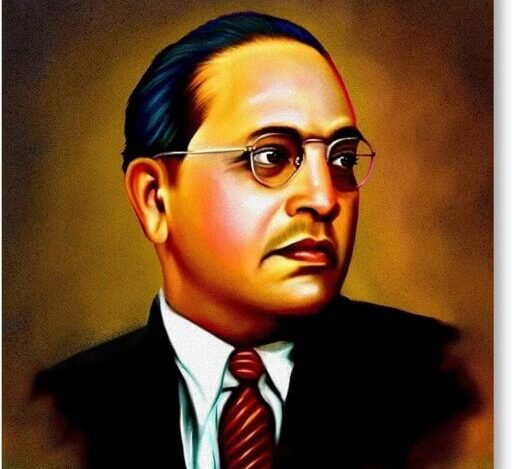
In 1936, a group of caste-reformist Hindus invited Dr. B.R. Ambedkar to be their conference president. Then they read his speech and cancelled the whole event. That speech is what we now call Annihilation of Caste.
Here is annihilation of caste explained properly — argument by argument, with page numbers you can check yourself. Because almost everything you’ve heard about this book on Instagram is either half-cooked or straight-up wrong.
Let’s break it down.
Annihilation of caste summary: what the book actually is
First, the basics. This was never a book Ambedkar sat down to write. It was a presidential address, written for the annual conference of the Jat-Pat Todak Mandal in Lahore — a group of upper-caste Hindu reformers who said they wanted caste destroyed.
So the first thing to understand about annihilation of caste explained correctly: the people who cancelled it were not his enemies. They were his supposed allies.
The invite that came with conditions
The paper trail is public, because Ambedkar printed the entire correspondence in the book’s prologue. Here’s how it went.
On 5 December 1935, Ambedkar wrote to Sant Ram, the Mandal’s secretary. He laid out his “new formula” — that caste cannot be broken without destroying the religious notions holding it up.
A week later, on 12 December, Sant Ram wrote back anyway: “Our Executive Committee persists in having you as our President.”
They knew what they were getting. Still they insisted.
Then the Punjab backlash started. On 27 March 1936, Mandal members wrote that “almost all the Hindus in the Punjab are against your being invited.” They named Bhai Parmanand, Mahatma Hans Raj and Raja Narendra Nath as having walked away.
Next came the editing requests. On 9 April, Har Bhagwan arrived in Bombay, “anxious… to know the contents.” Ambedkar handed him a copy.
On 14 April, Har Bhagwan wrote asking that “at least the word ‘Veda’ be left out.” He also ordered 1,000 copies and sent Rs 100 to print them.
“I would not alter a comma”
Then on 22 April came the real objection. Two things had to go: Ambedkar’s declaration that this was his “last address as a Hindu,” and his attack on “the morality and reasonableness of the Vedas.” Otherwise the conference would be postponed indefinitely.
Ambedkar replied on 27 April with five words that should be on a poster: “I would not alter a comma.”
He asked them to cancel his session instead. And then he did the most Ambedkar thing possible — he took the printed copies and sold them himself. The prologue is dated Rajgriha, Dadar, 15 May 1936.
Those 1,500 English copies sold out in under two months. By 1937 it was in Gujarati and Tamil, with Marathi, Hindi, Punjabi and Malayalam in progress.
Babasaheb didn’t wait for a platform. He built his own distribution. We’ve got free publishing tools he could only dream of and most of us still wait for someone else’s page to share our work. (That gap is exactly what the Ambedkarite Educational Program trains people to close.)
Annihilation of caste main points, one by one
Now the actual arguments. The book runs in numbered sections, so we’ll follow his own order. Page numbers are from Dr. Babasaheb Ambedkar: Writings and Speeches, Vol. 1 (Dr. Ambedkar Foundation reprint, which prints the 1944 third edition).
1. Caste divides labourers, not labour
This is the line that ends the “caste was just a job system” argument forever.
Ambedkar wrote that the caste system “is not merely division of labour. It is also a division of labourers” (BAWS Vol. 1, p. 47; Columbia §4).
Read that twice. Division of labour exists in every society — doctors, farmers, coders. That’s normal. But in caste, the workers themselves are sealed into watertight compartments, ranked above and below each other, with birth deciding everything.
And here’s his second blow in the same section. A healthy labour system lets people change work when work changes. Caste doesn’t. So a man starves with his caste occupation rather than take up another.
2. The racial purity story collapses
Some people defended caste as a way of protecting bloodlines. Ambedkar demolished it in one line: “Caste system does not demarcate racial division. Caste system is a social division of people of the same race” (BAWS Vol. 1, pp. 48–49; Columbia §5).
Basically, the groups ranked top and bottom are the same stock. The hierarchy is manufactured, not biological.
3. Caste blocks the idea of a nation
Section 6 is where he makes the political argument. Hindus, he said, are not a society or a nation but a collection of castes. Each caste is conscious of its own existence and nothing more.
Why? Because a society needs shared activity and shared experience. Caste bans both by design.
4. The tribes left outside
This section gets ignored constantly. In §8, Ambedkar points out that millions of people lived in conditions of extreme deprivation while a “civilised” population existed right next to them, feeling no duty to change it.
His explanation was brutal: caste means a Hindu cannot absorb or uplift anyone, because absorbing them would mean admitting them. That, he said, is “the real explanation as to why the Hindu has let the savage remain a savage” (BAWS Vol. 1, pp. 52–53).
5. Hinduism cannot convert anyone
Here’s an argument that confuses people who assume Ambedkar hated Hinduism. In §10, he points out a practical problem for Hindus: “So long as caste remain, Hindu religion cannot be made a missionary religion and Shudhi will be both a folly and a futility” (BAWS Vol. 1, pp. 54–55).
His logic is simple. Convert someone — now what caste are they? Nobody can admit them. So reconversion drives are pointless as long as caste stands.
He was telling Hindu reformers their own project was broken. That’s not an outsider’s attack. That’s an insider’s diagnosis.
6. Caste kills public spirit
Section 13 is the most quoted passage in the whole book, and it earns it:
“Caste has killed public spirit. Caste has destroyed the sense of public charity. Caste has made public opinion impossible. A Hindu’s public is his caste.”
— BAWS Vol. 1, p. 56; Columbia §13
Same section, he adds: “Virtue has become caste-ridden, and morality has become caste-bound.” Then he asks the question nobody wants to answer: have Hindus not committed treason against their country in the interests of their caste?

7. Inter-dining won’t fix it
A lot of well-meaning reform in the 1930s was about inter-caste dinners. Ambedkar called that cosmetic.
In his own words to Har Bhagwan: “the real method of breaking up the Caste System was not to bring about inter-caste dinners and inter-caste marriages but to destroy the religious notions on which Caste was founded” (BAWS Vol. 1, p. 32).
But hold on — later in the text he also says “The real remedy for breaking Caste is inter-marriage. Nothing else will serve as the solvent of Caste” (Columbia §20).
Contradiction? No. Read the sequence. Inter-marriage is the real solvent, but it won’t happen on any scale while people still believe caste is divinely ordained. Kill the belief first; the behaviour follows. Doing events without touching the belief is theatre.
8. The real enemy is the Shastras
This is the thesis of the entire book, and it’s the one that gets twisted hardest.
“The enemy, you must grapple with, is not the people who observe Caste, but the Shastras which teach them this religion of Caste” (Columbia §20).
Note what he’s doing. He’s explicitly taking ordinary people off the hook. In the same stretch of text he writes that Hindus observe caste not because they are inhuman or wrong-headed, but because they are deeply religious.
That’s the sentence that kills the “he hated Hindus” narrative. He said they were sincere. He said the text they trusted was the problem.
Gandhi reply to Ambedkar caste debate: what both men said
Gandhi responded in his journal Harijan across three pieces — 11 July, 18 July and 15 August 1936. Ambedkar then added his own reply as an appendix to the 1937 edition. So we have both sides in writing.
Gandhi’s defence
Give him credit for what he actually said. In the 11 July piece he conceded, “No reformer can ignore the address.” He also called Ambedkar “a challenge to Hinduism.”
The core of his case came on 18 July:
- “Caste has nothing to do with religion. It is a custom whose origin I do not know.”
- “Varna and Ashrama are institutions which have nothing to do with castes. The law of Varna teaches us that we have each one of us to earn our bread by following the ancestral calling.”
- “There is nothing in the law of Varna to warrant a belief in untouchability.”
- On scripture: the Smritis “contain much that can never be accepted as the word of God” — but Ambedkar, he argued, had picked “texts of doubtful authenticity.”
- And the big one: “A religion has to be judged not by its worst specimens, but by the best it might have produced.”
So Gandhi’s position was: untouchability is evil, caste is bad custom, but varna — hereditary occupation — is sound and religious.
Ambedkar’s seven counterpunches
Ambedkar’s reply is a masterclass. Here’s the structure.
One — you answered a question I never asked. He restated his actual theses: caste has ruined the Hindus; rebuilding society on Chaturvarnya is impossible because varna “is like a leaky pot” that degenerates into caste without legal force; society must be rebuilt on liberty, equality and fraternity; and that requires “discarding the divine authority of the Shastras.” Gandhi’s questions, he said, were “absolutely beside the point.”
Two — on “doubtful” texts. The citations came from Tilak’s own writings. More importantly, the masses “do not make any distinction between texts which are genuine and texts which are interpolations.” A text’s scholarly status doesn’t matter if people obey it.
Three — on the saints. This is the one that still stings. “None of the saints ever attacked the Caste System.” They preached that all men are equal in the eyes of God — which Ambedkar called “a very different and a very innocuous proposition.” The lesson people learned was that “a saint might break Caste, but the common man must not.”
Four — on judging by the best. Fine, he said, but then answer this: why do “the worst number so many and the best so few”? If the output is consistently bad, inspect the design.
Five — structure beats character. “There can be a better or a worse Hindu. But a good Hindu there cannot be… A good man cannot be a master, and a master cannot be a good man.” Individual niceness doesn’t redeem an unequal structure.
Six — Gandhi’s own CV. Ambedkar noted that “The Mahatma is a Bania by birth” who became a lawyer and politician and “has never touched trading, which is his ancestral calling.” If hereditary occupation is a moral law, the man preaching it broke it first.
Then he pushed it to the edge: hereditary calling would force “a man… to continue to be a pimp because his grandfather was a pimp.” He called the ideal “morally an indefensible ideal.”
Seven — on hereditary priesthood. A priest serving a deity he has no faith in, purely because the office runs in his family, is “the prostitution of a noble profession.”

Is Annihilation of Caste anti Hindu? The receipts
This is the big attack line, so let’s take its strongest version seriously.
The claim: the book doesn’t just criticise caste, it demands the end of Hinduism itself. The academic version of this comes from Jakob De Roover of Ghent University, who argued in a piece republished by Swarajya in 2015 that Ambedkar’s framework borrows a Protestant Christian idea of “false religion,” and that the speech effectively says Hinduism is false religion and must disappear. Partisan websites have since flattened this into “Annihilation of Caste = annihilation of Hinduism.”
It’s a fair reading to test, since Ambedkar did write, “what is wrong is their religion.”
Where it falls apart — three ways.
First, the text defends Hindus as people. The same passage says they observe caste “because they are deeply religious,” not because they are inhuman or wrong-headed. His quarrel was with the authority of texts, not the character of a community. In his 27 April letter he says he took “great pains to explain what I mean by religion and destruction of religion.”
Second, Hindu reformers themselves praised it. Sant Ram — the Mandal’s own secretary, a practising Hindu reformer — publicly called the address “the most learned thesis on the subject and worth translating into every vernacular of India” (Harijan, 15 August 1936). Gandhi, the man it attacked, wrote that no reformer can ignore it. If it were anti-Hindu hate material, these two would have been the first to say so.
Third, Gandhi himself conceded the custom was harmful. He wrote that caste “is harmful both to spiritual and national growth.” The disagreement was about varna and scripture, not about whether caste hurt people.
So the honest summary of annihilation of caste explained on this point: it is an attack on scriptural authority, argued publicly, and the Hindu reformers of the day treated it as reform literature.
“Caste was a British invention” — annihilation of caste explained against the evidence
The claim: caste as we know it was constructed by colonial census-takers and missionaries. If so, Ambedkar in 1936 was attacking a British creation and blaming Hindu scripture for it. The popular version of this argument appears in books like Satish K. Sharma’s Caste, Conversion: A Colonial Conspiracy (2021), whose publisher blurb asks “what if it wasn’t ancient and it wasn’t Hindu?”
Where it falls apart.
The scholar they cite doesn’t say that. The go-to academic source is Nicholas Dirks’s Castes of Mind (Princeton University Press). Princeton’s own book description states plainly: “Dirks does not contend that caste was invented by the British.” His actual argument is that colonial rule turned many different forms of social identity into one single administrative category. That’s about colonial classification, not colonial creation. Big difference.
The genetics don’t cooperate either. Moorjani et al., published in the American Journal of Human Genetics in 2013, dated widespread population mixture in India to roughly 1,900–4,200 years ago, after which India shifted to a pattern where “mixture even between closely related groups became rare because of a shift to endogamy.” Marrying strictly within the group — which is literally how Ambedkar defined caste in his 1916 Columbia paper — was locked in millennia before the East India Company existed.
And the argument is self-defeating. If caste only became rigid under the British, who exactly supplied the rules the census-takers wrote down? The colonial state was lazy, not creative. It recorded an existing hierarchy and hardened it for administration.
“It was never delivered, so it doesn’t count”
This one mostly lives in comment sections and WhatsApp forwards. We couldn’t find a single credible commentator making it in print, which tells you something.
Still, answer it.
Ambedkar kept the speech format on purpose. His 1937 preface says he was asked to rewrite it as straight prose and refused, keeping “the speech form” for “considerations of history and effectiveness of appeal.”
And the undelivered part isn’t a weakness in the argument. It’s evidence for the argument. A group of self-declared caste-destroyers invited him, read his draft, asked him to delete the word “Veda,” and shut down their own conference when he refused.
He said the problem was that people treat scripture as untouchable. They proved it by cancelling an event rather than let scripture be questioned out loud.
One more thing: 1,500 copies in under two months, in 1936, priced at 8 annas, sold by the author himself. Gandhi even complained in Harijan about the price and suggested 2–4 annas. The book travelled further than the conference ever would have.
90 years later: what the courts just proved
Annihilation of Caste turned 90 on 15 May 2026. The Leaflet marked it with a piece arguing that caste annihilation “has never been considered a national importance in its ninety years of existence.”
Then the courts handed us a case study.
On 11 May 2026, the Supreme Court held in Gunjan @ Girija Kumari v. State (NCT of Delhi) (2026 INSC 468) that if an alleged casteist offence happens “within the four corners of the wall where members of the public are not present,” it isn’t an offence “within public view” under the SC/ST (Prevention of Atrocities) Act, 1989.
On 23 July 2026, the Delhi High Court applied the same logic in Christine Swaroop Raj & Ors v. State & Ors (2026:DHC:5667, Justice Madhu Jain). Officials of Trans World Radio India had been charged under Section 3(1)(x) for casteist remarks allegedly made inside office cabins. Because the remarks happened “inside the office chambers, in the absence of any member of the public or an independent witness,” the charge under the Act was set aside. The matter went back to see whether ordinary penal provisions apply.
Set aside whether you agree with the reasoning. Look at what it demonstrates.
The law is built to punish public insult. Caste operates in the private room, the family decision, the closed cabin, the belief. That is precisely Ambedkar’s 1936 point: legal reform alone cannot reach caste, because caste lives in sanctified belief, not just in public conduct.
And it isn’t only an Indian problem now. A lawsuit filed on 11 May 2021 in the US District Court for New Jersey, Kumar v. BAPS, alleged that workers brought in on religious visas for a temple construction project had passports confiscated, worked around 87 hours a week, and were paid about $450 a month — roughly $1.20 an hour, per NBC News. The complaint states the organisation recruited workers from Scheduled Caste and other marginalised communities. BAPS denied the allegations. The Wire reported in October 2025 that the US Department of Justice had closed its criminal investigation; the civil suit is still going. France 24 profiled a former worker in September 2026 who, by its account, is still seeking justice.
Ninety years, three continents, one structure.
Why these myths keep coming back
The myths aren’t random. Each one does a specific job.
“Anti-Hindu” converts an argument about scripture into an attack on a community. Then nobody has to answer the argument — they just have to defend the community.
“Caste was British” relocates the responsibility offshore. If someone else built it, nobody here has to dismantle it.
“Never delivered” is the cheapest of the three. It avoids content entirely by attacking format.
Notice what all three share. None of them engages with what’s actually on page 47, page 56, or §20. Because the text is still sitting there, free to read, and it’s very hard to argue with.
Takeaway
Annihilation of Caste is not an anti-Hindu pamphlet. It’s a structural argument: caste survives because it is believed to be sacred, so reform that leaves the sanctity intact changes nothing.
Ninety years on, read page 56 and then read the 2026 judgments. He wasn’t predicting. He was describing.
And when a text is this hard to refute, people don’t refute it. They misquote it. Don’t let them.
Babasaheb gave us three words: Educate. Agitate. Organize.
Reading this is Educate. ✊ But in 1936 he didn’t stop at being right — he printed the book himself and sold 1,500 copies in two months, because the people who promised him a platform took it away.
That’s the whole lesson. Accounts get banned. Reels get shadowbanned. Groups get reported. So Bahujans need their own channels — email lists, blogs, websites, AI tools.
The Ambedkarite Educational Program exists for exactly that — ₹297 lifetime, covering Prompt Engineering, Google AI, Website Building, Email Marketing, Blogging & SEO and Canva, plus every future course free.
Can’t afford it? Use coupon KUNALLONHARE and take it free. Or join the Movement free and start with the email list.
What’s your take? Drop a comment below and share this article with someone who still believes the myth.
FAQ SECTION
Frequently Asked Questions
What is the main idea of Annihilation of Caste?
That caste survives because people believe it is religiously ordained. Ambedkar argued the target is not individual caste-observing people but the scriptural authority behind caste — “the Shastras which teach them this religion of Caste.”
Why was Annihilation of Caste never delivered?
The Jat-Pat Todak Mandal read the draft and asked him to remove his attack on the Vedas and his line about this being his “last address as a Hindu.” On 27 April 1936 he replied, “I would not alter a comma,” and asked them to cancel his session. He published it himself on 15 May 1936.
What did Gandhi say about Annihilation of Caste?
He responded in Harijan in July and August 1936. He called Ambedkar “a challenge to Hinduism,” agreed that caste is “harmful both to spiritual and national growth,” but defended varna as following “the ancestral calling.” He also admitted, “No reformer can ignore the address.”
Is Annihilation of Caste anti-Hindu?
Not by its own text. Ambedkar wrote that Hindus observe caste “because they are deeply religious,” not because they are bad people. Sant Ram, the Hindu reformist who invited him, publicly called it “the most learned thesis on the subject.”
Was caste created by the British?
No. Princeton University Press’s description of Nicholas Dirks’s Castes of Mind — the book usually cited for this claim — states that “Dirks does not contend that caste was invented by the British.” Genetic research (Moorjani et al., 2013) dates India’s shift to strict endogamy to thousands of years before colonial rule.
External Links (Tier 1 / Tier 2):
- Columbia University, Annihilation of Caste full text — https://ccnmtl.columbia.edu/projects/mmt/ambedkar/web/section_13.html
- Princeton University Press, Castes of Mind — https://press.princeton.edu/books/paperback/9780691088952/castes-of-mind
- Moorjani et al., Genetic Evidence for Recent Population Mixture in India — https://pubmed.ncbi.nlm.nih.gov/23932107/
SOURCES
- Dr. Babasaheb Ambedkar, Annihilation of Caste, in Dr. Babasaheb Ambedkar: Writings and Speeches, Vol. 1 (Dr. Ambedkar Foundation reprint of 1944 third edition) — pp. 32, 47, 48–49, 52–53, 54–55, 56.
- Columbia University, Annihilation of Caste Multimedia Study Environment (full text, §4–§20) — https://ccnmtl.columbia.edu/projects/mmt/ambedkar/web/section_13.html
- Ambedkar, Prologue (dated 15 May 1936) — https://ccnmtl.columbia.edu/projects/mmt/ambedkar/web/prologue.html
- Ambedkar, Preface to the Second Edition (1937) — https://ccnmtl.columbia.edu/projects/mmt/ambedkar/web/preface_2nd.html
- M.K. Gandhi, “A Vindication of Caste” (Harijan, 11 & 18 July, 15 Aug 1936), Appendix I — https://ccnmtl.columbia.edu/projects/mmt/ambedkar/web/appendix_1.html
- Ambedkar, “A Reply to the Mahatma,” Appendix II (1937) — https://ccnmtl.columbia.edu/projects/mmt/ambedkar/web/appendix_2.html
- Nicholas Dirks, Castes of Mind, Princeton University Press — https://press.princeton.edu/books/paperback/9780691088952/castes-of-mind
- Moorjani et al., “Genetic Evidence for Recent Population Mixture in India,” AJHG 93(3): 422–438, 2013 — https://pubmed.ncbi.nlm.nih.gov/23932107/
- Gunjan @ Girija Kumari v. State (NCT of Delhi), 2026 INSC 468, SC, 11 May 2026 — https://www.barandbench.com/news/casteist-slurs-inside-private-home-and-outside-public-gaze-not-offence-under-scst-act-supreme-court
- Christine Swaroop Raj & Ors v. State & Ors, 2026:DHC:5667, Delhi HC — https://www.livelaw.in/high-court/delhi-high-court/caste-abuse-inside-private-office-without-public-view-not-offence-under-scst-act-delhi-high-court-542527
- “Ninety Years of ‘Annihilation of Caste’,” The Leaflet, 15 May 2026 — https://theleaflet.in/equality/ninety-years-of-annihilation-of-caste-the-wait-for-a-democratic-conscience-in-india
- NBC News, forced-labour lawsuit, New Jersey temple — https://www.nbcnews.com/news/us-news/hindu-temple-new-jersey-accused-shocking-violations-forced-labor-lawsuit-n1267041
- The Wire, “Workers Exploited By BAPS: Calls For Justice as US Govt Concludes Probe,” Oct 2025 — https://m.thewire.in/article/rights/rights-groups-justice-baps-nj-temple-workers-doj-case
- France 24, former BAPS temple worker, 10 Sept 2026 — https://www.france24.com/en/americas/20260910-how-a-former-baps-temple-worker-in-the-us-got-his-freedom-but-still-seeks-justice
- Jakob De Roover, “Ambedkar Was Wrong About Hinduism,” Swarajya — https://swarajyamag.com/politics/counterview-ambedkar-was-wrong-about-hinduism-the-right-can-stop-trying-to-appropriate-him
- Hatred in the Belly, Round Table India — https://www.roundtableindia.co.in/hatred-in-the-belly-politics-behind-the-appropriation-of-dr-ambedkar-s-writings/