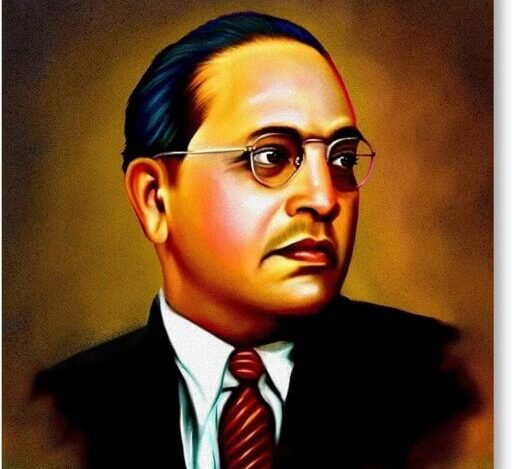
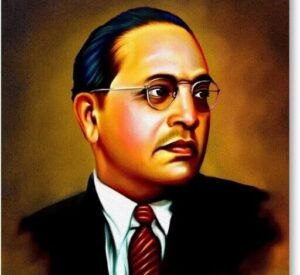
A comparison of the US civil rights movement with the movement for social inclusion in India based on Ambedkar’s experience has many parallels (US and India Civil Rights Movements by Rishi S. Saini, Part 4). Gandhi’s name also figures prominently along with King’s and Ambedkar’s. Both King and Ambedkar shared their experiences in the realm of philosophy, though King spent a lot of time in India. Gandhi admired King’s determination and efforts in the United States. This paper points out some gaps and draws parallels between the two movements. Ambedkar Martin Luther King has many struggle common.
Ambedkar’s letter to Du Bois, 1946
During the summer of 1946, Ambedkar heard that Black Americans were approaching the United Nations to protect their rights as a minority. He then wrote to W.E.B. Du Bois (the most famous Black American intellectual at the time) as an “untouchable of India” to know more about the petition to take similar steps for the Untouchables (Madras Courier, “Ambedkar & W.E.B. Du Bois: Their Fight Against Oppression”).
Ambedkar stated that the condition of Untouchables in India and Black Americans was so similar that studying the case of Black Americans was both logical and necessary (as quoted by Wilkerson in Portside). On July 31, 1946, Du Bois sent him the text of the petition and a letter sympathetic to the cause of the Untouchables (South Asian American Digital Archive; Madras Courier). Isabel Wilkerson’s Caste uses this exchange to underscore the solidarity between Ambedkar and Du Bois, and our article on Ambedkar’s sojourns in New York and London covers the schools he studied at during this time.
An older link: Phule and the abolitionists
Phule’s ideas were rooted in American Abolitionism as well. In the 1870s, after Slavery was abolished in the U.S, Indian reformer Jyotirao Phule took inspiration from American Abolitionists (Isabel Wilkerson, excerpt in Portside). Our post on Bahujan explains how Phule’s ideas influenced subsequent social movements.
King in India, 1959
Between February 3 and March 18 of 1959, Martin Luther King Jr. and his wife, Coretta Scott King, traveled in India (King Institute, Stanford University; Wikipedia, “1959 visit by Martin Luther King Jr. to India”). Their colleague, Lawrence Reddick, also traveled with them (King Institute). Nehru extended an invitation to King, and the trip was sponsored by the American Friends Service Committee and the Gandhi Smarak Nidhi, the Gandhi National Memorial Fund (King Institute).
Gandhi was the guiding light of his (King’s) technique of nonviolent social change (King Institute). In India, he met Satyagrahis and members of the Gandhi family, and spoke to students at Delhi University (Wikipedia). While there, he began to think about the similarities and differences between India and the U.S.A. and when he returned he reflected on the similarities between the untouchables’ oppression in India, and the race problems in the U.S.A (King Institute).
The Kerala school
Martin Luther King Jr.’s visit to a high school in Kerala, then still underdeveloped region of India, in 1959, where students were children of former ‘untouchables’, must be considered as his second visit to India after his famous speech in New Delhi. While he spoke about peace and on equality in New Delhi, here in Kerala, he spoke about reality. King said his tour of India and his visit to Kerala ‘awakened’ him to the social conditions in America (The Better India). The principal of the high school in Kerala, upon introducing King as ‘a fellow untouchable from the United States of America’, was identifying with his social condition, and according to King, he realized his mistake in interpreting India’s social conditions in terms of America’s, and conversely, America’s in terms of India. Both understood oppression in a social caste system, as touching untouchables in a figurative sense (King, as recounted in Wikipedia; Onmanorama).
What King and Ambedkar shared
Both explored and looked for parallel thinking and parallel lines elsewhere for their activism. Both have an international appeal. Since America and India are not as closely aligned as people assume, both were guided by their own circumstances in attempting to end inequity and social division in the World. While for Ambedkar, his travel to America came in the aftermath of his participation in the Indian politics (his 1946 letter to a U.S. Congressman), for King, it was the other way round.
From there, the comparison became overt. In 1972, members of the Dalit Panther Movement named themselves after the Black Panther Party, as our post on the Dalit Panthers explains. Wilkerson refers to Ambedkar as “the Martin Luther King of India,” notes the Foreign Policy review (Foreign Policy, September 2020). This has been part of what historians and writers call Dalit Black solidarity, though it has been more symbolic than practical. One Dalit rights writer says that leaders from Martin Luther King, Jr. to Malcolm X had little to no information about the untouchables and the caste system (Velivada, 2020). The log is available for review.
Where they differ
King and Ambedkar followed different paths. King’s path was of nonviolent protest, which he adopted from Gandhi (King Institute). In our post on separate electorates, we explain Ambedkar’s opposition to Gandhi on the 1932 Poona Pact. The rest of his life, Ambedkar worked through law, politics, and the Constitution, ending his life as a Buddhist convert, as explained in our posts on the Navayana Buddhism and the Constituent Assembly.
Some scholars argue that there are differences between race and caste. Some reviewers argue that Wilkerson merges the two; others think the comparison is helpful but limited, as our review of her book explains. As our post on caste in America explains, this is evident in the United States legal framework.
Why it matters for Black History Month
(US readers) For readers in the US, this pairing provides a window into the caste debate by using a history you are already familiar with. Also, it shows the long history of this connection, and that both of these movements have influenced each other. (For communities preserving this shared history, blogging skills, AI tools, and email marketing skills are essential. The AEP program teaches precisely these skills.)
Takeaway
Although he never had the chance to meet, we see similarities between Ambedkar and Martin Luther King Jr. Dr. Ambedkar reached out to Dr. Du Bois in 1946 to learn more about Black Americans’ petition to the UN, and King during his 1959 India visit, was referred to as a “fellow untouchable” while visiting a school in Kerala. Also, the comparison of King using Gandhi’s philosophy of Non-violence in his activism, and Ambedkar’s use of politics and religion to challenge Caste is a long-standing, yet deeply troubled, competition. This comparison is useful, however scholars say how far race and caste can be compared is hotly debated.
Frequently Asked Questions
Did Ambedkar meet Martin Luther King?
No. Ambedkar died in December 1956, and King visited India in 1959.
What was the connection between Ambedkar and W.E.B. Du Bois?
In 1946, Ambedkar wrote to Du Bois to ask about Black Americans’ petition to the UN. Du Bois replied on July 31, 1946, and said he had every sympathy with the Untouchables of India.
What happened on King’s 1959 India visit?
King and Coretta Scott King travelled in India from February 3 to March 18, 1959, at Nehru’s invitation, and met followers of Gandhi. In Kerala, a school principal introduced King as a “fellow untouchable.”
Is there a link between the Dalit and Black movements?
Yes. Phule drew on US abolitionists in the 1870s, Ambedkar wrote to Du Bois in 1946, and the Dalit Panthers took their name from the Black Panther Party in 1972.
Was Ambedkar called the Martin Luther King of India?
Yes, according to a review of Isabel Wilkerson’s book. Historians note that the two men worked in different traditions and used different methods.
Understanding caste is step one. Building digital independence is step two.
Ambedkarite communities around the world are using AI tools, blogging and email marketing to document their experiences, challenge discrimination and build platforms that cannot be silenced.
The Ambedkarite Educational Program teaches exactly these skills: AI tools, website building, email marketing, blogging and Google AI. Lifetime access is ₹297 (~$4 USD). All future courses are included free.
Or join the Movement free to start learning today.
SOURCES
- King Institute, Stanford, “India trip”
- Wikipedia, “1959 visit by Martin Luther King Jr. to India”
- Onmanorama, “Martin Luther King’s tryst with truth in Kerala,” 2019
- The Better India, “Why a Visit to a Kerala School ‘Awakened’ Martin Luther King Jr”
- Portside, Isabel Wilkerson excerpt, “America’s ‘Untouchables’”
- Madras Courier, “Ambedkar & W.E.B. Du Bois: Their Fight Against Oppression”
- Velivada, “When Martin Luther King Jr. Was ‘Introduced’ As An Untouchable In India,” 2020
- Foreign Policy, September 2020
- South Asian American Digital Archive, Du Bois letter to Ambedkar, July 31, 1946