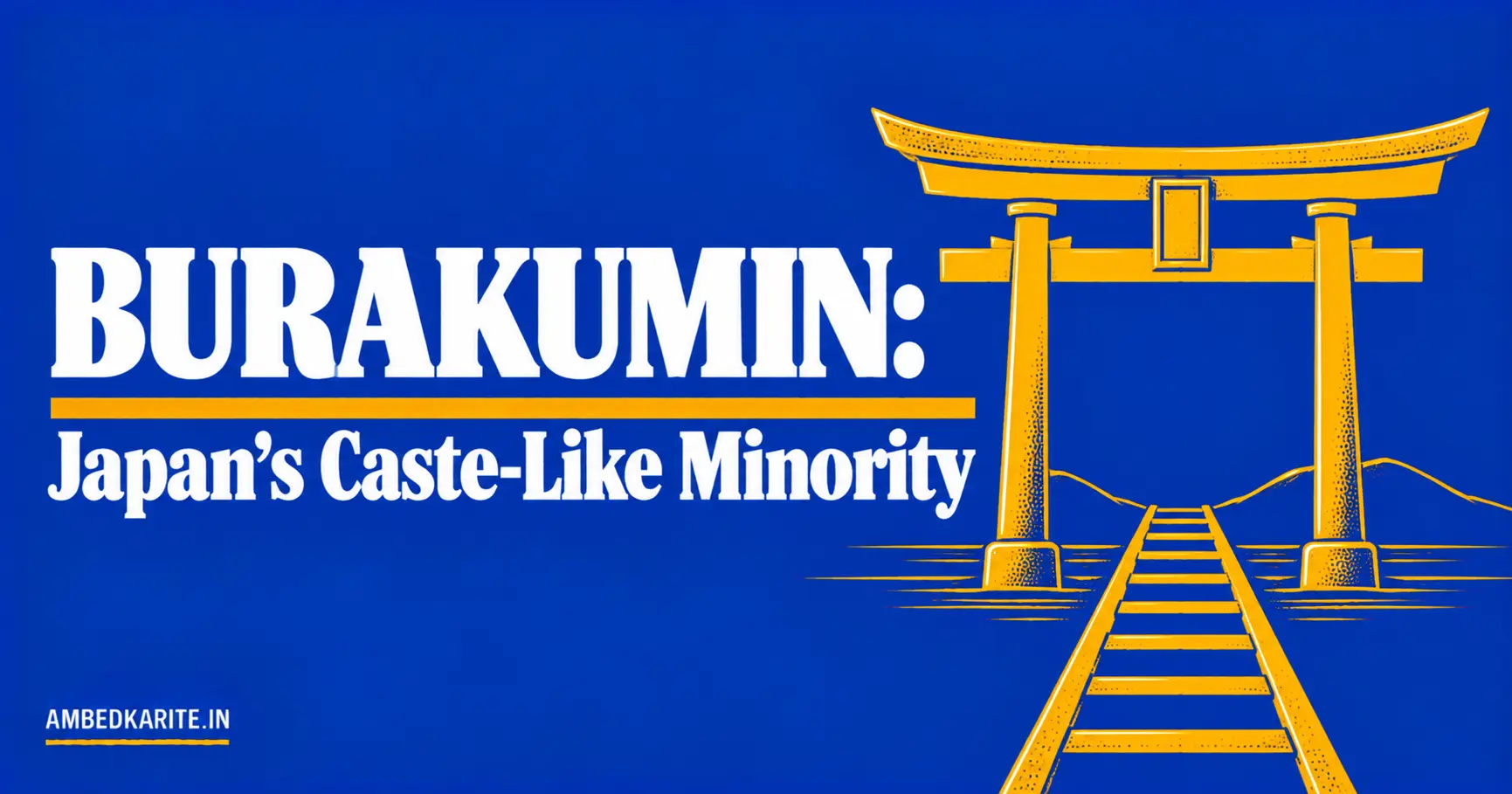
The Burakumin are sometimes referred to as Japan’s Untouchables or caste-like minority because of their descent from communities ostracized during the Tokugawa period (Suiheisha, Wikipedia). This case study will provide information about Burakumin, the historical context surrounding their social standing and disparagement, and the disparities that remain within Japanese society and how they relate to the Indian caste system.
Who are the Burakumin?
The word buraku means community or hamlet and the suffix “min” denotes people (Minority Rights Group International, “Burakumin (Buraku People) in Japan”). Burakumin communities are primarily found in rural and suburban Japan (Minority Rights Group International). As previously mentioned, these communities are largely of Japanese ethnicity (Minority Rights Group International; Encyclopedia.com, “Buraku or Burakumin”).
How did the system begin?
During the Edo or Tokugawa period (1603-1867) Japan’s social order was classified into hereditary status groups (EBSCO). The social order was headed by the samurai, followed by farmers, artisans and merchants, while the eta and hinin were placed outside of this order (Encyclopedia.com). The eta are largely credited for the production of leather and disposal of dead cattle, which in the mind of the elite class of that period were unclean tasks (Global Forum of Communities Discriminated on Work and Descent).
The Meiji government issued the Emancipation Edict on August 28, 1871, abolishing the legal status of outcastes. Former outcastes became “new commoners.” Discrimination against them continued. To give their descendants a reason to be regarded as a caste, some of the former outcastes began to call themselves “former eta” (Wikipedia, “Burakumin”). Our guide to the Indian system explains how the Burakumin, like Dalits, suffered from the barriers of the varna system and more due to their connection to the “polluting” professions.
What is the population of the Burakumin?
There are no recent official numbers. The Buraku Liberation League estimated the number to be around three million, based on the 1993 census (Minority Rights Group). Other estimates range from one to three million to over six million (Minority Rights Group). About 1.2 million people are officially counted (Global Forum of Communities Discriminated on Work and Descent). Based on a sociologist’s estimate that about 6,000 of the 9,000 designated buraku areas were never officially designated, the real number might be higher (Books & Ideas, “Discrimination against Japan’s Burakumin Community”).
What types of discrimination do Burakumin face?
Discrimination has historically been strongest in the areas of marriage and employment (Wikipedia, “Burakumin”). In the case of marriage, it was necessary for potential in-laws to check a person’s background to determine if that person was Buraku (Minority Rights Group). In the case of employment, a Buraku Liberation League group discovered in the 1970s that employers bought and circulated among themselves a three-hundred-page hand-written list that included persons in buraku areas and that it was used to screen job applicants (EBSCO, “Burakumin”).
Family registers made identification easy. The modern family register system, known as the koseki, allowed people of Buraku descent to be identified (Wikipedia, “Suiheisha”). Japan changed the Family Registration Law in 1976 to prohibit third parties from looking up other people’s family registers (Minority Rights Group). In 1985, Osaka Prefecture passed an ordinance prohibiting private individuals from investigating another person’s background to confirm Buraku origin (Minority Rights Group). Moving house offers only little protection, as family registration offices are obligated by law to provide agencies with a person’s record if that person previously lived in that prefecture (EBSCO).
Burakumin surnames
There is often the question whether surnames indicate Buraku ancestry. Sources are not in agreement. Brett Hetherington states that Burakumin are often identified by their surnames and addresses (Brett Hetherington, “The Plight of the Buraku People”). In a different source it says the only sure way to ascertain this is to look into the person’s background to see where they lived (EBSCO). Surnames alone cannot be trusted, as surnames were only adopted around the Meiji Restoration. There is little uniformity about indicators, as the family register and address are commonly reported indicators, along with firm names (see log for report).
What has Japan done?
Japan implemented special projects to address the issues of the Burakumin from 1969 to 2002, focussing on improving education, housing, and employment (Minority Rights Group). After this program ended, the Japanese government largely ignored the issues of the Burakumin (Minority Rights Group).
In December 2016 the Diet enacted the Act on the Promotion of the Elimination of Buraku Discrimination (EBSCO). It describes the fundamental concepts and obligations of national and local governments. It encourages consultation, education and research (EBSCO). Some critics say the law lacks teeth. That is because it does not prohibit discrimination against Burakumin and, therefore, does not establish any penalties (Minority Rights Group). In 2025 the UN Committee on the Elimination of Racial Discrimination asked Japan if it had studied the possibility of amending the 2016 law in order to define the term Burakumin (EBSCO).
New issues have arisen with the development of the Internet. Rights groups have reported names and other personal information about Buraku members that have been posted on the Internet along with derogatory messages (Minority Rights Group).
Burakumin and caste in India
The two systems are similar in some respects, but differ in others.
| Burakumin (Japan) | Dalits (India) | |
|---|---|---|
| Basis | Inherited outcast status from the Edo-period order | Inherited status in the varna and jati order |
| Linked work | Leather, handling dead animals, burial and similar work | Work seen as polluting, e.g. handling dead animals and sanitation |
| Legal abolition | 1871 Emancipation Declaration | 1950, Article 17 |
| Ethnicity | Ethnically Japanese | Same religion and language as others in the region |
| State measures | Dowa special measures, 1969-2002; 2016 Act | Reservation, the Atrocities Act |
Although there are similarities with both groups, particularly with Burakumin, this article offers a simplified comparison to introduce the concept of Article 17 and caste reservation in India and our own sources. Both groups fall under the category of discrimination on the basis of descent, as referred to by the UN (CERD, General Recommendation XXIX, 2002). Our article on the UN framework and plain article on casteism give further information. Our article on who Dalits are provides information on the Indian community.
Why it matters for Western readers
The Burakumin demonstrate to people outside of Japan that a legal framework without penalties will not end discrimination based on caste. Readers in countries considering whether to criminalize caste discrimination will find Japan’s example relevant. (Blogging, AI, and marketing automation skills are valuable tools for the cause. The AEP seeks to provide these tools for members of the community).
Takeaway
The Burakumin are the descendants of lower caste groups of Japan’s Edo period. They are a caste-based, descent-based, minority group rather than an ethnic group. The 1871 Emancipation Declaration ended their legal status, however, this did not end discrimination. They continue to face discrimination in their quest for employment and marriage. This is aided by the family registers and address lists.
Japan enacted special measures from 1969 to 2002 and a 2016 law, which detractors say contains no punitive provisions. Estimates of the number of persons affected range from 1.2 million to over 6 million. The case shows descent-based discrimination that goes beyond India.
Frequently Asked Questions
Who are the Burakumin?
They are descendants of eta and hinin and other outcast groups of Japan’s Edo period. Minority Rights Group says they are a caste- or descent-based group, and not an ethnic minority.
What does Burakumin mean?
The term is derived from buraku (community or hamlet) and min (people) and means ‘people from those communities’ or ‘descendants of those communities.’
Is there caste in Japan today?
The caste system was officially abolished in 1871. However, discrimination against Burakumin is reported to continue in areas, especially in marriage and employment.
Can surnames point to Burakumin?
Sources disagree. Some accounts say family names and addresses can identify them, while others say the more reliable markers are past addresses and the family register.
How is the Burakumin case similar to caste in India?
Both involve inherited status linked to “polluting” work and both were abolished in law, yet discrimination continues. The UN’s idea of descent-based discrimination covers both, though the systems differ in history and religion.
Understanding caste is step one. Building digital independence is step two.
Ambedkarite communities around the world are using AI tools, blogging and email marketing to document their experiences, challenge discrimination and build platforms that cannot be silenced.
The Ambedkarite Educational Program teaches exactly these skills: AI tools, website building, email marketing, blogging and Google AI. Lifetime access is ₹297 (~$4 USD). All future courses are included free.
Or join the Movement free to start learning today.
SOURCES
- Minority Rights Group International, “Burakumin (Buraku people) in Japan”
- EBSCO Research Starters, “Burakumin”
- Wikipedia, “Burakumin”
- Wikipedia, “Suiheisha”
- Encyclopedia.com, “Buraku or Burakumin”
- Global Forum of Communities Discriminated on Work and Descent, “Japan”
- Books & Ideas, “Discrimination Against Japan’s Burakumin Community”
- Brett Hetherington, “The Plight of the Buraku People”
- Refworld, World Directory of Minorities and Indigenous Peoples: Japan
- CERD General Recommendation XXIX, 2002