What is the caste system? Learn how varna and jati work, where SC, ST & OBC fit, what Ambedkar argued, why caste is now debated in the West.
How does the caste system work?
The caste system is a way to separate people into groups based on birth. Each caste determines rules on marriage, occupation and social contact. Historians note caste is inherited (Encyclopedia Britannica, “caste”). Caste is not equivalent to class. Wealth does not determine caste. The reverse is also true. The lowest caste can be the richest, and highest caste can be the poorest.
What is the origin of the caste system?
Some of the earliest literary mention of the caste system is found in ancient Indian texts. But the practice is estimated to exist at least 2,000 years. Most historians trace the system to various social reforms in the Indian subcontinent, some as old as the 6th century B.C. Later, to give a religious legitimacy to the ranking, the ideas of rebirth and karma were invoked by some religious scholars.
Where is the caste system prevalent?
The caste system exists primarily in India, Nepal, Sri Lanka and Bangladesh. It exists to a smaller extent in Pakistan (SBS News, “Factbox: What is the caste system?”).
Varna and Jati: The Two Layers
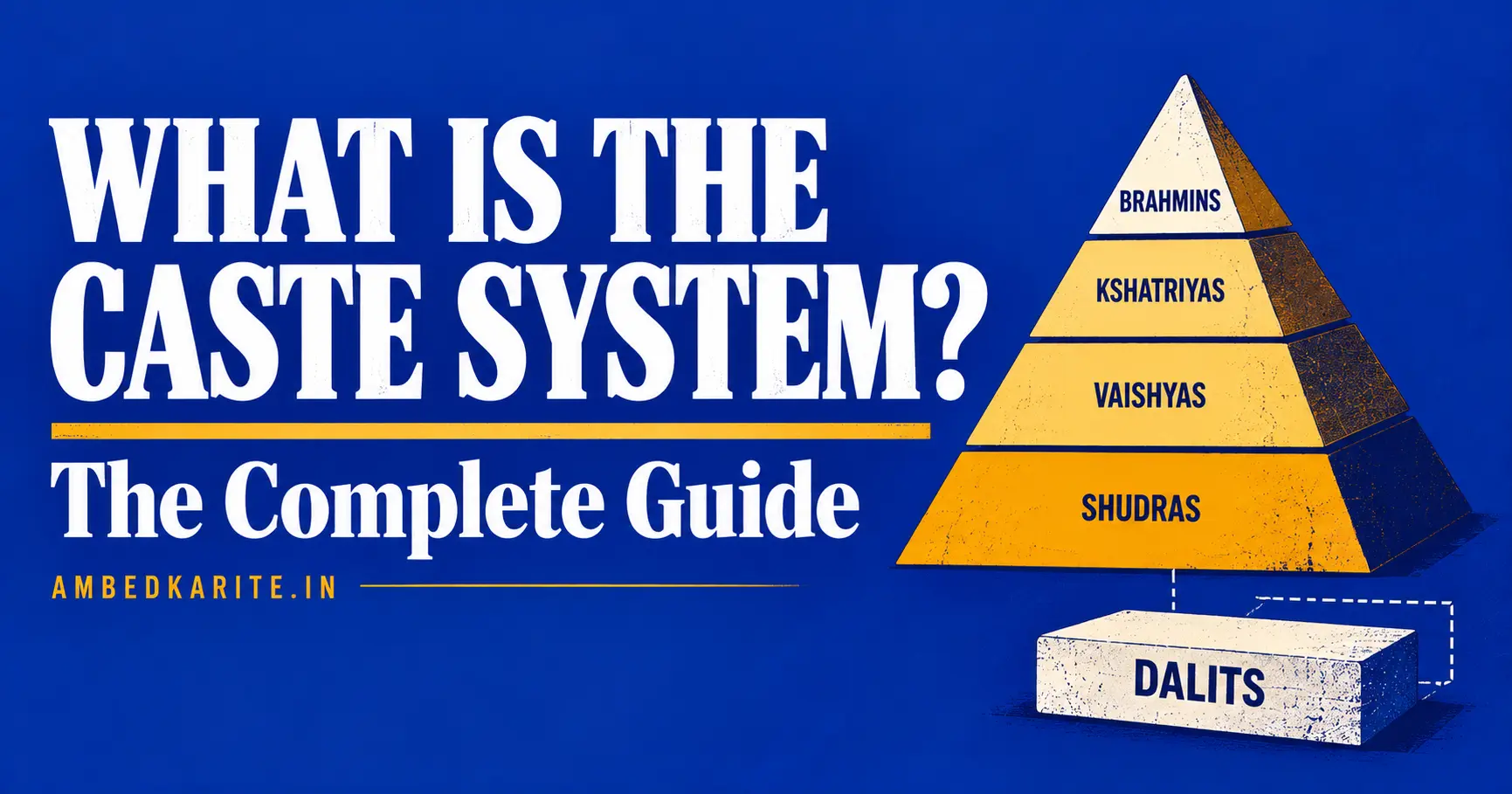
There is some confusion between the two terms. Varna is from ancient Hindu texts and is made up of four groups (Encyclopaedia Britannica, “caste”). Jati is the actual, local birth group, and there are thousands of them (Encyclopedia Britannica, “caste”).
Varna consists of:
- Brahmins: priests and scholars,
- Kshatriyas: rulers and warriors,
- Vaishyas: merchants and traders,
- and Shudras: servants and laborers.
Our post on the Shudras examines Ambedkar’s study of this fourth group.
When thinking of varna, think of your textbook. When thinking about jati, think of the real world. A family might say “we are Vaishya” in the broader sense, but their marriages and other social ties are tied to their jati. Members of the same jati in a higher varna are still ranked.
Beyond the four varnas
Some groups were placed outside the four fold order. Previously, people called “untouchables” were placed in a fifth order called the Panchama (Gulf News, “The meaning of Dalit”). People of higher castes felt that members of the fifth order were un-approachable and that they and their food were impure. We explain Dalit and other related concepts in our post on Dalit meanings.
Adivasis, the Indigenous peoples of India, are also placed outside the Hindu hierarchy. We talk about them under Scheduled Tribes below.
Where do SC, ST and OBC fit?
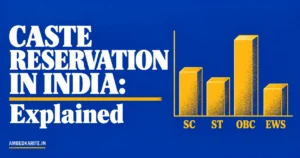
This is where most explainers stop. SC, ST, and OBC are not Varnas. The SC, ST and OBC categories were created as part of the Indian Constitution and as legislation by the government to provide legal safeguards, education, and employment benefits for certain classes of citizens. They have only a tenuous relationship with the Varna order.
| Category | Full name | Position relative to varna | Legal basis |
|---|---|---|---|
| SC | Scheduled Castes | Outside the four varnas (the old “untouchable” communities) | Constitution of India, Article 341 |
| ST | Scheduled Tribes | Generally outside the caste hierarchy (Adivasi communities) | Constitution of India, Article 342 |
| OBC | Other Backward Classes | Commonly described as mid-ranked, above SC and ST and below upper castes | Constitution of India, Articles 15(4), 16(4) and 340 |
| General/Unreserved | Includes the upper-ranked groups, mostly Brahmin, Kshatriya and Vaishya | No Special Schedule |
Scheduled Castes (SC). According to the 2011 Census, Scheduled Castes comprised 16.6 per cent of India’s population (Gulf News, citing the Census of India 2011). That is around one in six people. Currently, only Hindus, Sikhs and Buddhists are eligible for SC status (Constitution (Scheduled Castes) Order, 1950, as amended).
Scheduled Tribes (ST). Articles 341 and 342 of the Indian Constitution recognize Scheduled Castes and Scheduled Tribes (i.e. the Adivasis). Scheduled Tribes are not a part of the varna order and social structures of other communities in India. High rates of crime against the Scheduled Tribes exist. The National Crime Records Bureau (NCRB) reported that in 2023, crime against Scheduled Tribes was 12,960, an increase from 2022, when it was 10,115 (Deccan Herald, on NCRB Crime in India 2023).
Other Backward Classes (OBC). The Mandal Commission (1978-80), reported that other backward classes make up about 52% of India’s total population. This data was reported before including other under-represented communities in India. According to the People’s Archive of Rural India, the Commission suggested that 27% of all seats in educational and government jobs be reserved for OBCs. (People’s Archive of Rural India). Reservations should not exceed 50% of total seats. OBC is a social and educational class. Most of the OBC jatis are ranked between Shudra and Dalit (in the varna order) and are below the upper castes. Some of the OBC communities have land and local power.
General. “General” is the unreserved category. It usually has the upper castes and is a legal category and not a varna.
How the system operates in the real world
Caste dictated access to wells, temples, schools and meals. Dalits were consigned to manual scavenging and other “unclean” jobs. Inter-caste marriages were forbidden and punished.
Ambedkar said that caste was a ranking of laborers and not a division of labor (BAWS Volume 1, Annihilation of Caste). People could not move out of their assigned jobs, however skilled they became. Read a summary of the 1936 speech here.
Did the British create caste?
There is no consensus among historians on how colonialism stiffened caste. One major view is that, as a result of the British census, the indigenous population’s flexible, local identities coalesced into rigid and fixed identities (Nicholas Dirks, Castes of Mind, 2001). Other scholars believe that, before the British, caste ranking was amorphous and that colonialism changed its shape and form. Both opinions are part of the ongoing scholarly debates and the evidence is ambiguous.
Is the caste system still operating?
Yes. The Constitution of India, 1950, abolished untouchability and banned its practice in all forms (Article 17). The Prevention of Atrocities Act, 1989, was enacted by Parliament to proscribe certain offenses, and establish special Courts for the trial of such offenses (Prevention of Atrocities Act, 1989).
The situation has not improved. In 2023, the NCRB reported 57,789 cases of crime against Scheduled Castes, a 0.4 percent increase from 2022 (Deccan Herald, on NCRB Crime in India 2023). These are only the cases that were reported. There are numerous cases that don’t come to the attention of the police.
India’s last published caste count is old and the debate over the next one continues. In our post on the census and the caste debate, we discuss this. Ambedkar’s own life shows how caste impacted his access to an elite education and this is discussed on our Ambedkar biography page. (For diaspora communities documenting this history themselves, skills in blogging and the use of AI tools to create and send emails have become essential. The Ambedkarite Educational Program was built to teach exactly these skills.)
Caste in the West: what the data says
Many South Asians moved to the US, UK, Canada and Australia after the 1960s. Researchers do not agree on how far caste affects life there, and the survey data shows why.
Equality Labs, a US advocacy group, surveyed about 1,500 South Asian Americans in 2018. It reported that many Dalit respondents had faced unfair treatment. The Carnegie Endowment criticised it for using a self-selected sample (Carnegie Endowment, Social Realities of Indian Americans, 2021). About 24 per cent of its respondents were Dalit (UnHerd, 2022).
Carnegie’s own 2020 survey used a representative YouGov sample and found that 5 per cent of Indian Americans reported caste discrimination in the past year (Carnegie Endowment, 2021, as summarised by the Hindu American Foundation). Its 2024 survey found that most respondents supported measures to outlaw caste discrimination, and that skin colour was the most commonly reported basis for bias (Carnegie Endowment, How Indian Americans Live, 2025). The two surveys ask different questions of different groups, so the figures do not conflict directly.
On the law, Seattle added caste to its rules in February 2023. California’s legislature passed SB 403 to name caste, but Governor Newsom vetoed it in October 2023, saying existing law already covers caste (California Governor’s Office, October 2023). In the UK, the Equality Act 2010 lets ministers add caste as a protected characteristic, but this has not happened (Equality Act 2010, Section 9(5)).
The Hindu American Foundation and similar groups oppose caste-specific laws. They argue that such laws single out Hindus. Supporters reply that these laws name a form of discrimination that already exists.
Takeaway
The caste system is a birth-based ranking with two layers: four broad varnas and thousands of local jatis. Dalits sit outside the four varnas, Adivasis are generally outside the caste order, and OBCs are commonly placed in the middle. SC, ST and OBC are legal categories that decide protections and quotas, and they only loosely match the old varna order. Indian law bans untouchability, but official data still records tens of thousands of crimes against Scheduled Castes each year. In the West, the evidence on how common caste bias is remains disputed, and the legal response is still being decided.
Frequently Asked Questions
Is the caste system only part of Hinduism?
It began in Hindu texts and social customs. However, caste-like divisions also exist among Indian Christians, Muslims and Sikhs. The Mandal Commission’s OBC count, for example, includes non-Hindu communities.
Where do OBC, SC and ST fit in the varna system?
They are legal categories, not varnas. SC (Dalits) sit outside the four varnas, ST (Adivasis) are generally outside the caste order, and OBCs are commonly described as ranking in the middle, many in or near the Shudra varna.
Is the caste system illegal in India?
Untouchability is illegal under Article 17 of the Constitution. The Atrocities Act of 1989 punishes caste-based violence and humiliation. Caste identity itself is not banned, and caste still shapes marriage and social life.
Is caste discrimination illegal in the United States?
No federal law names caste. Seattle banned it in 2023, and California’s SB 403 was vetoed that year. Some legal scholars argue that existing rules on ancestry, race or national origin already cover it.
Understanding caste is step one. Building digital independence is step two.
Ambedkarite communities around the world are using AI tools, blogging and email marketing to document their experiences, challenge discrimination and build platforms that cannot be silenced.
The Ambedkarite Educational Program teaches exactly these skills: AI tools, website building, email marketing, blogging and Google AI. Lifetime access is ₹297 (~$4 USD). All future courses are included free.
Or join the Movement free to start learning today.
SOURCES
- SBS News, “Factbox: What is the caste system?”
- Gulf News, “The meaning of Dalit”
- People’s Archive of Rural India, Report of the Backward Classes Commission
- Deccan Herald, on NCRB Crime in India 2023
- Carnegie Endowment, How Indian Americans Live, 2025
- Hindu American Foundation, summary of the 2020 Carnegie survey
- UnHerd, 2022
- Constitution of India, Articles 15, 16, 17, 340, 341, 342 (link: legislative.gov.in)
- BAWS Vol 1 (link: hdl.handle.net/20.500.14121/2322)
- Add before publishing: Encyclopaedia Britannica, “caste”; Dirks, Castes of Mind (Princeton University Press, 2001)