The “caste census divide society” lie is older than Independence. Babasaheb Ambedkar destroyed it in 1947. Here’s the receipt.
Here’s a fact that ruins everyone’s argument 👇
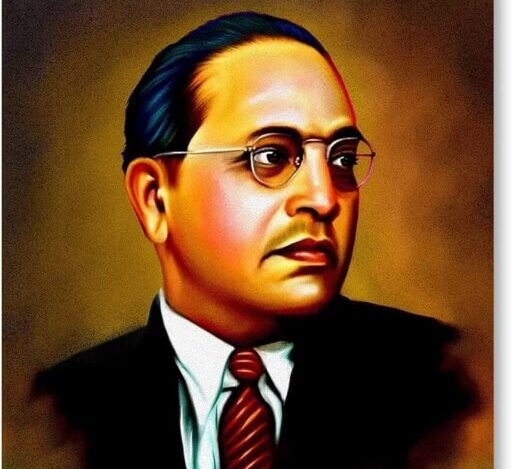
The “caste census divide society” line isn’t new. It’s older than Independence. And Babasaheb Dr. B.R. Ambedkar torched it in writing in 1947 — eleven months before Nehru’s government quietly killed caste enumeration in the 1951 Census [1].
So when Prime Minister Narendra Modi called the caste census demand “urban Naxal thinking” on News18 in April 2024, then announced one a year later in April 2025, then stalled the methodology for another full year [2] — he wasn’t doing something new. He was running a 75-year-old playbook.
Let’s break it down.
The “caste census divide society” claim — steel-manned
The opposition’s case sounds reasonable on paper. Honestly, it’s been India’s official position since 1951.
The argument goes like this. Counting castes solidifies caste identity. People start voting along caste lines. Communities inflate numbers to claim more reservation. Hindu unity cracks. The nation fragments. Therefore — don’t count.
This is the line RSS general secretary Dattatreya Hosabale defended in March 2025, saying “religion-based reservation is not accepted in the Constitution authored by Babasaheb Ambedkar” [3]. It’s the line PM Modi used in his “Ek hain toh safe hain” speech [4]. It’s the line UP CM Yogi Adityanath used with “Batenge to katenge” during the Maharashtra campaign [4]. And it’s the line Nehru used in 1951 when he stopped enumerating caste in the first independent census [5].
So the argument has a long pedigree. But pedigree isn’t proof. Let’s look at what Babasaheb actually said.
Did Ambedkar support caste census? Read what he said in 1947
On 26 October 1947 — two months after Independence — Babasaheb wrote this:
“The Census of India has over a number of decades ceased to be an operation in demography. It has become a Political affair. Every community seems to be attempting to artificially augment its numbers at the cost of some other community for the sake of capturing greater and greater degree of political power in its own hands. The Scheduled Castes seem to have been made a common victim for the satisfaction of the combined greed of the other communities who through their propagandists or enumerators are able to control the operations and the results of the Census.” [1]
That’s BAWS Vol. 17, Part 1. Direct quote. Read it twice.
Babasaheb didn’t say “stop counting caste because it divides.” He said the opposite. He said the census was already being manipulated to undercount Scheduled Castes. The fix wasn’t less data. It was honest data.
In 1953, when Nehru set up the Kalelkar Commission to identify backward classes without fresh caste numbers, Babasaheb called the no-data approach “petty intelligence” [6]. The Commission found 3,743 backward castes anyway — but had to extrapolate from 1931 data because nothing newer existed [7].
So the question “did Ambedkar support caste census” has a clear answer. He didn’t just support it. He warned that hiding the data would let the powerful keep stealing the share of the powerless.
That warning came true. And it’s still coming true.
Why caste census stopped 1951 — Nehru’s call, Babasaheb’s warning
Here’s the timeline most people don’t know.
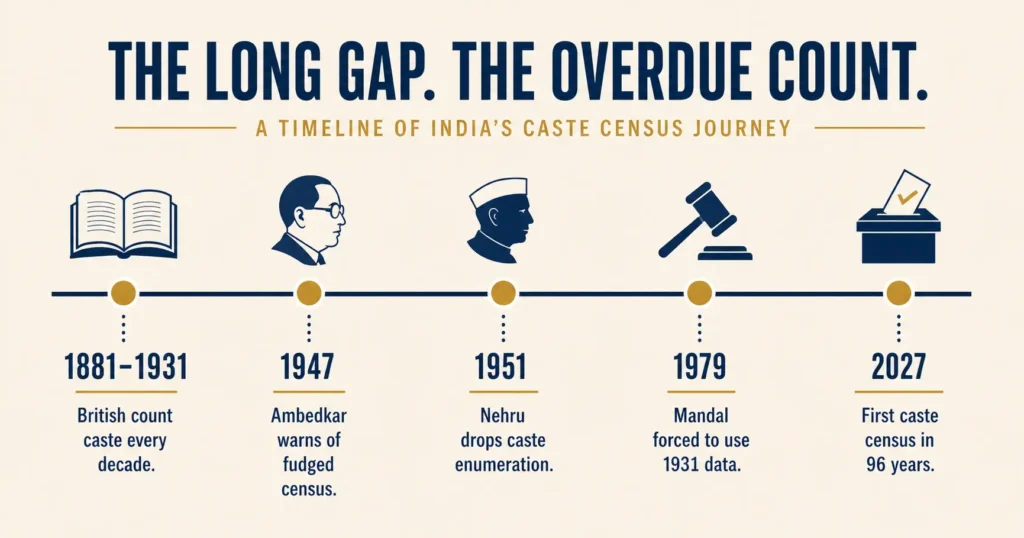
The British counted caste from 1881 to 1931 — every decade [8]. The 1931 Census recorded 4,147 distinct castes [5]. After Independence, in 1951, the Nehru government dropped caste enumeration except for SCs and STs [9]. The reason given: counting caste would “perpetuate social divisions” [9].
Sound familiar? That’s the exact line being recycled in 2026.
But here’s the catch. Nehru didn’t drop SC/ST counting. Why? Because the Constitution — drafted under Babasaheb’s chairmanship — required it for reservation [10]. Article 341 and 342 mandate SC/ST identification. So caste counting wasn’t actually banned. It was selectively banned. The lower castes got counted. The middle castes (OBCs) got erased.
That single decision shaped the next 75 years.
In 1953 the Kalelkar Commission was forced to use 1931 data. Its report was shelved [6]. In 1979, Mandal Commission did the same — used 1931 data, estimated OBC population at 52%, recommended 27% reservation [11]. The math was outdated by half a century when V.P. Singh implemented it in 1990.
So when someone asks “why caste census stopped 1951” — the honest answer is: because counting OBCs would have forced India to face the actual demographic shape of its inequality. And the people in charge in 1951 didn’t want that mirror held up.
The 1931 receipts — caste census 1931 Mandal Commission link
The 1931 Census is the single most important document in the history of Indian reservation policy. Read that again.
Every Mandal Commission calculation. Every state-level OBC list. Every Indra Sawhney 1992 calibration. All of it traces back to a colonial census conducted 95 years ago when India still had princely states, no Constitution, and 70% of the population was illiterate.
The caste census 1931 Mandal Commission link is the clearest evidence that hiding caste data doesn’t make caste vanish. It just freezes policy in time.
The 1931 Census found 4,147 castes. Brahmins were 1.42 crore [12]. Chamars 1.12 crore [12]. Rajputs 81 lakh [12]. Yadavs/Ahirs 56 lakh [12]. Mandal Commission used these numbers, projected forward, and arrived at 52% OBC share [11]. That estimate is still — in 2026 — the only national number we have.
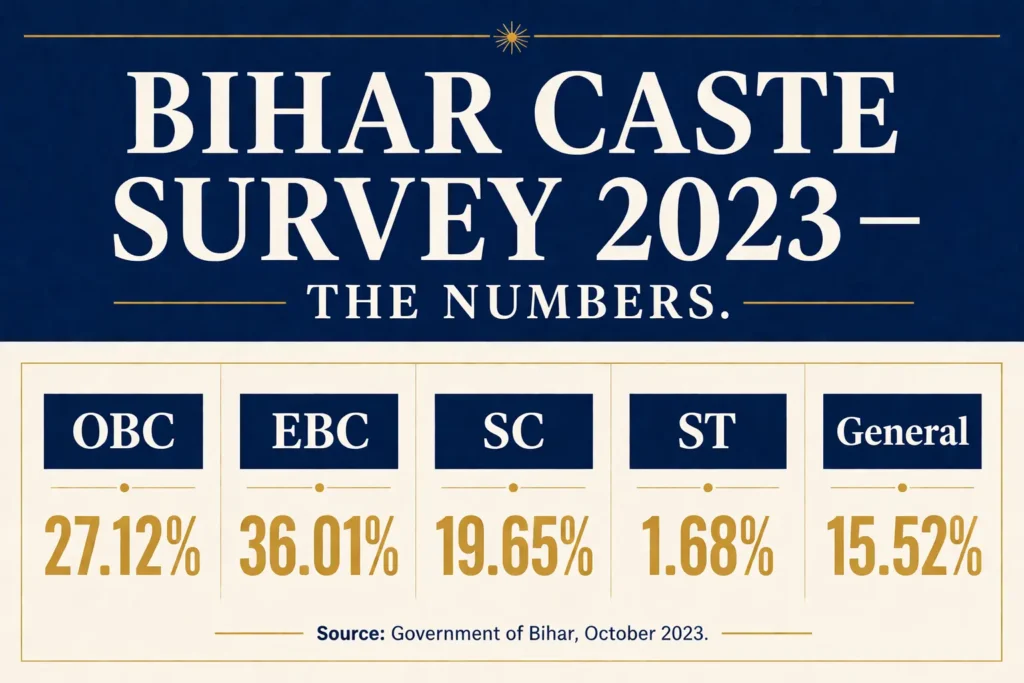
For comparison, Bihar’s 2023 caste survey found OBCs + EBCs at 63.13% of state population, with the General category at 15.52% [13]. So the actual share might be much higher than Mandal estimated. We don’t know. Because nobody has counted in 96 years.
That’s the cost of the “caste census divide society” myth. Half a billion people priced out of evidence-based policy.
Caste census urban naxal — the Modi U-turn timeline
The Modi government’s record on caste enumeration is one of the cleanest U-turns in Indian political memory. Here’s the receipts.
21 September 2021 — The Modi government filed an affidavit in the Supreme Court (Writ Petition Civil No. 841 of 2021) saying any directive to enumerate caste-wise population would interfere with policy already decided. Translation: we said no, court can’t say yes [14].
28 April 2024 — In a News18 interview, PM Modi attacked the Congress, calling its caste census demand “urban Naxal” thought [14]. The “caste census urban naxal” framing went viral that week.
30 April 2025 — Cabinet Committee on Political Affairs announces caste enumeration in upcoming Census [15]. Same government, same PM, opposite position. No public explanation for the flip.
1 April 2026 — House-listing phase begins for the 2027 Census. Population enumeration scheduled for February 2027 [16].
30 April 2026 — Congress general secretary Jairam Ramesh says one full year has passed and the government still hasn’t released methodology, hasn’t held dialogue with Opposition or state governments [17].
Today — We’re still waiting.
So the same political leadership that called caste census “urban Naxal” is now conducting one. But conducting it without showing how. That’s not a methodology problem. That’s a control problem. Whoever controls the methodology controls the numbers. Whoever controls the numbers controls the next 50 years of reservation policy.
Babasaheb predicted exactly this in 1947 — the Census becoming “a Political affair” [1].
The “caste census divide society” argument tested against Bihar
Let’s stop arguing in theory. Bihar already ran the experiment.
In October 2023, Bihar published India’s first state-level caste survey since Independence [13]. Findings: OBC at 27.12%, EBC at 36.01%, SC at 19.65%, ST at 1.68%, General at 15.52% [13]. The survey covered 2.59 crore households, 13.07 crore people.
Did Bihar collapse? Did caste riots break out? Did the state fragment?
No. The data did three things. First, it exposed that Bihar’s “upper caste” Bhumihars had a 27.58% poverty rate, second only to SCs and STs [18]. Caste identity didn’t shield poverty. Second, it revealed that Yadavs — usually treated as politically dominant — also had high poverty within OBCs [18]. Third, the state government tried to raise the reservation ceiling from 50% to 65%, which the Patna High Court struck down in June 2024 [19].
So the actual divider wasn’t the survey. It was the 50% cap. The data showed the state how unequal it was. The court said you can’t fix it past a number set in 1992.
If anyone claims caste census divides society, point them to Bihar. The state is still standing. Brahmins didn’t flee. Hindu society didn’t crack. What happened was simpler — for the first time in 90 years, policy could see the people it was supposed to serve.
The 50% cap — why data matters now
The Supreme Court’s Indra Sawhney v. Union of India (1992) judgment capped total reservation at 50% [20]. Nine-judge bench. Para 94B. That ceiling is still the law.
Here’s why it matters for the “caste census divide society” debate.
If OBCs are actually 52% of India (Mandal estimate from 1931 data), they get 27% reservation — half their population share. If they’re 63% (Bihar’s 2023 number), the gap widens. Either way, the math doesn’t work without fresh data. The 50% cap freezes the floor; the missing census freezes the ceiling.
Then in 2019, the 103rd Constitutional Amendment introduced 10% reservation for Economically Weaker Sections — mostly upper-caste poor [21]. Total reservation jumped past 50%. The Supreme Court upheld it in Janhit Abhiyan v. Union of India (2022) [22]. So the 50% cap can move — just not for the historically oppressed.
Read that again. The cap moves for upper-caste poor. The cap doesn’t move for OBCs because there’s “no data.”
That’s why caste census matters now. Not for political optics. For legal arithmetic.
Babasaheb wrote in his final Constituent Assembly speech on 25 November 1949 that India was about to enter “a life of contradictions” — political equality without social and economic equality [23]. He warned that “those who suffer from inequality will blow up the structure of political democracy” [23]. The 50% cap, frozen against fresh data, is exactly the contradiction he named.
The Educate-Agitate-Organize call wasn’t poetry. It was a survival manual. In 2026, “Educate” means knowing this 50% number. Knowing why it’s stuck. Knowing what data would unstick it. (For Ambedkarites looking to actually skill up beyond just reading — the Ambedkarite Educational Program covers exactly this kind of evidence-based advocacy with Blogging, SEO, Email, and AI tools at ₹297 lifetime.)
Who benefits when the numbers stay hidden
This is the part nobody wants to say out loud. So let’s say it.
In the 1941 Census, when respondents were given the option of “no caste,” it was overwhelmingly upper-caste Indians who claimed castelessness [24]. The same pattern showed in the Karnataka caste survey of 2015 [25]. Castelessness, in practice, is a privilege of being unmarked. Dalits, Adivasis, OBCs don’t get to opt out of caste because society won’t let them. Upper castes can — because for them, caste isn’t a barrier; it’s a default setting.
Sociologist Satish Deshpande has called this the “fig leaf” — the cultivated narrative of castelessness that obscures structural inequality [24].
So when someone says “caste census will divide society,” the question to ask is: whose society. The society where caste is invisible because it works for you? Or the society where caste is everywhere because it’s rigged against you?
Hindutva politics needs caste hidden because Hindu unity is its electoral product. If you count caste honestly, the math shifts. OBC + SC + ST + minorities = roughly 85% of India [26]. The “Hindu majority” framing collapses into “upper-caste minority controls discourse.” That’s not a divide caste census creates. That’s a divide caste census reveals.
Babasaheb said it cleaner than anyone. In Annihilation of Caste (1936): “Hindu Society as such does not exist. It is only a collection of castes.” [27]
You can’t divide what was already divided.
What Babasaheb actually wanted — a census of truth, not comfort
Read Babasaheb’s States and Minorities (March 1947), submitted to the Constituent Assembly’s Sub-Committee on Fundamental Rights [28]. The document carries a full demographic appendix. Caste numbers. Region-wise breakdowns. He wanted the data on the record.
Read his Simon Commission evidence from 23 October 1928 [29]. He fought the Bombay government’s undercount of Untouchables from 28 lakh down to 14 lakh, then to 4.59 lakh [29]. The colonial state was already manipulating numbers to deny representation. Babasaheb caught them and called it out.
Read his 26 October 1947 note [1]. He warned independent India would do the same — only worse, because now the manipulation would be done by Indians who call themselves nationalists.
Now look at where we are. The Modi government took 5 years to flip from “no caste census” to “yes caste census” [14]. It’s been 1 year since the announcement and methodology is still classified [17]. Bihar did its survey and the High Court struck down the resulting reservation hike [19]. Karnataka completed its survey and the report sat unreleased for years [25]. The 2011 SECC data was collected, then buried [30].
Every step of this — the foot-dragging, the methodology gatekeeping, the data suppression — Babasaheb predicted in 1947. He didn’t have a crystal ball. He had pattern recognition. The same caste system that fudges temple entry rules will fudge census forms. The same hierarchy that decides who drinks from which well will decide who gets counted in which column.
That’s why “did Ambedkar support caste census” isn’t really the right question. The right question is: who’s afraid of one, and why?
The takeaway
The “caste census divide society” myth fails three tests. Babasaheb tested it in 1947 and called it out. Bihar tested it in 2023 and the state didn’t crack. Logic tests it daily — you can’t divide what’s already divided.
What hiding caste data does is simpler. It protects the hierarchy by pretending the hierarchy doesn’t exist. It freezes reservation policy on 1931 numbers while the country has changed beyond recognition. It lets a small group keep claiming “merit” while sitting on inherited privilege the data would expose.
Counting caste isn’t the disease. It’s the diagnostic.
Educate. Agitate. Organize.
That was Babasaheb’s three-word manual. Reading this blog is “Educate.” But what about Agitate and Organize?
Today, X bans accounts. Reels get shadowbanned. WhatsApp groups get reported. The same casteless narrative that buries caste census numbers also tries to bury Bahujan voices online. So Ambedkarites need their own platforms — emails, blogs, websites, AI tools. Not as hobbies. As infrastructure.
The Ambedkarite Educational Program is built for exactly this — ₹297 lifetime, includes Prompt Engineering, Google AI, Website Building, Email Marketing, Blogging & SEO, Canva. Future courses added free.
Or join the Movement free and start with the email list before you decide.
Babasaheb didn’t wait for a free Census in 1947 to make his case. He built it himself. 79 years later, the game is the same. Only the platforms changed.
Frequently Asked Questions
Did Ambedkar support caste census? Yes. In a written note dated 26 October 1947 (BAWS Vol. 17, Part 1), Babasaheb said the Census of India had become “a Political affair” where Scheduled Castes were “common victims” of fudged enumeration. He wanted honest caste data, not less data.
Will caste census divide society? Bihar tested this myth in 2023. The state published OBC + EBC figures at 63.13% of population. No riots, no fragmentation, no caste war. What did happen — the High Court struck down a 65% reservation cap as too high. The data didn’t divide society. The 50% legal ceiling did the political damage.
Why was caste census stopped in 1951? The Nehru government dropped caste enumeration in the first independent census, citing “national unity” and fear of “perpetuating social divisions.” But SC/ST counting continued because the Constitution required it. The selective drop erased OBC data — and that single decision shaped the next 75 years of stalled reservation policy.
What did Modi say about caste census being “urban Naxal”? On 28 April 2024, in a News18 interview, PM Narendra Modi described the Congress demand for a caste census as indicative of “urban Naxal” thought. One year later, on 30 April 2025, his cabinet announced caste enumeration in the next census. As of May 2026, methodology has still not been released to the Opposition or state governments.
Did Mandal Commission really use 1931 census data? Yes. The Mandal Commission (1979-80) had no fresh caste numbers because the 1951 Census dropped enumeration. So it extrapolated from the 1931 data — 95-year-old colonial figures — and arrived at the 52% OBC estimate that became the basis for 27% reservation under V.P. Singh in 1990. That outdated baseline still governs policy today.
EXTERNAL LINKS
- BAWS Vol. 17, Part 1 (Ministry of Social Justice and Empowerment) — for Ambedkar’s 1947 census note
- Constituent Assembly Debates archive (loksabha.nic.in) — for 25 November 1949 final speech
- Government of Bihar Caste Survey 2023 official report
SOURCES
SOURCES (LINKED)
- Dr. Babasaheb Ambedkar: Writings and Speeches (BAWS), Vol. 17, Part 1, Ministry of Social Justice and Empowerment, Government of India. Note dated 26 October 1947. Also referenced via Velivada — Dr. Ambedkar’s Opinion on Indian Census.
- Outlook India, “Congress Accuses Modi Govt Of Delaying Caste Census,” 30 April 2026.
- Business Standard, “Religion-based reservation unconstitutional, goes against Ambedkar: RSS,” 23 March 2025.
- The South First, “BJP’s U-turn on caste census: What caused the change in stance?” 2 May 2025.
- “Caste Census,” Wikipedia, accessed May 2026.
- The News Minute, “Caste census matters: It may politically trump the current majoritarian project,” 28 May 2025.
- The Wire, “A Look Back at India’s Caste Census Journey,” 1 May 2025.
- India TV, “India’s last caste census was in 1931,” 1 May 2025.
- Al Jazeera, “History’s biggest census: Why India’s new population count is controversial,” 1 April 2026.
- Constitution of India, Articles 341 and 342 (Constitution of India archive).
- “Mandal Commission,” Wikipedia; supplementary reading via Anantam IAS — Mandal Commission: OBC Reservation Report.
- “Caste Census 1931 data,” Wikipedia (1931 caste population figures).
- Government of Bihar, 2022 Bihar Caste-Based Survey — released 2 October 2023; The Hindu, “Bihar caste-based survey report,” 8 November 2023.
- The Tribune, “PM Modi wants to delay caste census; details of exercise still awaited: Congress,” 30 April 2026; ANI, “Details of caste census still awaited,” 30 April 2026.
- NPR, “India will include caste details in its next census,” 2 May 2025.
- “2027 Census of India,” Wikipedia, accessed May 2026.
- Outlook India, “Congress Accuses Modi Govt Of Delaying Caste Census,” 30 April 2026.
- The Hindu, “Bihar caste-based survey report — poverty highest among Scheduled Castes, lowest among Kayasths,” 8 November 2023.
- 2022 Bihar Caste-Based Survey, Wikipedia. Patna High Court ruling, 20 June 2024.
- Indra Sawhney v. Union of India, AIR 1993 SC 477, 9-judge bench, 16 November 1992 — full text on IndianKanoon | Supreme Court DigiSCR.
- Constitution (One Hundred and Third Amendment) Act, 2019 — EWS 10% reservation.
- Janhit Abhiyan v. Union of India, Supreme Court of India, 7 November 2022 — judgment on Supreme Court website.
- Constituent Assembly Debates, Vol. XI, 25 November 1949 — Ambedkar’s final speech.
- Satish Deshpande, “Castelessness as Privilege,” cited in The News Minute, 28 May 2025.
- Science.org, “For first time in a century, India’s states count politically sensitive caste membership,” 22 March 2024.
- Mandal Commission report estimate (52% OBC) + 16.6% SC + 8.6% ST + minorities ≈ 85% — derived from Mandal Commission, Wikipedia + Census 2011.
- B.R. Ambedkar, Annihilation of Caste, 1936, Columbia University archive — Section 21.
- B.R. Ambedkar, States and Minorities, 15 March 1947 — submitted to Constituent Assembly Sub-Committee on Fundamental Rights.
- Evidence of Dr. Ambedkar before the Indian Statutory Commission (Simon Commission), 23 October 1928 — BAWS Vol. 2; full Vol. 2 PDF on MEA archive.
- Socio-Economic and Caste Census 2011, Government of India — caste data never released.
……………….. More Related Posts…………….
-
Caste Census Will Divide Society? Babasaheb Already Answered
The “caste census divide society” lie is older than Independence. Babasaheb Ambedkar destroyed it in 1947. Here’s the receipt. Here’s a fact that ruins everyone’s argument 👇 The “caste census divide society” line isn’t new. It’s older than Independence. And Babasaheb Dr. B.R. Ambedkar torched it in writing in 1947 — eleven months before Nehru’s…