Palwankar Baloo (1876-1955) was a member of one of India’s first Dalit cricket families, who represented the country on the world stage in the early 1900s. The game’s caste divide extended to its pavilions (Wikipedia, “Palwankar Baloo”). The impact of caste continues beyond the game and his admirer, Dr. Ambedkar. This guide chronicles the career of this icon, the social injustices he endured, his brothers, connection to Ambedkar, and the controversy caste continues to create in Indian cricket. It does not identify living players’ caste.
Who was Palwankar Baloo?
Baloo was born on March 19, 1876, in Dharwad, in what was then the Bombay Presidency, to a chambhar (Chamar) family (Wikipedia). His father was a sepoy in the British Indian Army, and Baloo played cricket as a boy with kit left behind by British officers in Pune (Wikipedia; The Better India, “The ‘Untouchable’ Cricketer Who Challenged the British & His Fellow Countrymen”). He worked as a groundsman, preparing the pitch for the Parsis in Pune, and later at the Poona Gymkhana, where he learned spin bowling (Wikipedia). Our guide to who Dalits are explains the term.
Palwankar Baloo’s cricket career
In 1896, Baloo moved to Bombay. He was selected to the Hindu Gymkhana, and played in the Bombay Quadrangular Tournaments (Wikipedia). He played first class cricket for the Hindus from 1905 to 1921 (Wikipedia). As per ESPNcricinfo figures on Wikipedia, he played 33 first class matches and took 179 wickets at an average of 15.21 (Wikipedia). In 1911, he was part of the all-Indian team which toured England under the Maharaja of Patiala, and picked up 114 wickets in that series which was otherwise unsuccessful for the team (Wikipedia). As per Ramachandra Guha, he was the first great Indian cricketer (Governance Now, review of Guha’s work).
First Dalit cricketer?
Numerous sources call Baloo, India’s first Dalit cricketer (Hindustan Times, “India’s first Dalit cricketer Palwanker Baloo fought against caste barriers on the field and off it”; ThePrint, “Why India has forgotten its first Dalit cricketer”). Other sources are more cautious. Guha mentions that in the late 19th century, when the British introduced the game of cricket in India, several Dalit players were part of Indian cricket (Kashmir Times, mentioning Guha). So, ‘first’ may mean first to achieve widespread recognition. In the absence of evidence to the contrary, I will take that to be a viewpoint and not a settled fact. Please see the log.
Caste in cricket: what Baloo faced
Wikipedia cites Guha and ThePrint to explain that Baloo was not treated as an equal because of his caste, and gives examples during his stint with the Pune team. His tea was brought to him in a disposable cup as he was not allowed to enter the pavilion to drink with the team. His lunch was served at a separate table. A lower-caste team attendant brought him water to wash his face in a corner, as he was not allowed to use the pavilion facilities. Things improved for him when he shifted to Bombay, but he was denied captaincy of the Hindu team for the Quadrangular Tournament (Wikipedia). Swarajya says that Baloo was the only Dalit in a team dominated by upper-caste men of prominent families of western India, and faced discrimination and segregation at an early stage of his career (Swarajya, “India’s First International Dalit Cricketer And The Breaching Of The Caste Frontier”).
The Palwankar brothers
Baloo had three brothers Shivram, Vithal and Ganpat, who also became first class cricketers (Wikipedia). Reports say Baloo being denied captaincy caused Shivram and Vithal to withdraw from the team in protest (Hindustan Times, via PressReader, “Outspinning the caste web”). Vithal Palwankar was appointed captain of the Hindus team in 1923, by the selection committee, thus becoming the first lower-caste Hindu to captain a team (Wikipedia, “Vithal Palwankar”). Guha writes about the struggles of the brothers in his essay “Cricket, Caste and the Palwankar Brothers” (Wikipedia, citing Guha, 2005).
Palwankar Baloo and Ambedkar
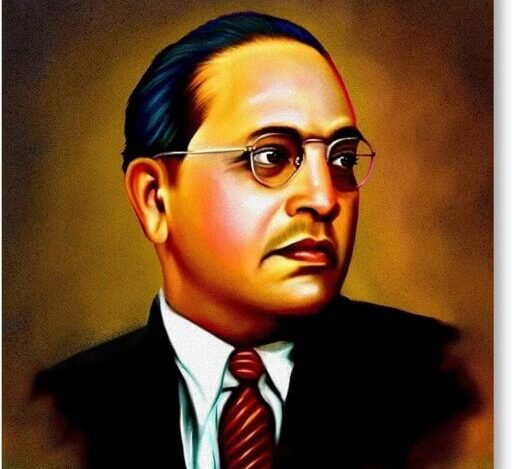
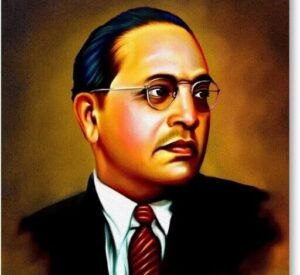
According to Wikipedia, Baloo and Ambedkar first met in the 1910s, and were close friends, admirers and supporters of each other’s activities for the benefit of the oppressed classes, and worked to improve their condition (The Better India; Governance Now). We have written about other aspects of Ambedkar’s life in our biography.
Later, they also came to be on opposite sides. Baloo was influenced by Gandhi. In 1932 Baloo signed the Rajah-Moonje Pact, and was against the demands of the depressed classes for separate electorates, and thus was also against Ambedkar (Wikipedia). Our separate electorates page explains the issue. Baloo also said that the conversion of the depressed classes to other religions was ‘suicidal’ when Ambedkar wanted to become a Buddhist (Wikipedia; our guide to Navayana Buddhism explains conversion). Baloo lost to Ambedkar from the Bombay Legislative Assembly in 1937 on a Congress ticket (Wikipedia). According to the Hindustan Times (via PressReader), Baloo was reluctant to contest against Ambedkar, and believed that he had no chance of winning.
Caste and Indian cricket after Baloo
The later part is heavily speculative, and the sources are mostly op-eds. A writer in Round Table India mentions the presence of caste in Indian cricket and says that in 2008 the BCCI endorsed a caste-based player selection policy. I was, however, unable to find any evidence to substantiate this claim (Round Table India, “Castes of Cricket in India”). A Kashmir Times op-ed mentions that only a handful of Dalits have played international cricket and that once the Union Minister Ramdas Athawale suggested the introduction of a quota for Dalit players (Kashmir Times, “Diversity Conundrum in Indian cricket”). Reliable data on the caste of Indian cricket players is unavailable. Guessing caste from names is also unreliable as we explain in our guide to caste surnames. Therefore this guide does not name the castes of any of the contemporary players.
His story matters because…
We include this example to illustrate caste discrimination occurring in public spaces. More information is available in Ambedkar Jayanti and Dalit History Month. For communities engaging in the practice of documenting their history, skills in blogging, AI and email marketing will play a pivotal role. The Ambedkarite Educational Program was designed to help with these skills.
Takeaway
Palwankar Baloo (1876-1955) was a left arm spinner from a Chamar family who took 179 first class wickets including 114 on the 1911 tour of England, faced separate tea, lunch and water arrangements and was denied the captaincy all due to caste. His brother Vithal captained the Hindus in 1923. Baloo idolized Ambedkar and was admired by him, but disagreed with him on the issue of separate electorates and conversion and lost to him in 1937. Several sources call him the first Dalit cricketer and Guha calls him the first great cricketer of India.
Frequently Asked Questions
Who was Palwankar Baloo?
A left-arm spin bowler (1876–1955) from a Dalit family who played for the Hindus in Bombay and toured England in 1911. Ramachandra Guha calls him the first great Indian cricketer.
Was Palwankar Baloo the first Dalit cricketer?
Many sources say so, but Guha notes that several Dalit players were part of Indian cricket in the late nineteenth century. “First” may mean the first to become widely known.
How did caste affect Palwankar Baloo’s career?
Wikipedia, citing Guha, says he was served tea in a disposable cup outside the pavilion, ate at a separate table in Pune and was denied the Hindu team’s captaincy in Bombay.
What was Palwankar Baloo’s link with Ambedkar?
They became close friends in the 1910s, and Ambedkar admired him. They later disagreed over separate electorates in 1932 and over conversion, and Baloo contested the 1937 election against Ambedkar and lost.
Are there Dalit cricketers in India today?
A few Dalits have played international cricket, according to one opinion piece. This guide names no current player’s caste, because no reliable data exists.
Understanding caste is step one. Building digital independence is step two.
Ambedkarite communities around the world are using AI tools, blogging and email marketing to document their experiences, challenge discrimination and build platforms that cannot be silenced.
The Ambedkarite Educational Program teaches exactly these skills: AI tools, website building, email marketing, blogging and Google AI. Lifetime access is ₹297 (~$4 USD). All future courses are included free.
Or join the Movement free to start learning today.
SOURCES
- Wikipedia, “Palwankar Baloo” (citing Guha, Kidambi and ThePrint)
- Wikipedia, “Vithal Palwankar”
- The Better India, “The ‘Untouchable’ Cricketer Who Challenged the British & His Fellow Countrymen,” 2018
- Hindustan Times, “India’s first Dalit cricketer Palwanker Baloo fought against caste barriers on the field and off it,” September 2018
- PressReader (Hindustan Times), “Outspinning the caste web”
- ThePrint, “Why India has forgotten its first Dalit cricketer,” 2018
- Swarajya, “India’s First International Dalit Cricketer And The Breaching Of The Caste Frontier”
- Governance Now, “‘What do they know of history who only history know?’” (on Guha’s work)
- Round Table India, “Castes of Cricket in India”
- Kashmir Times, “Diversity Conundrum in Indian cricket” (opinion)
- Ramachandra Guha, A Corner of a Foreign Field: The Indian History of a British Sport (Pan Macmillan, 2003), pp. 86–93 (please check)