
Caste surnames are assumed to be last names that reveal one’s caste in parts of South Asia. While surnames may reveal caste, the relationship is not as strong as most assume. Names can reveal caste to an employer, a landlord or a classmate. Some change their surnames, while others find that their name is guessed wrongly. This guide explains the relationship of names and caste, why the relationship is unreliable, what research shows about the role of surnames in hiring and why people change or hide their surnames. This guide does not describe surnames associated with each caste, as that may help others infer people’s caste.
Can a last name reveal caste?
In India, surnames generally reflect a caste, a lineage or a family background (Caste.org.in, “Caste, Gotra and Surname”). The relationship is described as probabilistic. Some surnames point to a single caste, while many others encompass several (NEN, “Find Caste By Surname”). Our guide on who Dalits are, describes the community that suffers the most due to caste-revealing names.
Caste and surnames: the relationship is unreliable
Researchers have to consider many things when dealing with caste. A study of elite hiring states it is unlikely that caste is known when applications are first read due to large regional variation in last names and migration (Making the Elite: Top Jobs, Disparities, and Solutions, arXiv). This study cites the Anthropological Survey of India, 2009, to say that surnames like Singh, Sinha, Verma, Chaudhary, Mishra and Das are shared across castes (arXiv).
With names, there are region-wise differences. A political economy paper states that North India follows a hereditary surname system, while South India follows an old system of using a father’s given name and a village reference, and both system changes with every generation, making surname identification unreliable (arXiv, “Political Power-Sharing, Firm Entry, and Economic Growth”). Further, it is mainly in the case of Hindus that surnames represent caste (arXiv). Court cases in India have also shown that a surname is not enough on its own to determine someone’s caste (Caste.org.in).
Caste and religion
Like with religion, there are differences in last names based on region. Sikh reformers promoted the shared last names of Singh and Kaur to reduce caste based prejudice, since a last name often reflects caste (Wikipedia, “Kaur”). In our post on caste in the Sikh community, we show how caste still exists there.
What the research has to say about hiring
The best known study is a field experiment conducted by Sukhadeo Thorat and Paul Attewell in 2007. They sent a set of job applications to prospective employers who advertised in English language newspapers. In each set, one application bore an upper-caste Hindu name, one bore a Muslim name, and one bore a distinctively Dalit name. (Thorat and Attewell, Economic and Political Weekly, 42 (41), ‘The Legacy of Social Exclusion’).
Their results showed that on average, job applicants with a Dalit or Muslim name were called for interviews less than applicants with an upper-caste name (Thorat and Attewell). Another article that synthesizes the study states that applicants with Dalit names were called back for interviews about a third of the times that applicants with upper-caste names were called back (The India Forum, ‘Algorithms Don’t Need Your Surname to Guess Your Caste’). Since this is a secondary source, please check the primary source for the precise number. One of the summaries of the study says that within hiring processes, rigid procedures that constrain the hiring manager’s discretion could potentially mitigate discrimination (Scribd summary of Thorat and Attewell). Our article on caste discrimination at work mentions a few strategies that employers can implement to eliminate or address workplace caste discrimination.
Why do people change surnames?
One study focused on urban Gujarat, and found that in a globalizing city, the surname becomes the most important identifier of caste, and therefore becomes the main source of discrimination (Transacting Caste in Modern Times, Research Gate). The study notes that the use of a surname that reveals one’s caste can hinder access to education, jobs and other employment opportunities, and that some Dalits change their surname to reduce the risk of discrimination, including adopting a name like Patel, (Transacting Caste in Modern Times, Research Gate). The study states that such moves carry a risk of being rejected by the community, (Transacting Caste in Modern Times, Research Gate).
Changing one’s surname is not easy. One author notes the suggestion of adopting a caste-neutral surname like Kumar, does not solve the core of the problem, (Caste.org.in). The study of Gujarat explains that members of the community who change their surname may still face discrimination in the future when their children grow up, (Transacting Caste in Modern Times).
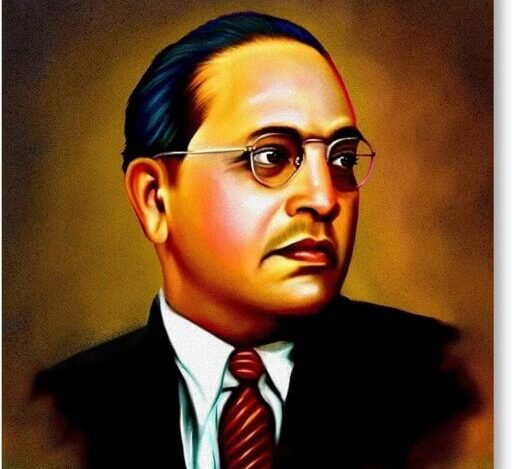
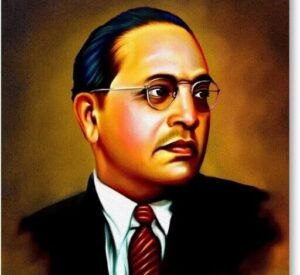
Ambedkar’s name has an interesting background. One reference website states he was born with a surname taken from his ancestral village, and adopted the name of a teacher who was sympathetic to him, (Name FYI Indian Surnames and Caste System). Please see the log as I found this reference in one weak source. Our Biography of Dr. B.R. Ambedkar covers his life.
Names and castes abroad
There are many examples of caste-based surname changes outside of India as well. A student from California State University, Sacramento, changed her surname on campus to hide her caste because she was afraid that using her real last name would reveal her caste, according to our article on caste on campus. Yashica Dutt, in her memoir, writes about how she hid her caste for many years, and we wrote about it here.
The AI example
In 2023, the researcher Dhiraj Singha gave an example of how the AI system ChatGPT, when asked to write an academic cover letter for him, replaced his surname Singha with Sharma. The system, according to the article, assumed a last name associated with the dominant castes in the Indian academia. We have written about this example of caste bias in AI, here.
This means for employers and schools
A last name is a weak signal, but people act on it and that’s where it can become problematic. Employers can help minimize this by implementing structured hiring, along with being explicit in policy that caste is covered (as outlined in our workplace guide). (For communities looking to document their own experiences, skills with blogging and email marketing have been vital. The Ambedkarite Educational Program is exactly that.)
Takeaway
Caste surnames are a probabilistic and an unreliable signal, as many surnames are shared across castes and naming conventions vary across regions and religions. People will act on these signals. A 2007 field experiment showed that applicants with Dalit or Muslim names received fewer interview calls than other, equally qualified, applicants, with high-caste names. Many Dalits in Gujarat share the experience of changing their surname to avoid caste-based discrimination. Name changes are costly and don’t always solve the problem. A name does not prove someone’s caste and therefore should not be treated as such.
Frequently Asked Questions
Can you tell someone’s caste from their surname?
Not reliably. Some surnames are associated with particular castes, but many are shared across castes, and naming rules differ by region and religion. Courts have said a surname alone is not enough to decide caste.
Why do some people change their surname?
Because a caste-revealing surname can invite prejudice in housing, jobs and education. A study of urban Gujarat found that some Dalits change their surnames for this reason, though doing so carries risks.
What did the 2007 job-application study find?
Thorat and Attewell sent matched applications with Dalit, Muslim and upper-caste Hindu names. Applicants with Dalit or Muslim names received fewer interview calls.
Do AI tools guess caste from names?
One researcher reported that ChatGPT changed his surname from Singha to Sharma in a cover letter. Our caste bias in AI post covers more research.
Why does this post not list surnames by caste?
Because such a list could be used to guess other people’s caste, and the link between surnames and caste is unreliable.
Understanding caste is step one. Building digital independence is step two.
Ambedkarite communities around the world are using AI tools, blogging and email marketing to document their experiences, challenge discrimination and build platforms that cannot be silenced.
The Ambedkarite Educational Program teaches exactly these skills: AI tools, website building, email marketing, blogging and Google AI. Lifetime access is ₹297 (~$4 USD). All future courses are included free.
Or join the Movement free to start learning today.
SOURCES
- Economic and Political Weekly, Sukhadeo Thorat and Paul Attewell, “The Legacy of Social Exclusion,” 42(41), 2007 (ResearchGate listing)
- The India Forum, “Algorithms Don’t Need Your Surname to Guess Your Caste. That’s a Problem”
- ResearchGate, “Transacting Caste in Modern Times: Changing Social Identity through Surnames in Urban Gujarat”
- arXiv, “Making the Elite: Top Jobs, Disparities, and Solutions”
- arXiv, “Political Power-Sharing, Firm Entry, and Economic Growth”
- Caste.org.in, “Caste, Gotra and Surname”
- Wikipedia, “Kaur”
- NameFYI, “Indian Surnames and the Caste System”
- NEN (WF Global), “Find Caste By Surname: India’s Hidden Map”
- Scribd, summary of Thorat and Attewell