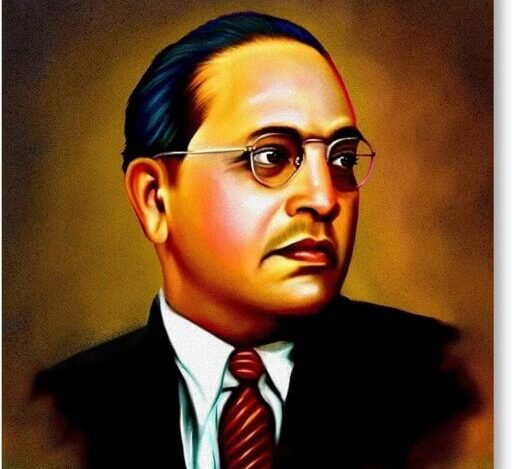
Ramabai Ambedkar (nee Ramabai Dheetre) (about date of birth; no consensus; died May 27, 1935) was the first wife of B.R. Ambedkar (1891-1956), a renowned Indian social reformer, economist, jurist, and politician, and was married to him for 29 years (1905 – 1935). This article gives a short biography of Ramabai, based on published works, her early life, her marriage, her children, her death, her memorial note, and her posthumous recognition. It reports the discrepancies in published works. Our article on B.R. Ambedkar covers his life.
Ramabai Ambedkar biography
Born in poverty, Ramabai was the daughter of Bhiku Dhotre (Valangkar) and Rukmini, and her mother died when she was very young. Ramabai’s father and uncle migrated to Bombay (now Mumbai) along with Ramabai and her siblings after Bhiku’s death. The family settled in the Byculla market area of Bombay. The year of Ramabai’s birth is variously reported as 1896/7, 1898 (Feminism In India; Ambedkarite Today), and 1899 (Biography Wiki). Bhiku earned his living by transporting fish baskets from the Dabhol market to Bombay (Biography Wiki, Free Press Journal). Ramabai suffered physical and mental poverty due to the untimely death of her mother (Feminism In India).
A. Ramabai Ambedkar: the marriage
On April 4, 1906, at the age of nine, Ramabai married Bhimrao Ambedkar in Byculla vegetable market, Mumbai (Wikipedia, Free Press Journal). According to Wikipedia, she was nine and Bhimrao was fifteen at the time of the marriage, which was an infant marriage, common during those times. Ramabai addressed Bhimrao as Saheb and he addressed her as Ramu (Free Press Journal). Feminism in India’s profile describes the relationship as of equal respect. For more on Ambedkar’s work regarding the legal status of women, refer to Ambedkar’s work regarding the Hindu Code Bill.
B. Family and children
During her marriage of 29 years, Ramabai bore Bhimrao five children. Yashwant, Gangadhar, Ramesh, Indu and Rajratna (Wikipedia). Of the five children, Yashwant was the only one to attain adulthood (Wikipedia, Free Press Journal). Free Press Journal mentions that Ramabai was anxious about Yashwant’s health, while ensuring nothing diverted Bhimrao from his studies and work. For more on Bhimrao’s studies during this period, please refer our guides.
C. Ramabai Ambedkar’s death (1935)
Ramabai lived in Bombay (now Mumbai) and departed this world on May 27, 1935, after a long illness, at Hindu Colony, Rajgruha (Wikipedia, Free Press Journal). At the time of Ramabai’s death in 1935, Bhimrao was very active and central to the politics of India (Guidelines to Poona Pact, guidelines to the Annihilation of Caste).
Dedication of Thoughts on Pakistan
Ambedkar dedicated his 1941 book Thoughts on Pakistan to Ramabai (Wikipedia). One profile states that he did this to thank her for her “goodness of heart” and “nobility of mind” (Feminism in India). I have not read Ambedkar’s full dedication, so my apologies for any abbreviation. See the log for the original phrase. Our article on what is Hindutva contains more on a famous passage from the book.
Ambedkar’s later marriage
Ambedkar married Savita Ambedkar (née Sharada Kabir) on April 15, 1948 (Wikipedia, “Savita Ambedkar”). According to Wikipedia, they both converted to Buddhism in 1956 (Wikipedia). After the death of Ramabai, it is said that Ambedkar decided to not marry again (Wikipedia, “Savita Ambedkar”).
Remembrances of Ramabai Ambedkar
Prakash Jadhav’s 2011 Marathi film Ramabai Bhimrao Ambedkar focuses on her life, with Nisha Parulekar in the title role (Wikipedia, “Ramabai Ambedkar”). Several places in India have been named after her (Free Press Journal). May 27 is observed as her death anniversary (Free Press Journal). Our article on Dalit women covers other related issues on Caste and Gender. Ramabai helps us see how the Caste movement was significantly influenced by people who are not mentioned in the textbooks. Her biography and many others like her can be written by people interested to take up the task online and for free, as taught by the Ambedkarite Educational Program (AEP). The AEP also offers online courses on website development, blogging, and electronic-mail marketing for ₹297 (~$4) (AEP, “Ambedkarite Educational Program”). Anyone can join the Program and the Movement.
(Ambedkarageethi)
Takeaway
Ramabai Ambedkar was born in 1897 or 1898 (depending on the source) and was around 9 years old when her mother arranged for her to marry Ambedkar, who was 15 years old at the time and later became known as B.R. Ambedkar. She had five children, only one of whom survived childhood (Yashwant). She passed away on May 27, 1935 and Ambedkar published Thoughts on Pakistan in 1941, dedicating the publication to her. There is a film and various other memorials dedicated to her. All sources agree on the facts and differ on her year of birth.
Frequently Asked Questions
Who is Ramabai Ambedkar?
The first wife of B.R. Ambedkar. Born to a poor family, she was arranged to be married at the age of 9.
What is the date of the death of Ramabai Ambedkar?
27th May, 1935, Rajgruha, Bombay.
How many children were born to Ramabai Ambedkar?
Five; Gangadhar, Indu, Ramesh, Rajratna and Yashwant.
What is the name of the book Ambedkar dedicated to Ramabai?
Thoughts on Pakistan which he published in 1941.
Who is the second wife of Ambedkar?
Savita Ambedkar (b. 1913) was born Sharada Kabir. Married him on 15th April, 1948.
SOURCES
- Wikipedia, “Ramabai Ambedkar”
- Wikipedia, “B. R. Ambedkar”
- Wikipedia, “Savita Ambedkar”
- Feminism in India, “Ramabai Ambedkar: A Pioneer In Her Own Right,” February 2020
- Free Press Journal, “Ramabai Ambedkar Death Anniversary: Lesser-known facts about B.R. Ambedkar’s wife”
- Ambedkarite Today, “About Ramabai (1898–1935): Biography and Life History of Mata Ramabai”
- Dhananjay Keer, Dr. Ambedkar: Life and Mission (please add the page references)
- B.R. Ambedkar, Thoughts on Pakistan (1941), dedication, in BAWS Vol. 8 (please add the reference)