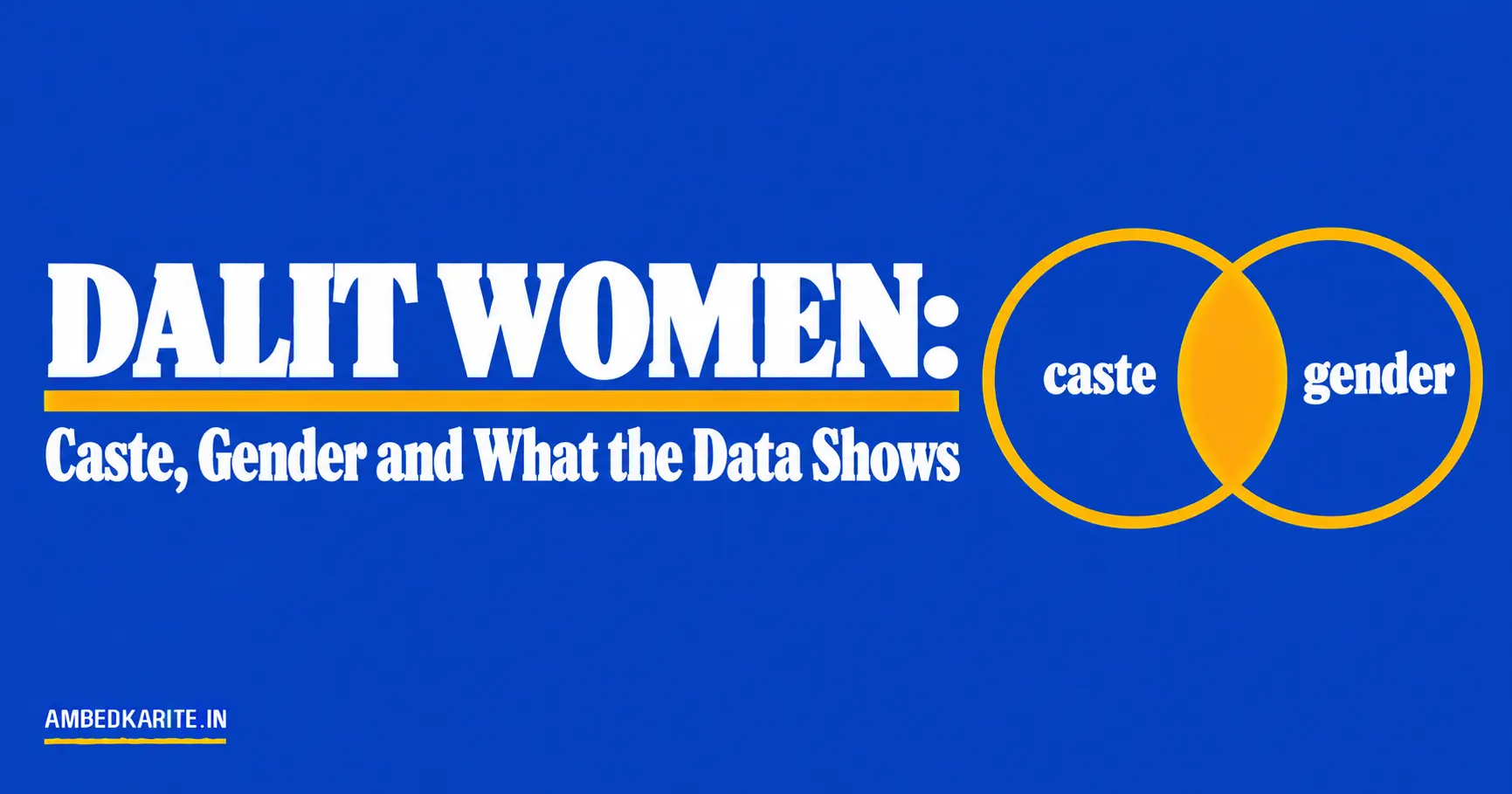
As both women and members of the Dalit community, Dalit women face discrimination on two fronts and CEDAW states this is intersectional discrimination. This booklet provides an explanation of this concept, the concern CEDAW has expressed about Dalit women, the data (both official and research based) on health and education, and other crimes, where this data is either nonexistent or incomplete, and where there are gaps. The focus is on policy and rights, and uses official data, statistics, and findings. It describes no specific incidents.
What is caste and gender discrimination?
Intersectional discrimination signifies that a person experiences discrimination in more than one way, and the effect of the discrimination is greater than the sum of the effects of discrimination in each of the ways. CEDAW expressed its concern on multiple counts in 2014 over the absence of a law to address all forms of discrimination, and urged India to adopt a legal framework to protect women against all forms of multiple and intersectional discrimination. Our other booklets provide more information on who Dalits are, and the concept of Casteism.
What UN bodies have said about Dalit women
CEDAW 2014: The Committee noted with concern the recent escalation of caste-based violence against women and girls, including sexual violence, and the failure of key State officials to address the situation and acknowledge the existence of sexual violence. The poor implementation of the (Prevention of) Atrocities Act, and the impunity of perpetrators of caste-based violence. (CEDAW/C/IND/CO/4-5, 2014).
CERD (2007)
The UN Committee on the Elimination of Racial Discrimination (CERD) noted its concern regarding the increasing numbers of allegations of sexual violence against Dalit women by members of the higher castes and recommended states to take action to eliminate multiple forms of discrimination against women including caste-based discrimination (IDSN, “UN and Dalit Women”, citing CERD).
Special Rapporteurs on violence against women
In 2009, Yakin Ertürk, in her report, mentioned 30 cases of violence against Dalit women in India (IDSN). In April and May 2013, Rashida Manjoo, in her visit to India, documented the exclusion and marginalisation of Dalit women and girls and the reality of numerous violations of their rights (IDSN, quoting Manjoo).
These are the observations made by the UN Committees and Experts. The Government of India has its own view on these and may be found in the log.
Dalit women’s health and life expectancy
The average Dalit woman in India dies 14.6 years earlier than the average Indian woman, according to a 2018 UN Women report. Intersecting discrimination, especially the lack of adequate sanitation and healthcare, contributes to her early death (IDSN, “UN Report: Average Dalit woman dies 14.6 years younger,” on UN Women, Turning promises into action). Another source estimates the average age of death of Dalit women to be 39.5 years, which is 14.6 years less than the average age of death of 54.1 years of upper-caste women (Global Justice: Theory Practice Rhetoric, 2015). The study also mentions that in similar situations, Dalit women have a life expectancy that is about 11 years less than others (Global Justice).
Education and literacy
The average literacy rate of Scheduled Caste women in India is about 57 percent, according to UN Women (IDSN, on UN Women). The 2011 Census put Dalit literacy at 66 percent (AIDMAM, “Dalit Women’s Long Road to Justice,” 2026). An academic source puts the literacy rate of Dalit women at 55.9 percent in 2009-10 (Global Justice). These low literacy rates are partially due to systemic discrimination against Dalit women and lack of adequate school facilities, which force girls to drop out (AIDMAM). For more information on quotas for Dalits in India, see our article on caste reservation in India.
What the numbers show about crimes against Dalit women
The National Crime Records Bureau (NCRB) of India records crimes against scheduled castes, and some crimes against women. The numbers represent the officially reported cases.
A 2023 analysis of data by AIDMAM (citing NCRB data from 2015 to 2023) points out that the number of registered crimes against Dalit women and girls increased by 49% from 2015 to 2023, and that 14.8% of all crimes against scheduled castes were against women. It also states that from 2015 to 2023, 66,199 crimes against Dalit women and girls were reported. It further states that, in 2023, on average, 12 Dalit women and girls were reported to have been raped every day, and that three out of ten of these victims were minors (AIDMAM).
In a joint submission to the United Nations Racial Discrimination Committee, it is stated that the NCRB reported 4,262 rapes of Scheduled Caste women and girls in 2024 (Joint stakeholder report to CERD, 2025).
These numbers are from analysis of official data. An earlier submission to the UN states that, according to NCRB data, the number of crimes against Dalit women reported in a given year can go up, as more cases may be reported in a given year (UPR India 4th cycle civil society report, 2022). Read our fact check to learn more about whether untouchability exists today.
The law and the gaps
The Atrocities Act is the principal law against atrocity crimes committed against persons based on their membership of a Scheduled Caste, and as explained in our page on the Prevention of Atrocities Act, its implementation has not been effectively addressed (CEDAW, 2014). The Committee also urged India to enact comprehensive legislation against discrimination based on intersectional status, including caste (CEDAW). Our post on the Hindu Code Bill covers Dr. Ambedkar’s efforts on legal disabilities facing women.
Dalit feminism
Caste and gender are intertwined, and that mainstream women’s movements have not adequately addressed caste, is acknowledged by Dalit feminists. Our reviews of Thenmozhi Soundararajan’s The Trauma of Caste, and Yashica Dutt’s Coming Out as Dalit are of works authored by Dalit women. (For communities documenting their own experiences, skills in blogging, AI tools and email marketing are essential. The AEP is designed for precisely these skills.)
Takeaway
UN bodies have recognized that Dalit women face multiple discrimination and that Dalit women face higher levels of violence than the average woman in India. Dalit women literacy rates stand at 57%. According to an analysis of data from the NCRB, crimes against Dalit women and girls increased by 49% between 2015 and 2023. CEDAW has called on India to step up efforts to implement the Atrocities Act, and enact a broad comprehensive anti-discrimination law.
Frequently Asked Questions
What do you mean by double discrimination against Dalit women?
It is the intersecting discrimination of Dalit women as women and as members of the Dalit Caste. CEDAW (in 2014) urged India to take measures to eliminate all forms of multiple discrimination faced by women.
What is the gap in the average life expectancy of Dalit women?
According to UN Women, Dalit women die on average 14.6 years before other women in India. In some studies, it is shown that the average Dalit woman dies 14.6 years before upper caste women.
What do various UN bodies say about Dalit Women?
In 2007, CERD expressed concern about reports of sexual violence on Dalit women. In 2014, CEDAW expressed concern about the widespread nature of caste-based violence and the lack of adequate implementation of the provisions of the Prevention of Atrocities Act.
What does the NCRB say about crimes against Dalit Women?
One analysis says reported crimes against Dalit women and girls rose to 8,529 in 2023 from 5,713 in 2015. NCRB data for 2020 shows there were 7,189 reported crimes against women and girls who fell in the ‘other’ and ‘not identified’ categories.
Is there a specific law to protect Dalit Women?
The Atrocities Act covers caste-based offences. CEDAW says its implementation has been poor and has urged a comprehensive anti-discrimination law.
Understanding caste is step one. Building digital independence is step two.
Ambedkarite communities around the world are using AI tools, blogging and email marketing to document their experiences, challenge discrimination and build platforms that cannot be silenced.
The Ambedkarite Educational Program teaches exactly these skills: AI tools, website building, email marketing, blogging and Google AI. Lifetime access is ₹297 (~$4 USD). All future courses are included free.
Or join the Movement free to start learning today.
SOURCES
- CEDAW, concluding observations on the combined fourth and fifth periodic reports of India, CEDAW/C/IND/CO/4-5, 2014
- IDSN, “UN & Dalit women”
- IDSN, “UN Report: Average Dalit woman dies 14.6 years younger than women from dominant castes” (on UN Women, Turning promises into action)
- IDSN / AIDMAM, “Dalit Women’s Long Road to Justice,” 2026
- OHCHR, joint stakeholder report to the CERD Committee on India
- IDSN / UPR, UPR India 4th cycle civil society joint submission, 2022
- IDSN, “Dalit Women” briefing paper
- Global Justice: Theory Practice Rhetoric, “Dalit Women in India,” 8(1), 2015