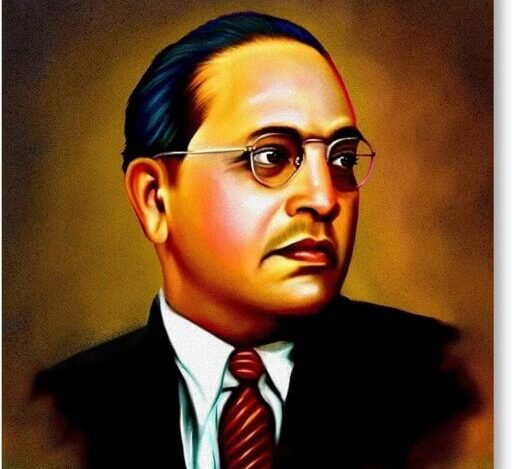
Poster-style graphic on Bhide Wada and the Phules: British stooges myth versus the record | भिडे वाडा और फुले दंपति पर नेवी-ब्लू पोस्टर स्टाइल ग्राफिक: अंग्रेज़ों के एजेंट वाला मिथ बनाम रिकॉर्ड
This little known fact destroys the stooge argument about Bhide Wada
Bhide Wada is the location of the Phule’s girls school. This is also the location where Phule’s British agent charge begins. Keshab Phule has published critiques of the British and praised them in print. However, the same book contains an essay titled “Slavery (in the Civilised British Government)” (Gulamgiri, Govt. of Maharashtra, 1991, title page). We will examine both.
We have instances where the dates do not align. Phadke’s (Y.D.) outline in the Gulamgiri of the Maharashtra government, states that Phule opened the girls’ school in 1848 (Gulamgiri, Govt of Maharashtra, 1991, p. 13). Below is a table with both dates.
They opened the school with the hope that educating girls would bring about change. The movement to abolish untouchability was met with strong opposition. As a result, no teacher was willing to teach in a school which admitted untouchables (Gulamgiri, Govt of Maharashtra, 1991, p.13). Therefore, Phule asked his wife to teach (Gulamgiri, Govt of Maharashtra, 1991, p.13).
On her way to school, members of the community threw stones and brickbats (Gulamgiri, Govt of Maharashtra, 1991, p. 13). Because of their work, Phule’s father asked him to abandon his goal and leave the house (Gulamgiri, Govt of Maharashtra, 1991, p. 13).
The school closed for some time due to financial issues. It was reopened with financial assistance from Phule’s Brahmin friends Govande and Valvekar (1991, p. 13, Gulamgiri). In the year 2006, the Pune Municipal Corporation passed a resolution to honor the national memorial to the site of Bhide Wada (The Leaflet, 2023). Judicial process allowed, and the structure was finally razed in December, 2023 (Punekar News, 2023).
Controversy Surrounding Establishment of Savitribai Phule School 1848
This is a record of events relating to Bhide Wada. When records differ, I have noted both.
Claim
What the source says
Status
School opened on 1 January 1848
Ministry of I&B post (2023)
School opened in August 1848
Phadke sketch (1991)
A girls’ school with 8 girls opened on 3 July 1851
Phadke sketch (1991)
Single Source
School restarted with Brahmin friends
Phadke sketch (1991)
Single Source
Memorial Resolution 2006, School demolished in 2023
The Leaflet (2023), Punekar News (2023)
The strongest case is made by Phule. In the Introduction to Gulamgiri, he wrote, “We are much beholden to the British rulers” (1991, p. 29) and said British rule liberated Shudras from bodily servitude (1991, p. 29) and that the British rule prevented the Bhats from oppressing the Shudras (1991, p. 29).
More. In 1841, Jyotirao Phule joined the Scottish Mission’s High School in Poona (Gulamgiri, Govt. of Maharashtra, 1991, p. 12). Members of his Samaj took a pledge of loyalty to the British Empire (Gulamgiri, Govt. of Maharashtra, 1991, p. 14). Critics of Phule scoffed that he was just a mouthpiece for the Christian missionaries (Gulamgiri, Govt. of Maharashtra, 1991, p. 13). Therefore, while some have questioned his loyalty to the British, others have stated he was just repeating the principles of the missionaries.
Bhide, Wada, and the Phules: where the stooge claim falls apart
There are several things to consider in Phule’s case. First is the book’s title and dedication. The title of the book places the concept of slavery under the British Government’s system of Brahmanical slavery (Gulamgiri, Govt. of Maharashtra, 1991, title page).
In the dedication, he expressed his wish that Phule’s countrymen take a cue from the people of the United States and follow their struggle against slavery (Gulamgiri, Govt. of Maharashtra, 1991, p. 3).
Second, in the same Introduction, he wrote that the British Government did not provide education to the masses and thus their bondage continued (Gulamgiri, Govt. of Maharashtra, 1991, p. 30).
Again in the Preface, he stated the high-class education policy of the Government resulted in almost complete monopoly of higher government positions by the Brahmins (Gulamgiri, Govt. of Maharashtra, 1991, p. 23).
Finally, he wrote that because of the sympathy of the European officers toward the Brahmins, they often tended to see things from the viewpoint of Brahmanical superiority (Gulamgiri, Govt. of Maharashtra, 1991, p. 21).
In addition to what he published, he took actions against many officials. In 1880 he was the only one of 32 nominated members of the Poona Municipality to oppose spending Rs 1,000 to honor Lord Lytton (Gulamgiri, Govt of Maharashtra 1991, p. 16).
In 1888 he went to the extent of dressing up as a peasant to speak out to the Duke of Connaught and request him to visit areas inhabited by untouchables (if any) and other rural areas and also to promote education of the poor and downtrodden (Gulamgiri, Govt of Maharashtra 1991, p. 16).
In 1882 also, he spoke to the Hunter Commission that the Government excessively spent revenue on higher classes education (Gulamgiri, Govt of Maharashtra 1991, p. 13).
4. Who did Phule target?
As noted by his translator, Phule made his sharpest attacks on priestly class and their officials (Gulamgiri, Govt of Maharashtra 1991, p. 10). His two other Brahmin friends too stood with him (Gulamgiri, Govt of Maharashtra 1991, p. 13). Based on the materials checked, it was more of constructive criticism than an order.
Phule on the Peshwa Era: A Reference Point for the Caste Debate
There are other references to Phule in our Peshwa case. In the introduction to ‘Gulamgiri’ (1873), he states that a Shudra had to carry an earthen pot on his neck, while passing through a Brahmin locality (Gulamgiri, Govt of Maharashtra 1991, pp. 29). In the preface he states that his Shudra brethren suffered even more than American slaves in the times of the Peshwas (Gulamgiri, Govt of Maharashtra 1991, pp. 20).
As ‘Gulamgiri’ was published in (1873), sixty three years before ‘Annihilation of Caste’, the rule of earthen pots is not a 20th century rule. However, a book can not be compared to a Peshwa’s decree, so this evidence remains contested.
Revival of the Myth of Bhide’s Wada Stooge
This myth is revived by quoting the preface of ‘Gulamgiri’. The quote is from a thank you note, and therefore seems legitimate. However, the rest of the book, and especially his (Phule’s) support to Lytton, remain neglected (Gulamgiri, Govt of Maharashtra 1991, pp. 16, 29).
It provides employment. If the Phules were stooges, their school, their book and their Satyashodhak Samaj can be ignored. Critics have adopted this line of argument with regard to Phule during his lifetime (Gulamgiri, Govt of Maharashtra 1991, p. 13).
A one line statement is easy to post and full page references are rare. This is what the Ambedkar-ites Educational Programme attempts to accomplish: reference and referencing skills, among other things. For the British part of the question, see Dalits and the British.
Phule thanked the British for their role in abolishing slavery, and wrote to the government on the need to provide education (Gulamgiri, Govt of Maharashtra 1991, pp. 16, 29). He wrote other letters criticizing the government for bestowing titles on dignitaries (Gulamgiri, Govt of Maharashtra 1991, p. 37). He remained opposed to the government’s decision to honor the Governor General of India and he was actually the first to move an adjournment motion against the decision (Gulamgiri, Govt of Maharashtra 1991, p. 67).
Frequently Asked Questions
What happened at Bhide Wada? The Government of India says the Phules started India’s first girls’ school there on 1 January 1848 (Ministry of I&B on X, 2023). The Government of Maharashtra edition of Gulamgiri gives August 1848 (Gulamgiri, Govt of Maharashtra 1991, p. 13).
Were the Phules British agents? The sources checked here show praise and pressure, not orders. Phule thanked the British for ending physical slavery (Gulamgiri, Govt of Maharashtra 1991, p. 29). He also criticised their education policy and voted against honouring Lord Lytton (Gulamgiri, Govt of Maharashtra 1991, pp. 16, 30).
What does the title of Gulamgiri mean? The full title is Slavery (in the Civilised British Government under the cloak of Brahmanism) (Gulamgiri, Govt of Maharashtra 1991, title page). The book is dedicated to the people of the United States for their fight against Negro slavery (Gulamgiri, Govt of Maharashtra 1991, p. 3).
When was Gulamgiri published? It was published in Marathi in 1873 (Gulamgiri, Govt of Maharashtra 1991, p. 6).
Is Bhide Wada a national memorial now? The Pune Municipal Corporation resolved to make it one in 2006, and courts cleared the way before the structure was razed in December 2023 (The Leaflet, 2023; Punekar News, 2023). Check the PMC for the current status.