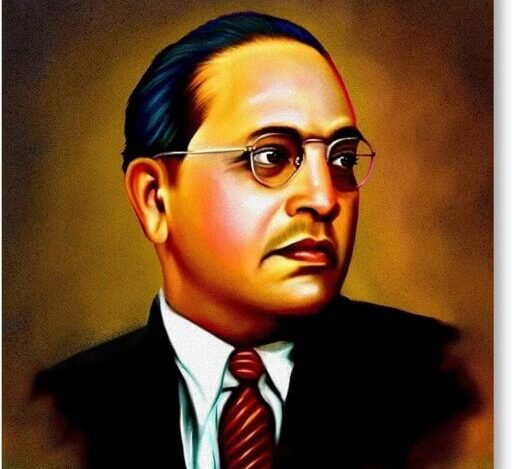
The Mahad Satyagraha began on March 20, 1927, when a group led by B.R. Ambedkar, then a member of the Indian Social Reform Association, organized a movement to allow “untouchables” to access public water tanks including the Chavdar Tank in the town of Mahad, in the Raigad district of Maharashtra (Wikipedia, “Mahad Satyagraha”; Vajiram and Ravi, “Mahad Satyagraha, Background, Events and Legacy”). This paper provides details of the march and related events of 1927 and gives an account of the 1937 court case, explains the significance of March 20th and provides references of sources that provide details of the events of that day. Our page “The Life of Bhimrao Ambedkar” provides a synopsis of his life and “Who are the Dalits?” provides additional information on Dalits.
Background: the Bole Resolution and Mahad municipality
The Bombay Legislative Council passed a resolution in August 1923, proposed by S.K. Bole, providing access to public facilities to the Depressed Classes. The resolution was adopted and reaffirmed in 1926. The Bombay government adopted the resolution and local bodies, including the Mahad municipality, also adopted the resolution. The Mahad council adopted the resolution in January 1924. The Domimant-caste groups, however, obstructed implementation and untouchables, thus, continued to be denied access to the Chavdar Tank. (ClearIAS, “Mahad Satyagraha (1927)”).
Bhishikt Hitakarin Sabha
Bhishikt Hitakarin Sabha (B.H.S.) is the Marathi name of the ‘Outcastes’ Welfare Association’ which was established by Dr. Ambedkar in 1924 (VisionIAS, ‘Mahad Satyagraha’). According to the available sources, some of the key organizers of the satyagraha were S.K. Bole, Surendranath Tipnis, Subhedar Savadkar, Anantrao Chitre and Ramachandra Babaji More (VisionIAS). In addition, R.B. More was also an organizer of the Mahad Satyagraha (Wikipedia, ‘R. B. More’). A separate essay in this website covers the burning of Manusmriti by Dr. Ambedkar.
The moving incident of Mahad Satyagraha, 1927
Between 19th and 20th of March, 1927, the Kolaba District Depressed Classes Conference was held at Mahad (VisionIAS). On the 20th of March, 1927, Dr. Ambedkar broke the centuries-old tradition of lower class people by going to the Chavdar Tank with a procession of his followers, and asserted their right to drink water from the tank (Drishti IAS; Shankar IAS). The procession comprised of thousands of Dalits (Shankar IAS, Clear IAS). In satyagraha, Dr. Ambedkar also asserted the rights of Dalit women (Wikipedia, ‘R.B. More’). For detail, see separate essay on Dalit Women.
What happened after December 1927?
One essay states that after the incident with the tank, caste Hindus “purified” the tank. According to the essay, this needs to be analyzed along with the protests (People Herald). The same essay states that Ambedkar was going to hold a second meeting in Mahad in December 1927, and gives a date range of December 26-27 (Wikipedia). It states that a court injunction granted to the upper castes hindered his plans (Drishti IAS; ClearIAS). Another public meeting was held by the Bahishkrit Hitakarini Sabha on July 3, 1927 in Bombay (People Herald). The accounts state that the burning of Manusmriti was performed on December 25, 1927 at the Mahad conference, and more information on this meeting can be found in our log.
1937 judgment
According to Drishti IAS and ClearIAS, the judgment was given in 1937 by the Bombay High Court, and it was determined that the tank was a public property and all communities had the right to use it. (Drishti IAS; ClearIAS). Other sources state December 1937 (Shankar IAS; Wikipedia) and March 1937 (VisionIAS). The essay states that the case to defend the tank was private was frivolous (People Herald). The legal case can be found on Indian Kanoon. I was unable to find the judgment and this is logged.
Social Empowerment Day
In India and the state of Maharashtra, March 20 is Social Empowerment Day to commemorate the Mahad Satyagraha (Wikipedia; Vajiram and Ravi). Wikipedia cites a 2003 notice from the Government of Maharashtra as the reason for its commemoration, and says that in 1940, Ambedkar held a rally in Mahad to mark the 14th anniversary of the satyagraha and declared it to be “Empowerment Day” (Wikipedia). 2026 will mark the 99th anniversary of the satyagraha (ClearIAS; Drishti IAS).
Mahad and the Constitution
The idea of liberty, equality and fraternity in the Constitution of India is related to the Mahad Satyagraha (Shankar IAS). The Constitution of India ended the practice of untouchability (our article on Article 17 of the Constitution). We have articles on the Prevention of Atrocities Act, on caste-based offenses, the temple entry movement and on the efforts to secure the right to enter places of worship, and on the debate between Gandhi and Ambedkar. The participants of the Mahad Satyagraha, conferences and publishing resolutions and records played a major role in their cause. Similar records of their activities can be kept online today. The Ambedkarite Educational Program shows the public how to use online tools such as blogging and web design for ₹297 (~$4 USD) and is free to join.
What the sources do not agree on
- When the order was issued by the municipal council. 1924 (Vajiram and Ravi) or 1926 (Shankar IAS).
- The approximate size of the protest. 2,500 (Shankar IAS) or “thousands” (ClearIAS).
- The second conference. Other sources claim December 25, 1927, while Wikipedia claims December 26-27, for the second conference.
- The court ruling. VisionIAS claims March 17, 1937, while the other sources claim December 1937.
- Who initiated the satyagraha. Various sources claim the Konkani Language meeting and the conference of the Kolaba District Depressed Classes.
Takeaway
The satyagraha was initiated by the Bole Resolution of 1923 and the Municipal resolution of 1924. The Municipal Resolutions were not implemented. The Municipality was also under the control of the British Government. On March 20, 1927, Ambedkar and the Dalits of Mahad took out a satyagraha and marched to Chavdar Tank to assert their right to take water from the Tank. The Bombay High Court, on March 20, 1937, delivered a historic judgment that the Tank was a Public Tank. The High Court also declared that Dalits have the right to take water from any Tank in Maharashtra. On March 20, 1927, the Courts also proclaimed that all Tanks in Maharashtra belonged to the Public and Dalits also had the right to take water from them.
FAQs
What was the Mahad Satyagraha?
A peaceful protest led by Ambedkar on 20 March 1927 in which thousands of Dalits marched to the Chavdar Tank to assert their right to use public water sources. They also famously asserted their right to drink water from public water sources by actually doing so.
What is the Chavdar Tank?
A public water body in Mahad in the Raigad district of Maharashtra. It is known as Chavdar Tale in Marathi. The Dalits were barred from using this public water body by the upper castes during that time.
What is the Bahishkrit Hitakarini Sabha?
An organization founded by Ambedkar in 1924 to take up the cause of the “outcastes” (Dalits) and work for their social uplift. This organization carried out the historic Satyagraha in Mahad in 1927.
Why is 20 March Social Empowerment Day?
This day marks the historic Satyagraha carried out by Ambedkar on 20 March 1927 for the drinking water rights of Dalits.
What did the High Court rule?
In 1937 the Bombay High Court ruled in favor of Dalits and declared the Chavdar Tank as a public tank which members of all communities of the society had the right to use.
SOURCES
- Wikipedia, “Mahad Satyagraha”
- Wikipedia, “Sitaram Keshav Bole”
- Wikipedia, “R. B. More”
- Vajiram and Ravi, “Mahad Satyagraha, Background, Events, Legacy”
- VisionIAS, “Mahad Satyagraha”
- Drishti IAS, “Mahad Satyagraha”
- ClearIAS, “Mahad Satyagraha (1927)”
- Shankar IAS, “Mahad Satyagraha”
- People Herald, “Mahad Satyagraha: The First Test of Indian Democracy”
- Dr. Babasaheb Ambedkar: Writings and Speeches, and Janata (1927) reports (please add references)
- Bombay High Court judgment on the Chavdar Tank, 1937 (please add a reference)