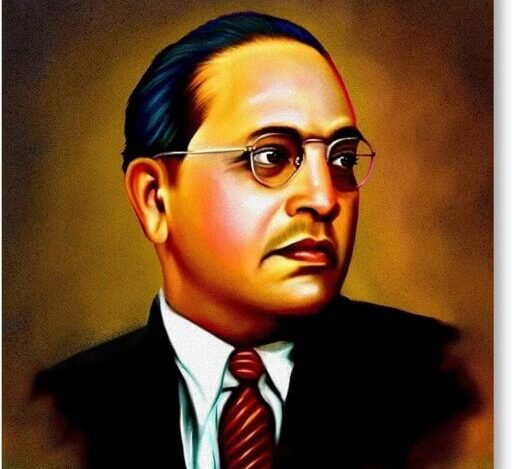

(1863-1941) was a Dalit social reformer in the princely state of Travancore in present day Kerala. He is famous for the Villuvandi Yatra of 1893. He also founded the Sadhu Jana Paripalana Sangham. He fought to end the exclusion of Dalits to schools. (Wikipedia, “Ayyankali”; Vajiram and Ravi, “Mahatma Ayyankali”). This paper presents a short biography of Ayyankali, based on published works. This includes his early years, 1893 protest, his first association, the school entry movement, his work in the Travancore legislative assembly and his legacy. Published works often vary in regard to dates. This paper presents the varying opinions. Our paper “Who are the Dalits” presents the meaning of the term Dalit.
Ayyankali biography: early years
Ayyankali was born on August 28, 1863, in Venganoor (now part of Thiruvananthapuram) in the princely state of Travancore to Ayyan and Mala. He was born into the Pulaya community which was then considered the lowest in the social order of Kerala. (Wikipedia, “Pulaya”). One of our sources states the Pulayas are a Scheduled Caste. One summary says his family owned land but that did not prevent his social and religious disabilities. He was prevented from using public roads and paths and prevented from educational and religious institutions. (Civilsdaily, “Mahatma Ayyankali (1863-1941)”). He is also known as the King of the Pulaya community and as Mahatma.
The 1893 Villuvandi Yatra
In 1893, Ayyankali defiantly rode in a villuvandi (bullock cart) on a road reserved for members of the upper castes of the then Malabar district, south India, dressed in the upper castes’ clothing. (Devika Panikar; Wikipedia) He was summarily thrown off the cart (Civilsdaily), and while accounts of the vatra differ (Arivinte Angadi, “History of Kerala”), some ascribe it to the defiance of upper castes’ social and cultural monopoly (Devika Panikar) and the constraints on the entry of members of the then low castes into certain social and religious areas, viz. access to public roads, and temples, educational institutions, places of worship, etc. It is pertinent to point out here that in 1925 Ayyankali led a march to Vaikom along with members of the Hindu Mahasabha to demand the removal of the social boycott on its members (see entry on Vaikom Satyagraha in this website). Our entry on the Temple Entry Movement gives details of this struggle.
Sadhu Jana Paripalana Sangham
Ayyankali later founded the Sadhu Jana Paripalana Sangham (SJPS) on 22 August 1907 at Kayamkulam (Wikipedia), though some accounts put the year at 1904 (Devika Panikar). The SJPS had numerous branches and focused on the educational, cultural and social needs of members, including the creation of awareness on members’ legal rights (Civilsdaily; Devika Panikar). In 1938, it was renamed the Pulaya Mahasabha (Arivinte Angadi). According to Nspire (“Ayyankali”), the SJPS was started in the gap between the Sree Narayana Dharma Paripalana Sangham (1938) and the Ezhava movement (1946). Our entry on Jyotirao Phule gives details of a similar movement in Maharashtra.
School entry and strike
According to Civilsdaily, Sahitya Aiyankali Karta demanded the right for Dalits to receive public school education. As a result, in 1907, the Travancore government issued an order to admit Dalits to all public schools. However, as reported by Civilsdaily and Vajiram and Ravi, public school officials refused implementation, and public school entry was granted only after 1910. It is reported that Ayyankali supported a 1908 school admission of a Dalit girl, which ended up in school arson. Ayyankali then initiated an agricultural strike, which resulted in refusal of landless Dalits to work in the fields until their children were allowed public school education. It is reported that Ayyankali supported the school children’s right to education and stated that if children are not taught, the fields of the community would be overrun by weeds. As stated in Arivinte Angadi, in 1907, Ayyankali was nominated to the Travancore assembly (Praja Sabha) by Sree Moolam Popular Assembly. Some sources (Civilsdaily) report that Ayyankali served for 28 consecutive years in the Travancore assembly. Ayyankali died in 1941 at the age of 77.
For more information on Ayyankali’s land rights and other articles, see our website.
Remembrance and the Ayyankali statue
A statue of Ayyankali was unveiled in 1980 by Indira Gandhi in Thiruvananthapuram (Vajiram and Ravi; Arivinte Angadi). Mahatma Gandhi called him the ‘Pulaya Raja’ (Janata Weekly, “Ayyankali: The First Revolutionary Voice against the Upper Castes in Kerala”). Another source describes P. Sanal Mohan as saying that Ayyankali was the most eminent Dalit leader in contemporary Kerala (Janata Weekly, Arivinte Angadi). People celebrate Ayyankali’s birthday (August 28) as Ayyankali Jayanti (Janata Weekly). This article also includes information about two other contemporary reformers (Periyar and Shahu Maharaj). The Dalit Unity of Ayyankali led the movement to educate Dalit children despite state obstruction, which inspired similar initiatives of their own time, and is still inspiring like the Ambedkarite Program which teaches online marketing and website designing for ₹297 (Janata Weekly, $4 USD). Movement members can register and access materials for free.
Disagreements in the source material
- There is a discrepancy about the year of the establishment of SJPS (1904 and 1907 in different sources).
- According to different sources, the strike occurred between 1907-1908, 1909, or is altogether undated. Reasons for the strike are also given in various accounts.
- It is unclear in which year Ayyankali was first elected to the Legislative Assembly (1910 or 1912).
- Different accounts provide details about the riots caused by the Villuvandi Yatra. Other accounts omit details about the riots.
Takeaway
Born August 28, 1863 and passed June 18, 1941, Ayyankali, a member of the Pulaya community, was the first Dalit Member of the Travancore legislative assembly. In 1893 he famously rode a bullock cart on a public road that was reserved for upper castes, a protest known as the Villuvandi Yatra. Along with his pioneering role in the abolition of the social disabilities practiced against Dalits in schools, he laid the foundation for the entry of Dalits to public roads, public schools and assemblies, by founding the Sadhu Jana Paripalana Sangham in 1907. The strike he led from 1907 to 1909 resulted in the removal of the word ‘Sadhu’ from his organization, and it was then called the Pulaya Mahasabha. Along with Gandhi, who referred to him as “Pulaya Raja”, Ayyankali is one of the prominent Dalit icons in India. August 28 is celebrated as Ayyankali Jayanti. A state funded statue was erected in his honor in 1980.
Frequently Asked Questions
Who was Ayyankali?
A Dalit social reformer who was an activist and politician in the state of Travancore from 1863-1941.
What was Villuvandi Yatra?
A protest in which Ayyankali rode on a public road that was reserved for upper castes. This public road was known as Villuvandi.
What was the Sadhu Jana Paripalana Sangham?
An association that Ayyankali founded in 1907 to remove social disabilities that Dalits faced, and to collect donations to build schools for Dalits. This association was later renamed the “Pulaya Mahasabha” in 1938.
Why is Ayyankali called Mahatma?
Ayyankali is referenced as ‘Mahatma’ Ayyankali by many.
Where is the Ayyankali statue?
There is a state funded statue in Thiruvananthapuram, which was built in 1980.
SOURCES
- Wikipedia, “Ayyankali”
- Wikipedia, “Pulaya”
- Vajiram and Ravi, “Mahatma Ayyankali, Biography, Contributions, Honors, Death”
- Civilsdaily, “[PIB] Mahatma Ayyankali (1863–1941)”
- Janata Weekly, “Ayyankali: The First Revolutionary Voice against the Upper Castes in Kerala”
- Devika Panikar, “Ayyankali’s Militancy”
- Arivinte Angadi, “History of Kerala: Ayyankali”
- Nspire (Ambedkar resource site), “Ayyan kali”
- Sanal Mohan, Modernity of Slavery: Struggles against Caste Inequality in Colonial Kerala (Oxford University Press, 2015) (please add page references)