

Isabel Wilkerson Caste (2020, formally titled Caste: The Origins of Our Discontents), is the book that defined caste for many Americans. This book uses the US racial order and India’s caste order and Nazi Germany to outline the different orders (Publishers Summary, MIT Press). The book was a bestseller and a documentary, Origin, was released in 2023. This article will outline Wilkerson’s key argument, respond to it from the viewpoint of Dalit and other scholars of India and give my take on it.
What is Isabel Wilkerson’s central claim?
Wilkerson is a journalist and author of The Warmth of Other Suns (Booklife, 2010; Journal Caste, Brandeis University). The central argument of her book is that “race” in the US is the “skin” and the caste system is the “bones” (Wilkerson, as quoted in AP).
She argues that there are eight pillars of a “caste” system. These are:
- God’s will, and the laws of nature,
- biology and heredity,
- control of marriage,
- purity,
- jobs, and livelihood,
- dehumanization and stigma,
- gruesome and vicious oppression,
- and the belief in the superiority and inferiority of races (Philosophy World Democracy, book review).
After outlining this above, Wilkerson analyzes the United States, India, and Germany against these pillars. For an overview of the Indian Caste system, you can see our article on the varna system and jati, as well as legal and social categories of Dalits and Other Backward Classes (OBCs) of India.
How She Uses Ambedkar
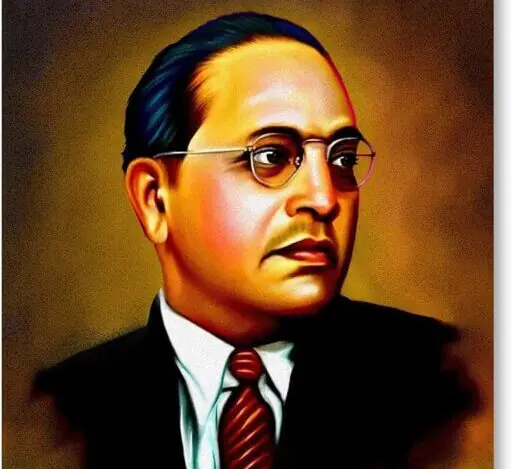
Wilkerson is influenced by B.R. Ambedkar, who helped draft India’s Constitution and wrote about inherited inequality (The White Review). According to one source, she calls him the Martin Luther King of India (Foreign Policy, September 2020). One source states that Wilkerson also cites him for her eight pillars after a talk to a group of Ambedkarites in Massachusetts (Foreign Policy).
Ambedkar’s point that caste is inherited and has limited mobility is captured by Wilkerson. One reviewer of The White Review states that then Wilkerson states that the caste system and the US’ racial system function the same way. Readers can get a brief overview of Ambedkar’s thoughts on these topics by reading his 1936 speech.
What the book gets right
Wilkerson’s book has added Dalits and Ambedkar to the Western audience, where they were previously unknown. One review in World History Connected states that Wilkerson has argued compellingly for the need to address the residual effects of violence, which helped to stabilize and sustain caste hierarchies, both in the US and in India (Arjun Guneratne, World History Connected).
Other reviewers also say they found value in the question itself. Framing issues in the US with a caste lens helps peoples understand the residual effects of previous, legalized social hierarchies. This is the question that has motivated social reform in India since Ambedkar’s time.
Where critics push back
The book hasn’t captured enough about present-day Dalit life. A Dalit reviewer in Foreign Policy (September 2020) critiqued the book for telling few detailed stories about ongoing Dalit atrocities in India, and using India mostly as a background story for the American case. The New Republic also noted the thin examples in India (2020). A reviewer for Philosophy World Democracy wrote that Wilkerson primarily uses the violence against Dalits to underscore her point about race, and so caste essentially becomes a metaphor (Philosophy World Democracy).
Caste and race are blurred. One reviewer, for the Boston Review, argued that Wilkerson merges the two by portraying Indian caste as being the same over thousands of years, and critiques Wilkerson for summarily dismissing the work of Oliver Cox (Boston Review).
Caste is more fluid. The New Republic wrote that Wilkerson’s book shows caste in more inflexible terms, as compared to how it is in reality (2020). The reviewer, however, notes that Wilkerson, in fact, gives considerable emphasis to the tradition of resistance from Ambedkar and the Dalit Panthers (The New Republic).
The Nazi comparison. The reviewer in the Arjun Guneratne (World History Connected) critique contends the comparison to the Nazis is the chief flaw in Wilkerson’s argument. Reviewer Guneratne also notes the Nazis adapted from the American race laws (Arjun Guneratne, World History Connected).
A political caution. A political caution is added by a Dalit reviewer. If Wilkerson’s book gives the impression that in India, the atrocities of caste are on the decline, it may bolster the belief that casteism is also on the decline (Foreign Policy, September 2020).
What is the difference between Caste and Race?
Caste is a social order determined by an individual’s birth. It regulates endogamy, or marriage rules. Based on these rules, individuals of the same skin color, language, or religion can be in different castes. Contrarily, race in the US is primarily defined by physical characteristics coupled with a nation’s history of chattel slavery and racial segregation. The difference is important in both law and in theory.
Wilkerson’s critics argue the overlap is real but limited. Her supporters say shared mechanics like heredity and marriage make the comparison valuable. Both positions exist among academics, and the debate is ongoing. In US law, both supporters and opponents make the case for how Caste discrimination should be considered, and our article on Laws and Lawsuits in the US explains where things currently stand.
Origin: The Film
Ava DuVernay’s film Origin, premiered at the Venice Film Festival on September 6, 2023 (Reuters, 2023). With this film, DuVernay became the first African American woman to present a film in competition at this festival (Reuters, 2023). It is not a direct film adaption of Wilkerson’s book. Instead, it captures her process of writing and research (AP, Mississippi Free Press).
The film goes to India to meet Dalit scholar Suraj Yengde (The Wire, American Kahani). Playing the part of Ambedkar is sociologist Gaurav Pathania. In one scene, Wilkerson opens Ambedkar’s The Annihilation of Caste, and the film uses Ambedkar’s recorded voice to talk about marriage within the group as a means of preserving caste (The Wire). It also mentions that Martin Luther King Jr. visited India in 1959 (American Kahani). For the film’s audience who discovered Ambedkar through it, our Ambedkar biography page is a good starting point.
Ambedkar and Black America: the 1946 letters
The connection between the two struggles is older than the book. There is an undated letter from Ambedkar to W.E.B. Du Bois from around 1946. In it, Ambedkar asks about Du Bois’ involvement with the National Negro Congress and a petition to the United Nations on behalf of minority rights (South Asian American Digital Archive). In a reply on July 31, 1946, Du Bois said he was enclosing a statement to be read to the Untouchables of India, and said that he was in full sympathy with the Untouchables (South Asian American Digital Archive).
Here is some useful background for Western audiences. It shows that Black and Dalit leaders compared notes long before Wilkerson’s book. The term the Dalit community chose for itself is described in our post on the meaning of the word Dalit.
Why this matters for readers today
Wilkerson’s book reached a very wide audience just as the US began a public argument about caste. Seattle’s 2023 ordinance and the later state-level bills came after it. The book is a starting point for many readers, not the last word on India.
For Dalit and diaspora communities, the lesson is practical. Others will explain your history if you do not. Writing, publishing and teaching it yourselves has become a core skill. (The Ambedkarite Educational Program was built to teach exactly these skills.)
Takeaway
Isabel Wilkerson’s book Caste gave millions of Western readers their first exposure to the concept of ‘caste’ as it is mostly used in the Indian subcontinent. The book is commendable for posing the key question about the hidden hierarchy in the US and raising interest in Ambedkar. Its shortcomings, according to Dalit and Indian studies reviewers, include thin description of contemporary Dalit life and blurring the line between caste and race. The film adds the element of Ambedkar, and an Indian setting, but is also not a strict adaptation of all the elements of the book. Readers should use the book as an entry point and read Ambedkar and Dalit writers directly.
Takeaway
Isabel Wilkerson Caste gave millions of Western readers their first look at caste. Its strongest contribution is the question it raises about hidden hierarchy in the US and the attention it gives to Ambedkar. Its weaker side, according to Dalit and Indian-studies reviewers, is thin detail on present-day Dalit life and a tendency to blend caste with race. The film adds Ambedkar’s voice and an Indian setting, but it is also not an adaptation of every argument in the book. A good reader takes the book as an entry point and then reads Ambedkar and Dalit writers directly.
Frequently Asked Questions
What is the book Caste by Isabel Wilkerson about?
It argues that the US racial hierarchy works as a caste system, and compares it with India’s caste order and with Nazi Germany. It names eight pillars that she says support caste systems.
Is Origin based on Isabel Wilkerson’s book?
It is inspired by it but is not a direct adaptation. The film follows Wilkerson as she researches and writes the book, and it includes scenes in India with Ambedkar’s story and the scholar Suraj Yengde.
What do critics say about the book’s treatment of India?
Several reviewers, including a Dalit writer in Foreign Policy, say it gives few detailed accounts of Dalit life in India and uses India mainly as a backdrop for the American argument. Others say it blends caste and race.
What is the difference between caste and race?
Caste is a birth-based ranking tied to marriage rules and often found among people of the same colour and language. Race in the US is usually tied to physical traits and a particular history. Scholars disagree on how far the two overlap.
Understanding caste is step one. Building digital independence is step two.
Ambedkarite communities around the world are using AI tools, blogging and email marketing to document their experiences, challenge discrimination and build platforms that cannot be silenced.
The Ambedkarite Educational Program teaches exactly these skills: AI tools, website building, email marketing, blogging and Google AI. Lifetime access is ₹297 (~$4 USD). All future courses are included free.
Or join the Movement free to start learning today.
SOURCES
- MIT Press Bookstore, Caste: The Origins of Our Discontents
- The White Review, book review
- The New Republic, “Is America Trapped in a Caste System?”
- Foreign Policy, “An Indian Dalit Reading of Isabel Wilkerson’s Bestseller,” September 2020
- Boston Review, “Caste Does Not Explain Race”
- World History Connected, Arjun Guneratne, book review
- Philosophy World Democracy, review of Caste
- Journal CASTE (Brandeis University), Vol. 2 No. 1
- Mississippi Free Press, AP report on Origin
- Reuters, September 6, 2023
- The Wire, on Origin
- American Kahani, review of Origin
- South Asian American Digital Archive, Du Bois letter to Ambedkar, July 31, 1946
- Add before publishing: BookLife review (Carol O’Day, Substack, link in search results)