In India, Jai Bhim meaning is simple to understand; it’s a greeting which literally means “Victory to Bhim”. The 2021 film Jai Bhim, by Gowthamna V. Kumar, has introduced many people outside India to this greeting. This guide explains the meaning of the greeting and provides a summary of the film, describing what it shows and what it does not.
Jai Bhim Meaning
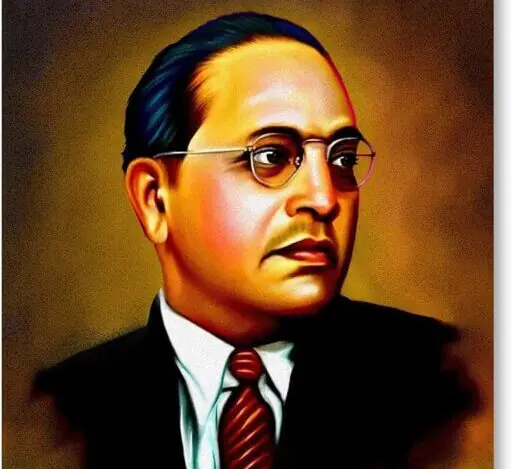
Jai means “Victory” or “Glory”. Bhim here is referencing Dr. Bhimrao Ambedkar, not the character Bhim from the Hindu Epic Mahabharata (Round Table India, “Countering ‘Jai Sri Ram’ with ‘Jai Bhim’”). Therefore the saying becomes “Hail Bhim” (Round Table India).
As a greeting, it serves to express admiration for Dr. Ambedkar. As a slogan, it is a call to dignified fight for liberty and equality (Round Table India). This is embodied in Dr. Ambedkar’s life and struggle, and is best illustrated by his biography.
Who started the Jai Bhim greeting?
Most accounts credit L.N. Hardas. Also known as Babu Hardas Laxmanrao Nagrale, he was a Dalit leader and legislator from Nagpur who was closely associated with Ambedkar (Dalit Liberation, July 2024). He was born in 1904 and died in 1939 (Wikipedia, “L. N. Hardas”). The year given is 1935 based on the book of the historian Ramchandra Kshirsagar (Wikipedia, “Jai Bhim,” citing Kshirsagar, Dalit Movement in India and Its Leaders).
According to an article in Ambedkarite Today, and summarized by Dalit Liberation, during the period of election and after Hardas’ election he was given the greeting “Jai Ramapati.” Hardas was uncomfortable with the greeting and approached a Muslim cleric who explained to him the meaning of the greeting “Salaam Alaikum” and Hardas got the idea of having a different greeting for his party. He introduced the greeting “Jai Bhim” and the reply was given as “Bal Bhim.” The reply later disappeared and both the parties gave the greeting as “Jai Bhim.”
Not every account agrees. The article in Wikipedia suggests that it may be older than the time of Ambedkar and the full history needs further research.
What it replaced
Prior to Jai Bhim, greetings used by Dalit communities were Jai Johar, Jai Ramapati, Ram Ram, and Namaskar (Dalit Liberation, July 2024). As reported by Ambedkarite Today, a community greeting aids in constructing a community address like “Salaam Alaikum” for the Muslim community.
It is also debated whether it is a variation of Jai Hind. As Eleanor Zelliot, Historian, writes, Jai Hind was changed to Jai Bhim (Eleanor Zelliot, From Untouchable to Dalit, 1992, p. 144, Dr. Ambedkar Books). Other Ambedkarite writers deny this, stating Jai Bhim was in use since 1936, while Jai Hind was used with the Indian National Army in the 1940s (Ambedkarite Today). The 1936 date is the source’s claim and I have not confirmed it to be true.
Jai Bhim: greeting, slogan, politics
Round Table India states the slogan was popular during the lifetime of Ambedkar and was initially used by Dalits. Later on, it spread and was adopted by political parties and BAMCEF (Round Table India).
According to Dalit Liberation, published in July 2024, non-Dalits in the Indian Parliament also were seen using the greeting Jai Bhim, which the author called remarkable (Dalit Liberation, July 2024, reposting a ThePrint article). Many Dalit communities also use the greeting during Ambedkar Jayanti and Dalit History Month. It is also part of the vows Ambedkar gave to his Buddhist converts, of which we have covered in our article on the 22 vows.
A greeting like this helps diaspora communities record history and pass on identity. Now, Ambedkarites all over the world do this themselves through blogs, A.I. tools, and email lists (The Ambedkarite Educational Program is designed to empower communities to do this).
The true story of Jai Bhim
Jai Bhim (2021) is a Tamil-language legal drama, produced and directed by T.J. Gnanavel, with Suriya in the lead role. It was released on Amazon Prime Video on November 2, 2021. (Wikipedia, “Jai Bhim (film)”)
The movie is set in Cuddalore, Tamil Nadu in 1993. Sengeni and Rajakannu (of the Irula Tribe) were arrested. Rajakannu disappeared after being taken into custody. (Wikipedia, “Jai Bhim (film)”) Sengeni approached lawyer Chandru for help. He filed a habeas corpus, a case to order a detaining authority to produce the person (Wikipedia, “Jai Bhim (film)”).
Justice Chandru told The News Minute that while the movie took some creative liberties, it was overall a factually correct account of the events. (The News Minute) He also said the police tried to bribe him and Sengeni, and that he turned the police away (The News Minute). Pre-release coverage of the case, including in Wikipedia, placed the incident in 1995. Most sources say it happened in 1993.
What is disputed
After its release, the film immediately created a controversial situation. Members of the caste of Vanniyars in Tamil Nadu took offense to a scene in the police officer’s house which displayed a calendar with a symbol of a fire pot, which is considered to be offensive to them (Silverscreen India). The filmmaker later changed the calendar to one with the deity Lakshmi (Silverscreen India).
On 15 November 2021, the Vanniyar Sangam sent a legal notice to the filmmakers and stated that the film portrayed the community in a bad light. They also demanded an unconditional apology and the removal of specific scenes, and a compensation of Rs. 5 crore (The News Minute). The legal notice also stated that Anthonysamy, the officer’s real name, was portrayed in the film as Gurumoorthy (Silverscreen India). A legal notice does not mean that a lawsuit will be filed, however (The Wire).
The Director said that he had no intention to hurt any community and expressed regret to those that he offended (DT Next). Suriya also stated that the concept of the film was to portray a legal battle for justice (The News Minute). Several other film directors and associations supported Suriya (Silverscreen India). As of now, both sides are in agreement that no intent to defame was portrayed by the filmmakers.
Why the phrase travelled
The movie brought international exposure to this phrase. With a worldwide streaming platform, the movie placed an Ambedkarite salutation at the forefront of thousands of viewers who had no prior exposure to it. As described by Round Table India, this phrase is something that “Dalits” answer with “everything” to “life” when asked what it means to them.
A starting point for Western readers would likely be the philosophy behind it. More about Ambedkar’s thoughts on inherited inequality can be found in our post on his 1936 address. A post on the meaning of Dalit can be found here. And the debate surrounding caste laws in the US can be found here.
Takeaway
Jai Bhim meaning comes down to “Victory to Bhim,” a greeting that honours Dr. B.R. Ambedkar and says that dignity and equality are worth fighting for. L.N. Hardas is widely credited with starting it in 1935, though some details of its early history are debated. The 2021 film is based on a real 1993 case, and its lead lawyer says it stayed close to the facts, but it also drew a dispute that the makers say was not intended. Used today as a greeting, slogan and identity, the phrase links Dalit communities in India and abroad.
Frequently Asked Questions
What does Jai Bhim mean?
It means “Victory to Bhim,” where Bhim is Dr. Bhimrao Ramji Ambedkar. It is used as a greeting, a slogan and a sign of respect among Ambedkar’s followers.
Who started the Jai Bhim greeting?
Babu L.N. Hardas, a Dalit leader and close associate of Ambedkar, is widely credited with starting it around 1935. Some accounts say its roots may be older, but that is unproven.
Is the film Jai Bhim a true story?
It is based on a 1993 case in Cuddalore, Tamil Nadu, fought by the lawyer K. Chandru, who later became a judge. Chandru has said the film stayed true to the facts apart from some cinematic liberties.
Do only Dalits say Jai Bhim?
It began among Dalits and Ambedkar’s followers. It has since been taken up by political parties and other groups, and in 2024 some non-Dalit lawmakers were reported to say it in Parliament.
Understanding caste is step one. Building digital independence is step two.
Ambedkarite communities around the world are using AI tools, blogging and email marketing to document their experiences, challenge discrimination and build platforms that cannot be silenced.
The Ambedkarite Educational Program teaches exactly these skills: AI tools, website building, email marketing, blogging and Google AI. Lifetime access is ₹297 (~$4 USD). All future courses are included free.
Or join the Movement free to start learning today.
SOURCES
- Round Table India, “Countering ‘Jai Sri Ram’ with ‘Jai Bhim’”
- Ambedkarite Today, “Origin of JAI BHIM Slogan”
- Dr. Ambedkar Books, “Jai Bhim and Jai Hind”
- Dalit Liberation, July 1, 2024
- Wikipedia, “L. N. Hardas” (used to locate dates; see log)
- Wikipedia, “Jai Bhim” (see log)
- Wikipedia, “Jai Bhim (film)”
- The News Minute, interview with Justice Chandru
- The News Minute, Vanniyar Sangam legal notice
- Silverscreen India, “Breaking Down the Controversies”
- The Wire, legal notice report
- DT Next, director’s statement