The Dalit Buddhist movement began when Ambedkar and around 200,000 of his followers converted to Buddhism in 1956 (Choe 2026). Only the Indian census has provided statistics on this group. According to the 2011 census of India, 8.44 million people in the country (0.7% of the total population) practiced Buddhism (Choe 2026). Many Dalits practiced Buddhism along with Ambedkar (Census of India 2011). Of these 8.44 million people, 6.53 million were from the state of Maharashtra (Census of India 2011; Choe 2026). Ambedkarite Buddhism is largely confined to the Indian subcontinent (Choe 2026). Ambedkar (1891-1956) was the first Dalit to be appointed to the constituent assembly of India to draft the Constitution of India (Prakash 2024). Information in this guide has been sourced and updated from various resources till November 28, 2026.
Dalit Buddhist movement: what the census counts
India’s census counts religion, and the 2011 census did not count caste (Census of India, 2011; Deccan Herald, 2025).
Ambedkar took Buddhism along with his followers in 1956 at Nagpur (Choe 2026; Prakash 2024). Following his death in December of the same year, the movement lacked a central leader (Choe 2026). For more information on the history of this movement see our guides on Ambedkar Jayanti and the 22 vows.
BUDDIST POPULATION IN INDIA: THE CENSUS DATA
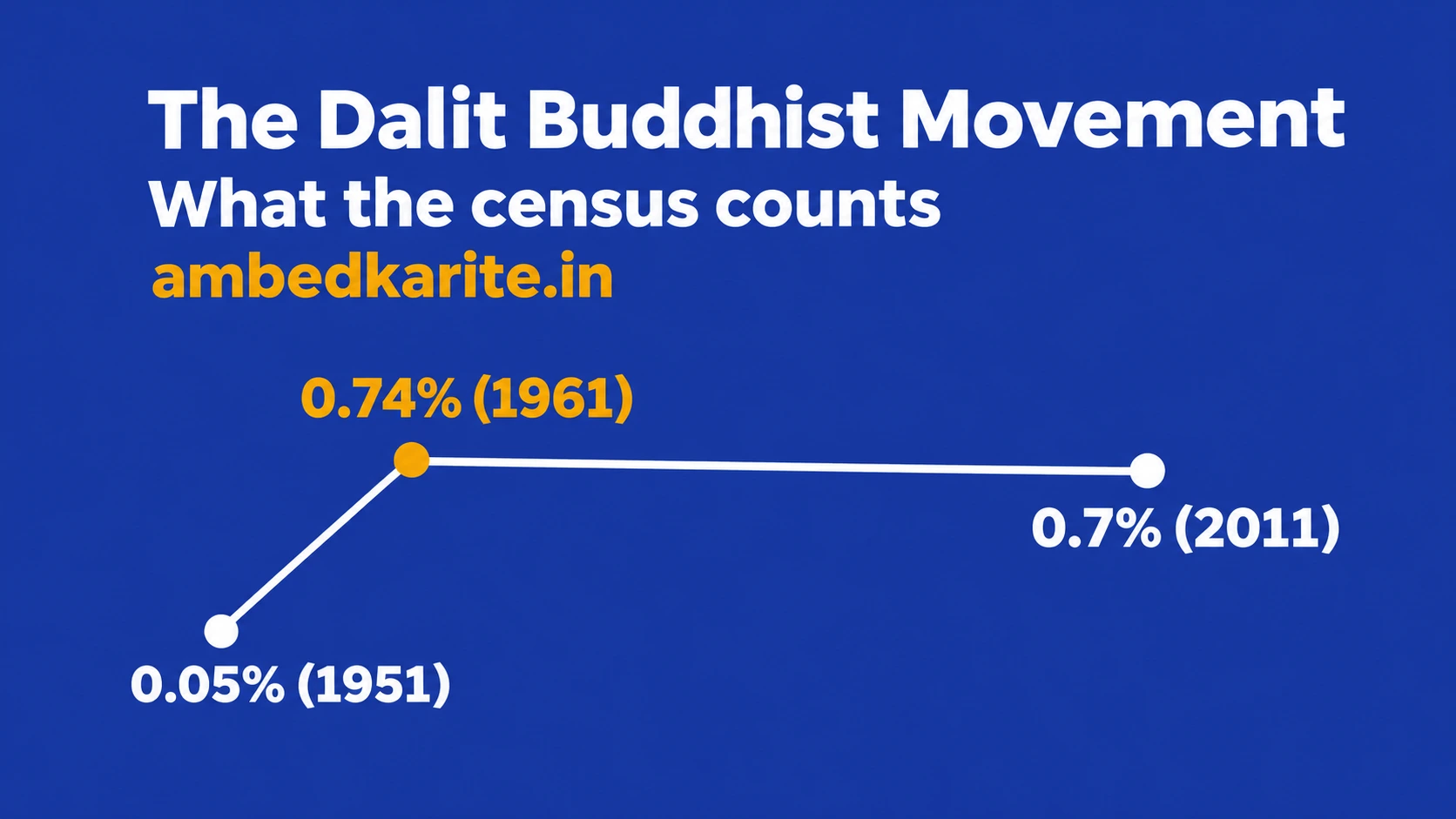
In 1951 the Buddhist population of India was recorded to be 0.05% and in 1961 it increased to 0.74%. The 2011 census reported 8.44 million Buddhists representing 0.7% of the total population (Choe, 2026).
According to data compiled by Census Data India the population of Buddhists in 2001 was 7,955,207 (0.77% of the total population). Between 2001 and 2011 the Buddhist population is estimated to have increased by about 6.1% (Census Data India, 2025).
According to Choe there has always been a minority of Buddhists in India and increases in population have not been continuous (Choe, 2026).
Choe also states that a lot of people who have converted to Buddhism from Hinduism have not changed their religious affiliation in their official documents and are therefore still counted as Hindus.
WHO ARE THE BUDDHISTS OF INDIA?
Of the total Buddhist population of India as per the 2011 census, 5,757,576 were Scheduled Castes (68.2% of the total Buddhist population) and 866,029 were Scheduled Tribes (10.3% of the total Buddhist population).
Thus conversion to Buddhism does not deprive a person of his/her reservation rights as was previously the case (Choe, 2026).
A census figure is only as clear as its definition, and a reader needs to know what was counted. Presenting a number together with its definition and its source is part of the blogging lessons in the Ambedkarite Educational Program.
WHERE DO THE BUDDHISTS LIVE?
As per the 2011 census, 6,531,200 (5.81% of total population of Maharashtra) of the total Buddhist population of India resided in Maharashtra (Census of India, 2011; Choe, 2026). Of these 95% were classified as ‘Mahars’.
Choe states that, unlike other regions of India, Uttar Pradesh’s version of Ambedkarite Buddhism underwent several revivals along with phases of Dalit political activism (Choe 2026). Mahars, who comprise the vast majority of Ambedkarite converts, are discussed in our other article.
Ambedkarite Buddhism: the term and the 1956 conversion
Choe refers to the type of Buddhism initiated and advocated by Ambedkar as ‘Navayana’ Buddhism. Followers of this interpretation are referred to as ‘Ambedkarites’ (Choe 2026). In 1956, on his (and thousands of others’) conversion to Buddhism, Ambedkar took 22 vows to publicly repudiate the Hindu faith and renounce belief in the Hindu deities and Brahmanical ritualism (Choe 2026).
According to Choe, the primary aim of Ambedkar’s conversion to Buddhism was to encourage members of the Dalit community to abandon their faith in and commitment to Hinduism. She writes that the ‘Ambedkar movement’ remains weak in terms of individual or group commitment to meditative practice, but is strong in its public performances and demonstrations (Choe 2026).
Why the numbers are hard to read
Counting Dalits who have converted to Buddhism has proven problematic in many censuses. Sometimes converts do not inform the authorities of the change in their religious identity (Choe 2026). In addition, in the Indian state of Gujarat, the authorities require individuals wishing to convert from one religion to another to secure the permission of the district magistrate to do so (Choe 2026).
The next census of India, scheduled in 2027, may give information about the religious affiliation of the people based on their caste. It remains to be seen, however, if the information provided will be of any use to identify the number of Dalit Buddhists.
Dalit Buddhist movement: what each source counts
| Source | What it counts or says | What it cannot show |
|---|---|---|
| Census of India, 1951 and 1961 (via Choe, 2026) | Buddhists: 0.05% (1951), 0.74% (1961) | Growth after 1961: Choe calls it episodic, not cumulative |
| Census of India, 2001 (compilation) | 7,955,207 Buddhists, 0.77% | The method: read through a secondary page |
| Census of India, 2011 | About 8.44 million Buddhists, 0.7%; 5,757,576 Scheduled Caste Buddhists (68.2%); 866,029 Scheduled Tribe Buddhists (10.3%) | Caste within Buddhists beyond Scheduled Castes and Tribes; converts classified as Hindu |
| Census of India, 2011, Maharashtra | 6,531,200 Buddhists, 5.81% of the state, about 77% of India’s Buddhists; 95% of Scheduled Caste Buddhists there registered as Mahar | Other states’ Buddhists by caste |
| Choe (2026) | Regionally concentrated; conversion as protest; strong public ritual and memory; census may understate reach | A count: it is a conceptual argument |
| Census 2027 | Includes caste enumeration; reference date March 1, 2027 | Whether religion by caste will be published in a usable form |
| Dalit Buddhists outside India | None found | Not applicable |
| Any count after 2011 | None found | Not applicable |
Sources: Choe, 2026; Census of India, 2011; Census Data India, 2025; Deccan Herald, 2025; PIB, 2026. Some census figures were read through secondary pages and should be checked against the census. This is general information.
Takeaway on the Dalit Buddhist Movement
The last census was in 2011 and thus has not been recently updated to include data on the Dalit Buddhist movement which began in 1956 (Choe, 2026). The total Buddhist population of India was estimated to be 8.44 million in 2011, comprising of 0.7% of the country’s total population (Choe, 2026). The total number of Scheduled Caste Buddhists was estimated to be 5,757,576 in 2011 (Census of India, 2011). Buddhists primarily reside in Maharashtra comprising of 77% of the country’s total Buddhist population (Census of India, 2011; Choe, 2026). Ambedkarite Buddhism is expected to increase in subsequent censuses (Choe, 2026; Deccan Herald, 2025).
Who is B. R. Ambedkar?
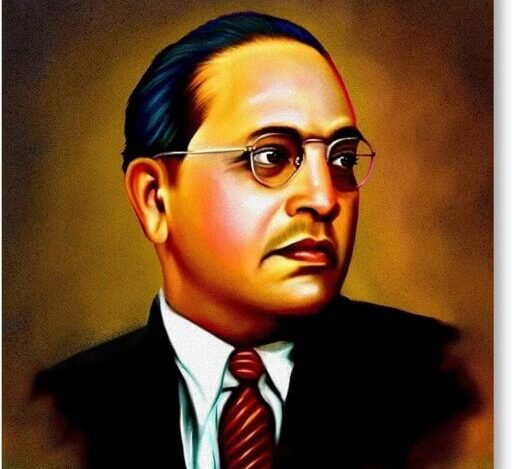
Bhimrao Ramji Ambedkar (14 April 1891 – 6 December 1956) was an Indian jurist, economist, politician and social reformer who also is considered the chief architect of the Constitution of India. A prominent supporter of the Dalit movement, he was an important leader of the neglect of Untouchables in Hinduism.
Readers who want to learn to read census tables closely and write clear, sourced explainers can start with the Ambedkarite Educational Program, a lifetime-access course at ₹297 (about $4 USD) that covers blogging, website building, email marketing, AI tools and Google AI, with all future courses included. The free Movement page is another place to begin.
This article draws on a 2026 journal article by Jiyeon Choe (read in full), census figures read through compilations, Gyan Prakash’s 2024 review, and reports on Census 2027. I did not reach the census tables themselves, and I found no count of Dalit Buddhists after 2011 or outside India. Each source’s figures are attributed to it.
Last updated: November 28, 2026
Frequently Asked Questions
What is the Dalit Buddhist movement?
It began with Ambedkar’s mass conversion to Buddhism in Nagpur in 1956. Presently, it is only through the census that the numbers associated with this movement can be ascertained (Choe, 2026).
What is the population of Buddhists in India?
The 2011 census recorded 8.44 million people (0.7% of the population) as Buddhists (Choe, 2026).
In what way does the census define Dalit Buddhists?
In the 2011 census, 5,757,576 people were identified as Buddhists and members of the scheduled caste (Census of India, 2011).
What is the population of Buddhists in Maharashtra?
Of the 8.44 million Buddhists in India, 6,531,200 are resident in Maharashtra (61% of the total) as per the 2011 census (Census of India, 2011).
What do you mean by Ambedkarite Buddhism?
This term is used by Choe to define the peoples’ beliefs and practices which have been influenced by the interpretations of Buddhism provided by Ambedkar (2026).
Sources
- Choe: Navayāna Buddhism and the Conditions of Religious Continuity: Conversion and Anti-Caste Emancipation in Modern India, Religions 17(7): 821, July 9, 2026
- Census of India: Census of India 2011, Office of the Registrar General & Census Commissioner, India
- Census Data India: Buddhist Population in India 2025: State-wise Census Data (compilation of the 2001 and 2011 figures)
- Prakash: A “Life of Contradictions,” The New York Review of Books, June 20, 2024
- Deccan Herald: Centre announces Census 2027 schedule, 2025