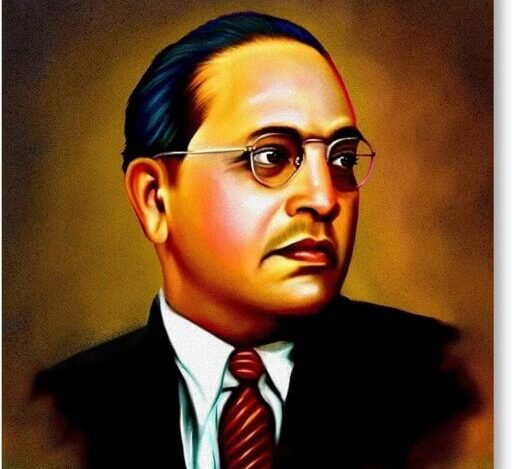
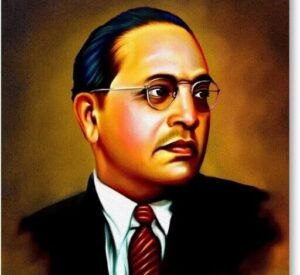
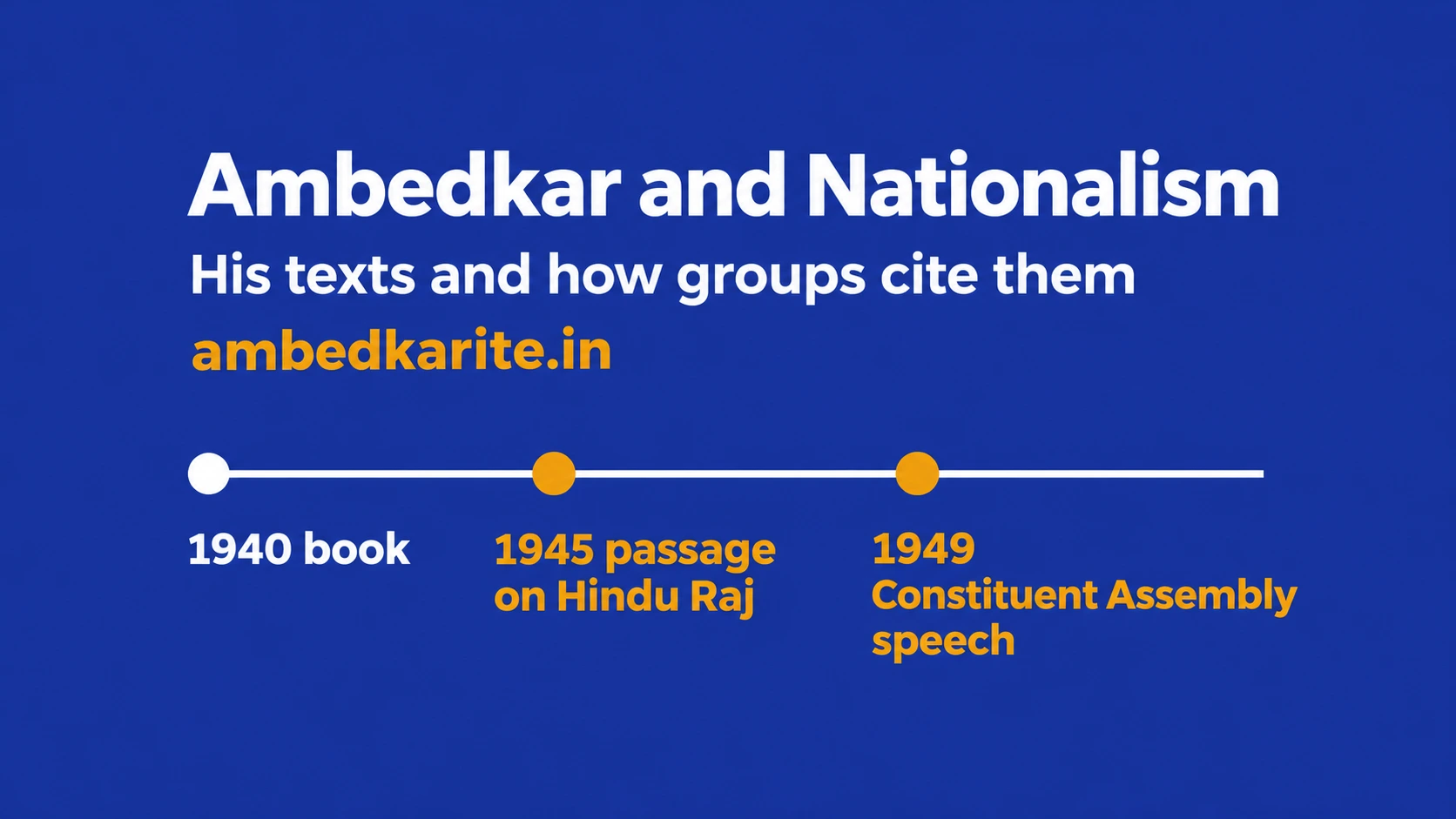
Ambedkar nationalism is best read from his own texts, because his words on the nation are often quoted and argued over (Constituent Assembly Debates, 1949). The best source to understand Ambedkar’s nationalism is in his own writings. Often quoted and debated passages from the Constituent Assembly debates of 1949, have also been the subject of much academic discourse. Pakistani or the Partition of India was first published in 1940, later as part of his collected works in volume 8. Ambedkar believed that a Hindu Raj would be the most detrimental to India’s interest (BAWS vol. 8). In 1949 he stated in the Constituent Assembly that ‘the caste system being anti-social and anti-national, must go’ (Constituent Assembly Debates, 1949). Ambedkar’s views on Hindu Rashtra are equally contested. His thoughts have inspired both right and left leaning groups in Indian politics (The Wire, 2023). B.R. Ambedkar was a Dalit, or ‘untouchable’ philosopher, activist and politician. He was the principal architect of India’s constitution. He died in 1956 at the age of 65. Information in this entry is current as of November 28, 2026.
Ambedkar nationalism: what the sources say
The Constituent Assembly Debates are the official report of the body that drafted India’s constitution, and Volume XI covers November 14 to 26, 1949 (Constituent Assembly Debates, 1949).
More on the context of these ideas can be found in our other guides on the Constituent Assembly, Caste, and Hinduism.
The book: Thoughts on Pakistan
Thoughts on Pakistan was first published by Thacker and Company in 1940 with additional editions in 1945 and 1946. The 1946 edition has been reprinted in volume 8 of the collection Babasaheb Ambedkar: Writings and Speeches (BAWS Vol. 8, 1990).
Chapters X and XIII of Thoughts on Pakistan deal with social issues pertaining to both Hindu and Muslim society. Chapter X mentions that in comparison to evils prevalent in the Hindu society evils in the Muslim society are more rampant (Pritchett, 2005).
Some writers have interpreted Ambedkar’s criticism of Muslim politicians as evidence of Ambedkar’s belief on the ‘anti-national’ character of the Muslims. Others refute this interpretation (2025).
The 1945 passage on Hindu Raj
In Chapter XIII of Thoughts on Pakistan, Ambedkar states ‘Hindu Raj’ would be disastrous for India (BAWS Vol. 8, 1990). Pakistani Muslims should establish a separate nation if they fear being ruled by a Hindu majority. Ambedkar was against the creation of Pakistan as he believed that it would not prevent the establishment of ‘Hindu Raj’ (Simeon, 2019). Some editions of the book place this part on pages 354-355 while others on page 358 (2024).
Did Ambedkar advocate for the creation of a ‘secular’ state? As part of his argument against ‘Hindu Raj’ he states ‘An India of Hindus, ruled by Hindus, would be no better than Nazism or Fascism’ (BAWS Vol. 8, 1990).
Page numbers differ between editions, so a reader who wants to check a quotation needs the edition and the chapter, not only a page. Citing a source in a way that others can find it again is part of the blogging lessons in the Ambedkarite Educational Program.
“Caste and Nation” speech (1949)
Ambedkar contended that a country made up of several thousands of castes cannot be a nation (Constituent Assembly Debates, 1949). Caste system creates competition among its members and consequently leads to animosity amongst them (Constituent Assembly Debates, 1949).
To bring about fraternity among citizens of a nation, Ambedkar asserted that the citizens must put the interest of the country first (Constituent Assembly Debates, 1949). Ambedkar feared that the independence of India would be threatened if political parties did not take steps to promote the interest of the country and focused on the interest of their religious sects (Constituent Assembly Debates, 1949).
Who quotes him?
In his 2023 Vijayadashami speech, the RSS Chief, Mohan Bhagwat stated that Ambedkar and himself held the same view on the emotional integration of Hindus.
There are writers associated with the RSS who believe that Ambedkar was an insider of the RSS (Outlook, 2023). Other critics say Ambedkar was a strenuous opponent of a Hindu Rashtra (The Wire, 2023).
None of these views are invalidated or supported in this article.
What the sources can’t determine
The views expressed by Ambedkar in the quotes above reflect his views on nationalism in 1945 and 1949. Later interpreters of these views have also differing views as to what Ambedkar meant by them. The best place to examine these views for yourself are in the records of the Constituent Assembly (1949) or Volume 8 of his writings (1990).
Ambedkar nationalism: what each source shows
| Source | What it says | What it cannot show |
|---|---|---|
| Constituent Assembly Debates, Vol. XI (November 25, 1949) | Ambedkar: “a great delusion” to believe India was a nation; “the castes are anti-national” (separation; jealousy and antipathy); fraternity needs a nation; creed above country would put independence in jeopardy | How the passage applies to any present-day movement |
| Pakistan or the Partition of India (editions of 1940, 1945, 1946; BAWS Vol. 8) | Chapter XIII, section VI: Hindu Raj would be the greatest calamity and must be prevented; Pakistan not the remedy where Muslims are a minority | The exact page in your edition (editions differ: 347 to 368 for the chapter; 354 to 355 or 358 for the passage) |
| Same book, Chapters X and XII | Criticism of Muslim social and political life (per a scholar’s index) | How it is used today: some cite it for one reading, a writer rejects that reading |
| Prakash, NYRB (2024) | For Ambedkar, freedom from upper-caste domination mattered more than freedom from colonial rule | His view of present-day politics |
| RSS speeches compilation (2023 address) | Bhagwat refers to Ambedkar’s Constituent Assembly speech on emotional unity | Anything beyond the compilation’s own text |
| Outlook (2023) | Writers aligned with the RSS say Ambedkar had links with it | Verification of those claims |
| The Wire and advocacy outlets | Critics say Ambedkar opposed a Hindu nation and the RSS’s ideology differs | Neutral adjudication: these are critics’ positions |
| IANS (December 2025) | BJP backed Bhagwat’s Hindu Rashtra remarks; an opposition MP asked about the constitution | A ruling on either side |
Sources: Constituent Assembly Debates, 1949; BAWS Vol 8, 1990; Pritchett, 2005; Prakash, 2024; RSS speeches compilation, 2024; Outlook, 2023; The Wire, 2023; IANS, 2025. This is general information. The article reports each side’s position and does not rule on it.
Take on Ambedkar and Nationalism
As far as Ambedkar’s views on nationalism is concerned we can refer to his 1945 book and his 1949 speech to the Constituent Assembly (BAWS Vol 8, 1990; Constituent Assembly Debates, 1949). He also wrote a book titled ‘Ambedkar’s Thoughts on Pakistan’ in which he warned against the possibility of a Hindu Raj (BAWS Vol 8, 1990). In the same volume he also wrote about ‘Hindu Raj’ stating that it would prove to be the biggest calamity for the Hindus (BAWS Vol 8, 1990). In the speech to the Constituent Assembly he states that different castes of Hindu society feel enmity for one another and thus, cannot be considered to be of one nation (Constituent Assembly Debates, 1949).
Readers who want to learn to read primary texts closely and write clear, sourced explainers can start with the Ambedkarite Educational Program, a lifetime-access course at ₹297 (about $4 USD) that covers blogging, website building, email marketing, AI tools and Google AI, with all future courses included. The free Movement page is another place to begin.
This article draws on the Constituent Assembly Debates (Volume XI, official report), the published chapters and editions of Pakistan or the Partition of India, a scholar’s index of the book, Gyan Prakash’s 2024 review, a compilation of the RSS chief’s 2023 address, and news and advocacy reports from several sides. I did not open Volume 8’s text for the passage in your edition, and I found no independent study of his views on nationalism. Each group’s claims are attributed to that group.
Last updated: November 28, 2026
Frequently Asked Questions
What were Ambedkar’s opinions on Hindu Rashtra?
In the speech he gave in 1949 to the Constituent Assembly he stated that if different castes of the Hindu society combine to form one nation it would result in Hindu Rashtra (Constituent Assembly Debates, 1949).
What is Thoughts on Pakistan?
Published in 1940 as Pakistan or the Partition of India, it was Ambedkar’s analysis and reaction to the Muslim League’s demand for ‘Pakistan’ (BAWS Vol. 8, 1990).
What does ‘Hindu Raj’ mean?
In chapter XIII of the same book, Ambedkar predicted that if it ever occurred it would be the most disastrous thing to happen to the country and requested his readers to consider if Pakistan would be a solution to this (BAWS Vol. 8, 1990; Simeon, 2019).
Why did Ambedkar describe some castes as ‘anti-national’?
In 1949 he said that because some castes isolate themselves from other castes they create enmity and hatred amongst different social groups (Constituent Assembly Debates, 1949).
How do various groups interpret Ambedkar’s views on Hindu Rashtra?
Some writers associated with the RSS believe Ambedkar foresaw a positive future for a Hindu Rashtra, while others, mainly those opposed to the idea of a Hindu Rashtra, believe Ambedkar was critical of the idea (The Wire, 2023; Outlook, 2023).
There are also other views not mentioned here which have been published recently.
Sources
- Constituent Assembly Debates: Official Report, Volume XI, November 14 to 26, 1949 (Parliament of India)
- BAWS Vol 8: Pakistan or the Partition of India, Babasaheb Ambedkar: Writings and Speeches, Volume 8 (contents)
- Pritchett: Pakistan, or, The Partition of India, chapter and section index
- Simeon: Extracts from B.R. Ambedkar’s book on Pakistan (1940, 1945), 2019
- The Wire: Mohan Bhagwat May Quote Ambedkar, But RSS Is Polar Opposite of His Ideology, 2023
- Outlook: Politics of Appropriation: Why Ambedkar’s Legacy Matters, 2023
- Countercurrents: Revisiting Ambedkar’s Critique of Muslims, December 2025
- Opinion Magazine: RSS and Ambedkar: Two Poles of Indian Political Spectrum, 2024