In 2023, Seattle became the first US city to prohibit discrimination against a person based on their caste. For the majority of Americans, the term “caste” was previously unheard of. Along the same lines, the term “Dalit” was likely unheard of as well. The term Dalit is not complex to state, but rather to understand fully. Dalit Meaning refers to the term that was once used to demean members of the South Asian community to “untouchables.” This document explains in more detail where this term originated and why it has recently appeared in courts and the workplace in the West.
What does Dalit mean?
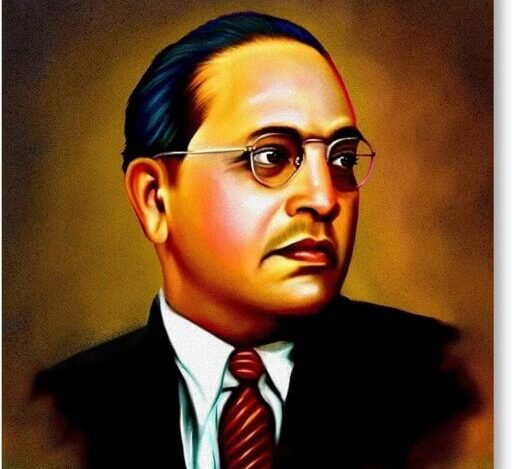
In Sanskrit, the word Dalit means broken, scattered, or crushed. However, there is much more to the term that encompasses its true meaning. There is an extensive history to the term that is not fully understood. It can generally be said that throughout South Asia, the word Dalit was largely popularized in the early to mid 1900s, with the efforts of Jyotirao Phule and B.R. Ambedkar.
One important thing to understand is that the term Dalit, or any term for that matter, that is used to describe a social class, is not a neutral term. The term is chosen by the community to refer to themselves and the social class they are in. The Dalit class was particularly unjust. To combat this, in the 1970’s a group called the Dalit Panthers, comparable to the Black Panther Party, was formed. From this point on, the term became generally accepted, and brought awareness to the unjust classification.
“Untouchable” was the old social label. The reason some communities were labeled untouchable was because higher castes believed their touch, their food, even their shadow was polluting. Use of the term is considered offensive today. However, Ambedkar used the term for the title of his 1948 book The Untouchables because he wanted to document this social reality (BAWS Vol 7, The Untouchables).
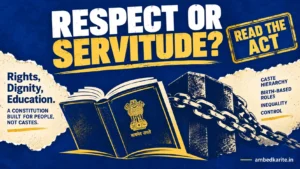
Scheduled Caste is the legal terminology in India, provided by the Constitution (Article 341). Here, the President of India decides which communities will be listed in the ‘schedule’ and provides them with legal protection and reservation in education and jobs.
Dalit is the term preferred by the community in the social and political realm. This term encompasses a broader social reality, and is often applied to all oppressed people, not only to Scheduled Castes (Wikipedia, Dalit).
The Indian State is not in favor of this terminology. In 2018, the Ministry of Social Justice and Empowerment directed all states to use ‘Scheduled Caste’ in all their official documents (The Wire, September 2018).
In August 2018, the Information and Broadcasting Ministry directed all news channels to refrain from using the term ‘Dalit’ (The Week, September 2018). The term ‘Dalit’ was struck down by the Bombay High Court in an advisory to the media. This advisory was upheld by the Supreme Court in February 2019 (The Leaflet, February 2019). This sparked criticism from several Dalit activists, including Sudhakar Raokhaje, the co-founder of the Dalit Panthers (The Wire, September 2018).
Meaning of Untouchable caste: how the caste system placed Dalits
Hinduism splits people into four main groups: Brahmins (priests), Kshatriyas (warriors), Vaishyas (merchants), and Shudras (servants). The Dalits were placed outside all of these. Sometimes they were called the fifth group, Panchamas (Gulf News, “The meaning of Dalit”).
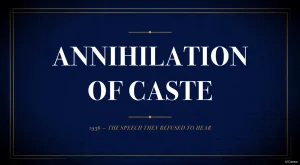
This meant that they were socially excluded. Dalits were not allowed to use public wells, or to eat with the other groups. They were not allowed to enter temples. They were given the most menial tasks, like cleaning latrines and touching dead animals. Ambedkar said that caste is not just a division of labour, but of labourers, ranked in a fixed order. (BAWS, Vol 1, Annihilation of Caste).
Caste is different from race. Historians and legal scholars explain that it is inherited, and tied to birth and marriage laws. It is found among people of the same color, language, religion, and often occupation. Because of these distinctions, Western laws and judicial systems treat it differently.
Who is considered a Dalit today?
The last published census of India (2011) placed Scheduled Castes at 16.6% of the total population of India (Gulf News, citing Census of India 2011). This means that approximately one in every six Indians is a Dalit. Dalits are not a homogenous community. They are made up of hundreds of castes, with varying languages, regions, and customs.
Most Dalits are Hindu; others are Buddhist, Sikh, Christian or Muslim (Wikipedia, “Dalit”). Only Scheduled Caste status is legally granted to Hindus, Buddhists and Sikhs (Constitution (Scheduled Castes) Order, 1950, as amended). Thus Dalit Christians and Muslims have fought for a long time to end this discrimination.
Ambedkar himself, in 1956, a few weeks before his death, carried out a mass conversion to Buddhism as a means of escaping the Hindu order of religion which justified caste. Our post on the Mahar community covers the caste to which he was born.
Ambedkar and the word
He is also known for giving greater currency and circulation to the word ‘Dalit’. In his writings and speeches, he gave a political edge to the word and advocated for the right of Dalits to a separate representation. He was against the Gandhian concept of a united India. This led to the 1932 Poona Pact. Our separate electorates post details this further.
The Dalit struggle is also a struggle for the right to knowledge. Dalit voices were kept out of educational institutions, newspapers and other literature for centuries. The modern Ambedkarite movement is using new communication technologies and the internet to promote their history and knowledge. The Ambedkarite Educational Program is designed to help them do this.
What the law says in India
In 1989, the Indian Parliament enacted the Scheduled Castes and Scheduled Tribes (Prevention of Atrocities) Act, which created separate categories of crimes based on atrocities committed against members of these communities, and established special courts to try these cases (Prevention of Atrocities Act, 1989). The Constitution of India provides for reservation in appointments and admission in educational institutions and in the Legislatures for the Scheduled Castes. Our post on reservation and Dr. Ambedkar addresses a widespread myth regarding this.
The data: what the statistics show
According to the National Crime Records Bureau (NCRB) of India, in the year 2023, there were 57,789 reported cases of crimes against members of the Scheduled Castes in India. This was an increase from the 57,582 cases reported in the year 2022 (NCRB, Crime in India 2023). These are only the reported cases. There are many crimes that are never reported and reached the police, and therefore, do not get documented.
Numbers like these show that the word ‘Dalit’ describes a present-day condition. This on its own doesn’t necessarily provide a clear picture of the prevalence of discrimination. Researchers look into this through the use of surveys.
Why the Dalit meaning matters in the US, UK, Canada and Australia
Many South Asians moved to the West after the 1960s and the caste system moved with some of them. Researchers have not come to a consensus about the role it plays in the lives of South Asians living in the West.
According to a survey by Equality Labs, a US-based advocacy group, published in 2018, about 1,500 South Asians Americans reported that a large number of Dalit respondents faced discrimination in the workplace. Critics, including the Carnegie Endowment, contend that the survey used a self-selected sample and, as such, may have biased in favour of people with strong opinions (Carnegie Endowment for International Peace, Social Realities of Indian Americans, 2021). The survey further reported that 24% of its respondents were Dalit (UnHerd, 2022).
Carnegie’s own 2020 survey used a representative sample from YouGov. It found that 5 per cent of Indian Americans reported caste discrimination in the past year (Carnegie Endowment, 2021, as summarised by the Hindu American Foundation). Carnegie’s 2024 survey found that most respondents backed measures to outlaw caste discrimination, and that skin colour was the most common reported basis for bias (Carnegie Endowment, How Indian Americans Live, 2025). Both surveys are real, and they measure different things. The first asked a self-selected group about lifetime experience. The second asked a representative group about the past year.
On the law, Seattle added caste to its anti-discrimination rules in February 2023. California’s legislature passed SB 403 to name caste in state law, but Governor Gavin Newsom vetoed it in October 2023, saying existing law already covers caste (California Governor’s Office, October 2023). In the UK, the Equality Act 2010 lets ministers add caste as a protected characteristic, but this has not been done (Equality Act 2010, Section 9(5)). In Australia, the Human Rights Commission’s president said in February 2026 that caste protection has not been tested in Australian courts (Australian Human Rights Commission, February 2026).
The Hindu American Foundation (HAF) and groups such as CoHNA oppose caste-specific laws. They argue that such laws single out Hindus. Supporters reply that the laws name a form of discrimination that already exists. Our readers should know that both positions are active.
Takeaway
The Dalit meaning is “broken” or “oppressed,” but the word is used as a statement of identity and resistance. Dalits are the communities once treated as untouchable. Indian law calls them Scheduled Castes, and about one in six Indians belongs to that group. The word has been contested by the Indian state and embraced by many in the community. In the West, caste is now debated in city councils, courts and workplaces, and the data on how often it occurs is disputed. Knowing the word is the first step to following that debate fairly.
Frequently Asked Questions
Is the word Dalit offensive?
Many Dalit activists and writers use it with pride, as a name the community chose. The Indian government prefers “Scheduled Caste” in official papers, and issued advisories on this in 2018. If you are writing about a specific person, it is respectful to use the term they use for themselves.
Are Dalits Hindu?
Most are, but not all. Dalit communities also include Buddhists, Sikhs, Christians and Muslims. Under Indian law, only Hindus, Sikhs and Buddhists can hold Scheduled Caste status.
How many Dalits are there?
India’s 2011 Census counted Scheduled Castes at 16.6 per cent of the population, about one in six people. India has not published a newer full caste count since then.
Is caste discrimination illegal in the United States?
No federal law names caste. Seattle banned it in 2023, and California’s SB 403 was vetoed in 2023. Some legal scholars argue that existing laws on ancestry, race or national origin may already cover it, though courts have not settled this.
Understanding caste is step one. Building digital independence is step two.
Ambedkarite communities around the world are using AI tools, blogging and email marketing to document their experiences, challenge discrimination and build platforms that cannot be silenced.
The Ambedkarite Educational Program teaches exactly these skills: AI tools, website building, email marketing, blogging and Google AI. Lifetime access is ₹297 (~$4 USD). All future courses are included free.
Or join the Movement free to start learning today.
SOURCES
- Gulf News, “The meaning of Dalit”
- Wikipedia, “Dalit” (used only to locate leads; see log)
- The Wire, September 4, 2018
- The Week, September 4, 2018
- The Leaflet, February 18, 2019
- Deccan Herald, on NCRB Crime in India 2023
- Carnegie Endowment, How Indian Americans Live, 2025
- Hindu American Foundation, summary of the 2020 Carnegie survey
- UnHerd, 2022
- Constitution of India, Articles 17 and 341 (add India Code URL)
- BAWS Vol 1 (Annihilation of Caste) and Vol 7 (The Untouchables) (add Government of Maharashtra PDF URLs)