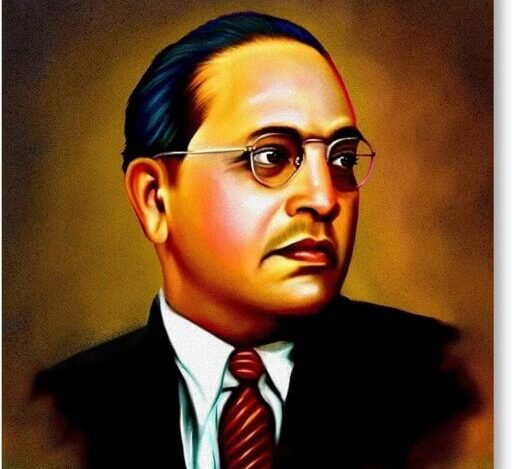
Poster-style graphic on the baluta system and Mahar watan: respect or servitude, with sources | वतनदार महार और बलुता पद्धति पर नेवी-ब्लू पोस्टर स्टाइल ग्राफिक: सम्मान या गुलामी, सोर्स के साथ
Baluta System and Mahar Watan: Respect or Servitude?
Respect and servitude can exist side by side, and the baluta system proves this.
The baluta system gave Mahars grain, privileges and land, and the watan system gave them an official position. It is not false to say that this system gave Mahars respect. Although a Mahar who held this position had to give way to a high-caste man (Mandloi, Vidyasagar University Journal of History, 2019-20, p. 106), he got respect in the eyes of the society. Let us examine both the aspects of the system.
Watan means hereditary land grant (Mandloi, p. 104). Thus for the Mahars it meant hereditary office and land (Mandloi, p. 104).
Prior to the British rule, this system was prevalent in various villages of Maharashtra (Mandloi, p. 104). The British had no role in the genesis of this system. A village officer got three things – a share of grain every year (balute), privileges (haqs) and land (inam) without tax. These combined were known as the watan of the balutedars (Mandloi, p. 105). The Mahars were included in the twelve balutedars of the village (Mandloi, p. 105). To know more about this community, read our post on Mahar Caste.
Was the Mahar watan a respected village role?
Here is the strongest version of the claim. In the mid-1800s, the British called the Mahar “the village eye” and said he could settle a boundary dispute between two farmers (R.N. Goodine, via Mandloi, p. 106). A different colonial writer said Mahars were proud to transport money to the district from the village (A. Robertson, via Mandloi, p. 106).
Additionally, the system ranked Mahars in the first row of village servants, suggesting their service was important (Mandloi, p. 105). In 1874, the Bombay Hereditary Offices Act also acknowledged Watandar Mahars as hereditary village officers (Mandloi, p. 110). In servant castes, there was real respect.
Baluta and Respectful Claim
The Baluta system was more accurate. All males of the Baluta age group were forcibly enlisted to serve the village (Mandloi, p. 105). The Mahars performed the most menial tasks of the village (Mandloi, pp. 105-106). It was considered impure. So Mahars were considered untouchables (A. Robertson, via Mandloi, p. 106).
Second, the rules of service were clearly defined. In 1928, Ambedkar told the Bombay Legislative Council that the rules of service were indefinite. The hours of service were not fixed. If the officiating Mahar was absent from service, any of his relatives, even female relatives, were liable to service (Ambedkar, BAWS Vol. 2, p. 111, Mandloi). They could be required to serve at any time, day or night (Ambedkar, BAWS Vol. 2, p. 111, Mandloi).
Third, inadequate and uncertain pay further defined the servants’ condition. Ambedkar told the Council that the government’s actual payment to the Mahar servants was almost nothing. The maximum payment was Rs. 1-8-0, in Thana, and Rs. 0-13-4 in Nasik (Ambedkar, BAWS Vol. 2, p. 112, Mandloi).
The rest was baluta from farmers (W. H. Sykes, via Mandloi, p. 107). The land that Mahars farmed, the watan, was very small and was sub-divided among heirs. The sub-divided land was even further de-valued (M. G. Bhagat, via Mandloi, p. 107).
Fourth, the condition of being a servant to farmers further subjected the Mahars to servitude. Mahars were often subject to social boycott by farmers (Ambedkar, BAWS Vol. 2, p. 112, Mandloi). A Mahar had to step aside or make sure his shadow did not touch a person of higher caste, and wear a black thread (Mandloi, p. 106). The Sholapur District Gazetteer of 1884 described Mahars as “poverty stricken…hated and feared.”
Fifth, the system tied people down. For Ambedkar, the case system wasn’t merely a classification of labor. It was a classification of human beings who are ranked above and below one another (BAWS Vol. 1, Annihilation of Caste, p. 108). In 1939 he called the Mahar watan “a system of heartless exploitation” (Janata, 1939, p. 115).
What did the Watan Bill aim to do?
The Baluta System functioned through brawls or fights. Mandloi gives dates.
‘Balutas’ recruited others, mostly younger boys, to form gangs, called ‘masalas’. There were constant fights between the balutas, to dominate the space where they recruited. Eventually, one baluta overpowered the others, so that, in effect, a ‘head baluta’ existed. The struggles between various ‘head balutas’ determined, in a manner of speaking, who the ‘baluta chief’ of that area was.
If ‘pardesi balutas’ challenged the dominance of ‘local balutas’ and succeeded, it meant that the ‘local balutas’ were demoted, and the ‘pardesi balutas’ were promoted. The ‘local baluta’ system was, therefore, unstable, since it was constantly changing.
Date
Event
Source
1874
Bombay Hereditary Offices Act defines “hereditary office”, includes Mahars in it.
Mandloi, p. 110
19 March 1928
B. R. Ambedkar presents Bill No. XII of 1928, in the Bombay Legislative Council.
Mandloi, p. 110; BAWS, Vol. II, pp. 72-73
3 August 1928
Speech on the Bill.
Mandloi, pp. 110-114; BAWS, Vol. II, pp. 75-89
24 July 1929
Ambedkar withdraws the Bill.
Mandloi, p. 114
17 September 1937
A new Bill to amend the Act of 1874.
Mandloi, p. 114
1941
Ambedkar tells the Governor about the new policy of the government which involves reduction in salary of officials and increase in taxes
Mandloi, p. 114
1959
The Bombay Inferior Village Watans (Abolition) Act, 1959, Act 1 of 1959. The act provided for the Abolition of Inferior Watans
The 1928 bill had five objectives i.e. for improving the conditions of Watandars, providing means for the Communal Watans, definition of Mahar Services, the cessation of Baluta and the freedom from the obligation of Mahar servants to serve the farmers (Mandloi, p. 111). Ambedkar suggested if the servitude were to be continued, the service should be honourably discharged (Mandloi, p. 112).
What is the history behind the Mahar watan’s abolition?
The Bombay Inferior Village Watans Abolition Act, 1958 (Act 1 of 1959) took care of this. Section 4 of this Act abolished the inferior village watans and terminated all incidents thereof as well as the obligation to serve (Bombay Inferior Village Watans Abolition Act, 1958, s. 4). The waters of such villages were resumed and the waters occupied therein were distributed to the watandars of those villages (Act, s. 5). Compensation was also given to the watandars (Act, s. 10).
Mandloi mentions that the Bhumiheen Satyagraha of Dadasaheb Gaikwad (1958-59) was also instrumental in the recognition of the land rights of the displaced (Mandloi, p. 117). Prohibition of bonded labour is also provided for in the Constitution (The Constitution of India, Article 23).
The persistence of this ‘respected role’ myth
This myth describes the functions as ‘office’, the hereditary land tenures as ‘inam lands’ and the duties as ‘village eyes’ (Mandloi, pp. 104-106). It does not describe being forced to perform bonded labour. Many of them experienced going without food and wages, and boycotts (Mandloi, pp. 111-112).
People don’t have to wonder who benefited from the change because of this movement. According to Ambedkar, the baluta system kept the Mahars enslaved to the farmers and rural area (Mandloi, p. 107). (A lot of information like these are hard to find. The Ambedkarite Educational Program trains its participants on Journalism (Blogging/SEO, website development) and how to use technologies to fish for information. These are key to educating the activists for effective advocacy.)
Takeaway
A baluta system was an advancement system from the previous condition (servitude) and was not necessarily overseen or regulated. Threats of boycott were communal and individual (Mandloi, pp. 105-112). Failing to fulfill a baluta meant surrender of all land rights to the baluta system. Ambedkar unsuccessfully tried to end the Watan system in 1928, but the system was formally abolished in 1959 (Mandloi, p. 114; Act, s. 4).
Today, X bans accounts. Reels get shadowbanned. WhatsApp groups get reported. So Bahujans need their own platforms: emails, blogs, websites, AI tools.
The Ambedkarite Educational Program is made for exactly this. ₹297 lifetime, includes Prompt Engineering, Google AI, Website Building, Email Marketing, Blogging & SEO, Canva, plus all future courses free.
What is the baluta system? It was the village arrangement that paid village servants a yearly grain share, customary rights and inam land. It dates from the medieval era and continued under British rule (Mandloi, pp. 104–105).
What was the Mahar watan? It was a hereditary office plus a land grant given to Mahar village servants (Mandloi, p. 104).
Did Ambedkar try to abolish the Mahar watan? Yes. He moved Bill No. XII of 1928 on 19 March 1928 and withdrew it on 24 July 1929 (Mandloi, pp. 110, 114). He moved another bill in 1937 (Mandloi, p. 114).
How was the Mahar watan abolished? The Bombay Inferior Village Watans Abolition Act (Act 1 of 1959) abolished inferior village watans in section 4 (Act 1 of 1959, s. 4).
Is forced labour illegal in India today? Yes. Article 23 of the Constitution prohibits begar and similar forced labour (Constitution of India, Article 23).
Further reading (cited by Mandloi, not read for this article): H. Kotani, “Conflict and Controversy over the Mahar Vatan” (Manohar, 1997); Gail Omvedt, Dalits and the Democratic Revolution (Sage, 1994).
What’s your take? Drop a comment below and share this article with someone who still believes the myth.