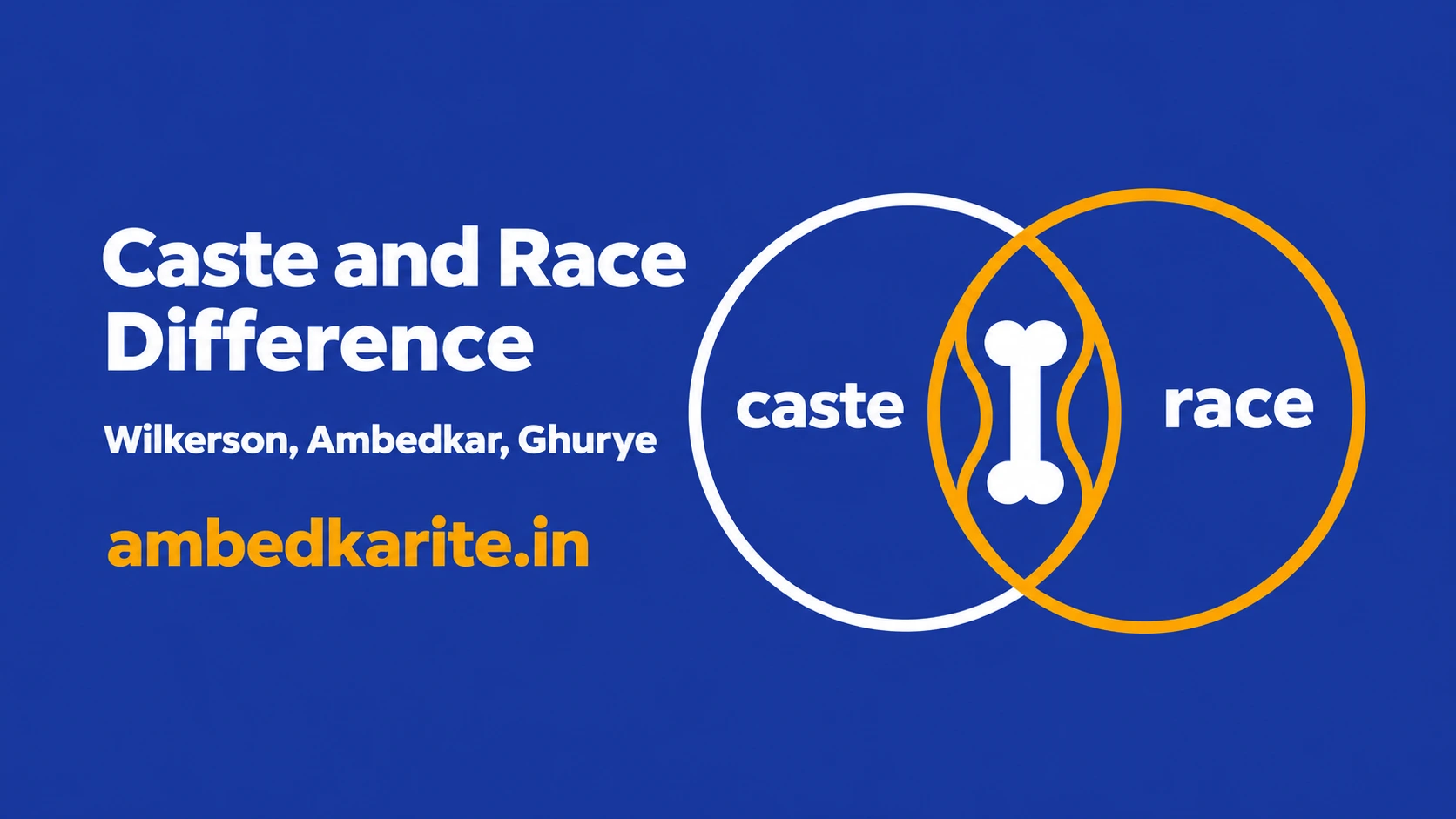
The caste and race difference is disputed among scholars (Michigan Journal of Race and Law, 2020). Scholars differ in their views on the connection between caste and race. One similarity is the way members of both societies are ranked based on birth. Wilkerson gives the example of India and the US having similar ‘caste’ systems. One of the early writings on the connection between race and caste in India was published in 1932 by G.S. Ghurye. According to Wilkerson, in this context race takes the place of ‘skin’ and caste of ‘bones’. One Dalit engineer believes ‘skin’ color also plays a role in identifying members of the lower caste. Caste, in general, is a birth-based permanent subordination of certain individuals or groups in society. The following information is based on studies published by 2026 November 25.
Wilkerson’s Argument: Bones and Skin
According to Wilkerson, race functions as a signifier to whoever’s caste one is supposed to occupy (2020, NPR). She claims race was later added to caste to give more justification to the system (2020, NPR). Wilkerson’s book has been widely lauded for “labeling” this new framework of racism (2023, Spectrum Magazine).
Dalit is a term for people from communities once labeled “untouchable” (The Seattle Times, 2020). Endogamy is the rule of marrying only within one’s own group (BAWS Vol 1, Castes in India).
Elsewhere, the anthropologist Arjun Appadurai has argued that caste has evolved over long periods of time to become an element of a society’s cosmology (2020). In contrast, he says, white supremacy and racism were created to legitimize domination over others (2020). Dalit journalist Yashica Dutt has also taken issue with Wilkerson’s work for failing to include the experiences of people of color (2020).
Panashe Chigumadzi has written that of all the scholars and authors, Wilkerson most resolutely pushes race to the background (2020, Boston Review).
Where scholars say the caste and race difference lies
In the view of André Béteille, race is virtually non-existent in India (2016, Sciences Po CERI). Another scholar, Gupta, has argued that in other contexts besides India, both race and caste should be viewed as separate means of social stratification (2016, Sciences Po CERI). Critics of this view have stated that Gupta’s analysis fails to understand that both race and caste should be conceptualized as social constructs (2016, Sciences Po CERI).
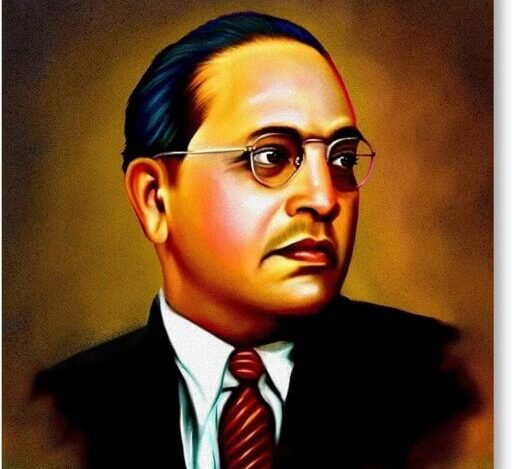
Ambedkar has also taken the view that people of India are of mixed descent and race unified by culture (1916, BAWS Vol 1).
The 1932 Publication ‘Caste and Race in India’ by G. S. Ghurye
Published in 1932 in London, Ghurye’s ‘Caste and Race in India’ takes up the analysis of Herbert Risley’s theory of race and caste. According to Risley’s theory, people’s position in the hierarchical structure of the caste system is correlated with their position in the hierarchy of the human race, which he proposed to measure using the nasal index.
Elsewhere it is indicated that Ghurye accepted Risley’s general line of argument and defects in his methodology. It has also been written that Ghurye postulated a relationship between race and caste in northern India.
Words decide how a dispute is heard, and at Durban in 2001 one word, “race,” was the argument (Sciences Po CERI, 2016). The Ambedkarite Educational Program teaches blogging and website building, so readers can publish careful explainers that define their words.
How Ambedkar responded to the Aryan race theory
In his 1916 work ‘Castes in India’ Ambedkar wrote “ethnically all are heterogeneous” to refute the notion that people of different castes are of different races. He then goes on to ask the reason for the division of a culture into different castes.
Later in another work ‘Who were the Shudras’, he rejects the theory of the Aryan invasion of India.
India, Durban and the UN: what the law says about descent
India at Durban 2001 also argued against grouping caste with race as they are not inherently linked. Nonetheless, in 2002 the UN Committee on Elimination of Racial Discrimination (CERD) held that ‘descent’ should be interpreted to include ‘systems of inherited hierarchical status’ including castes.
India, in its communication to the Committee, once again denied any relationship between caste and race (Human Rights Watch, 2007). At the Committee’s next session, CERD again upheld its position on ‘descent’ to include ‘systems of inherited racial inferiority’ (CERD, 2007). Some legal scholars have recently argued that in the US context caste should be considered race under Title 1981 (Brown and Thorat, 2024).
Where the two systems meet for South Asian Americans
Colorism is discrimination based on skin shade, and it can affect people within the same racial or caste group (Carnegie Endowment, 2025).
Unlike other South Asian communities, many Dalits in the US migrated relatively recently. Consequently, they remain socially and economically relatively marginalized compared to other South Asians. In a 2024 survey conducted by Carnegie’s Endowment for International Peace, 31% of Indian Americans reported experiencing discrimination based on skin color and 7% reported experiencing caste-based discrimination. Because the sample was large, these figures likely underestimate the actual prevalence of each among the Dalit population.
Caste and race difference: positions compared
| Position | Who holds it | Core argument | Limits or criticism |
|---|---|---|---|
| Caste is the structure and race the visible sign | Isabel Wilkerson | Race in the US is the signal of where a person fits in a caste hierarchy | Critics say it flattens India and sets race aside too far |
| Caste differs from race in origin | Arjun Appadurai (as summarized) | Caste grew over millennia as an organizing cosmology, unlike whiteness as a category of domination | Summary comes from a law-journal piece |
| Caste and race are different hierarchies | André Béteille; Gupta | Race is irrelevant to India, and the two are different modes of stratification | Critics say it does not treat race as a social construct |
| India is a mixed people united by culture | B.R. Ambedkar, 1916 | Cultural unity, not blood, makes a people homogeneous | His argument concerns India’s own history |
| Caste has a racial origin | Herbert Risley | Caste rank reflects racial type | Later scholars reject or revise it |
| A partial racial link | G.S. Ghurye, 1932 (as read by some scholars) | Race and caste correlate in northern India but not elsewhere | Scholars disagree about his stance |
| “Descent” covers caste | UN racial-discrimination committee, 2002 | Descent does not solely mean race and covers inherited status | India says caste is outside the convention |
| Caste can be race in US law | Legal scholars such as Brown and Thorat | Section 1981 reaches ancestry and ethnic characteristics | No court has decided |
Sources: NPR, 2020; Michigan Journal of Race and Law, 2020; Sciences Po CERI, 2016; BAWS Vol 1; Sociological Bulletin, 2002; Guha, 2025; CERD, 2002; Brown and Thorat, 2024. These are scholarly positions, not settled facts.
Takeaway on the caste and race difference
There are real difference between race and case historically and in the eye of the law. Scholars haven’t always been able to agree on these differences. Wilkerson compares systems of ancestral hierarchy in the US and India. Critics of Wilkerson’s book say that comparing the two in this fashion flattens the complexities of the Indian Caste System. Early accounts of this intersection have been anecdotal and no studies have been conducted to measure this. Readers should view each of these accounts with caution.
Whether caste is race is argued in universities, courts and the United Nations, and each side has its sources. Readers who want to explain that argument in plain language for their own communities can start with the Ambedkarite Educational Program, a lifetime-access course at ₹297 (about $4 USD) that covers blogging, website building, email marketing, AI tools and Google AI, with all future courses included. The free Movement page is another place to begin.
This article draws on Isabel Wilkerson’s argument as reported by NPR and reviewers, scholarship on G.S. Ghurye and the 1932 book, Ambedkar’s 1916 paper, UN committee documents, and a law-journal summary of the US debate. I did not read the 1932 book, and scholars disagree about it. Scholarly positions are described as positions.
Last updated: November 25, 2026
Frequently Asked Questions
What is the difference between case and race?
Scholars have not always been in agreement on these distinctions. Béteille and Gupta have stated that the two systems are separate from one another. The UN Committee on Elimination of Racial Discrimination has stated that ‘descent’ is to be interpreted as ‘caste’ (NPR, 2020).
What do case and race have in common?
Wilkerson compares the ancestral hierarchy in US and India, alongside Germany under the Nazis (Spectrum Magazine, 2023).
What is Caste and Race in India?
This is a 1932 work by G.S. Ghurye in which he assesses Herbert Risley’s theory of race and caste (Sociological Bul bulletin, 2002). Scholars are divided on Ghurye’s view on Risley’s theory (Guha, 2025).
What views do you have on race and caste?
Wilkerson (2020) argues that race and caste are separate concepts. In her view, people are assigned a place in the caste system and race is used to identify that position (NPR, 2020).
What do you mean by ‘caste race intersection’?
This refers to a situation where a person’s race and their position in the hierarchy of castes intersect. For example, a Dalit person with darker skin (The Seattle Times, 2020). No studies have been conducted to measure this.
This explanation has been provided for your information only.
Sources
- Michigan Journal of Race and Law: Are Caste and Race Really Analogous?, 2020
- NPR: It’s More Than Racism: Isabel Wilkerson Explains America’s ‘Caste’ System, 2020
- Spectrum Magazine: Caste: The Origins of Our Discontents, book review
- Boston Review: Who Is Afraid of Race?
- Sciences Po CERI: World Conference against Racism 2001 and caste (Questions de Recherche)
- Sociological Bulletin: The Hindu Nationalist Sociology of G.S. Ghurye, March 2002
- SAGE Journals: Guha, Hindu Nationalism and the Converging, Diverging and Intersecting Identities of Caste and Race in India, 2025
- Taylor & Francis: The Brahmanisation of Indian Sociology or the Birth of the Racial Theories of Untouchability, 2024
- Frances Pritchett: Ambedkar, Castes in India, 1916 (BAWS Vol 1)
- ResearchGate: Dr. B. R. Ambedkar on the Aryan Invasion and the Emergence of the Caste System in India, 2005
- UN Human Rights: CERD General Recommendation XXIX, 2002
- UN Human Rights: CERD concluding observations on India, 2007
- Human Rights Watch: Submission on India to CERD, 2007
- Arizona Law Review: Brown and Thorat, 2024
- The Seattle Times: India’s engineers have thrived in Silicon Valley. So has its caste system., reprinting The Washington Post, 2020
- Carnegie Endowment for International Peace: How Indian Americans Live, 2025