
The word ‘Bahujan’ literally means the majority or the greater part of the people. In India, Bahujan refers to the collective name of the communities and castes, who are oppressed, marginalized and suppressed. This essay explains the meaning of the Bahujan, the source of the word, the communities it refers to, the distinction between Bahujan and Dalit, the Bahujan Samaj and the Bahujan Samaj Party.
What is the meaning of Bahujan?
Bahujan means the greater or the majority part of the people. ‘Jana’ means ‘People’ in Sanskrit and ‘Bahu’ means ‘Greater’ or ‘many’. In the case of Bahujan Samaj, Samaj means ‘Society’ in Hindi (Elections.in). ‘Bahujan’ can also be defined as the ‘Majority of the society’, or the ‘greatest’ or ‘the most’ part of a society.
Politically and socially, Bahujan refers to the Scheduled Castes, Scheduled Tribes and the other Backward Castes (Wikipedia, Bahujan Samaj Party). The Bahujan Samaj Party also says, it represents the religious minorities of the country (Elections.in).
What is the source of the word?
The term is found in the scriptures of Buddhism and Hinduism, including the statement, Bahujana Hitaya Bahujana Sukhaya, which means ‘for the welfare and the happiness of the many’ (Wikipedia, Bahujana Sukhaya Bahujana Hitaya Cha). This statement is also attributed to the Buddha (Wikipedia, Bahujan Samaj Party). A writer says that Bahujan was first used by the Buddha in the 6th Century B.C. (Forward Press). We have a separate essay on Ambedkar and his turning to Buddhism.
In the 19th century, reformer Jyotirao Phule identified a large section of the oppressed in Maharashtra (Forward Press). In his own writing, he used the term “Shudra-Atishudra” to describe this community and told history as a defeat of the majority by a wily minority (Forward Press, citing Anupama Rao). Our post Who are the Shudras addresses this in more detail.
Who is included in the Bahujan?
Most commonly, the word Bahujan includes the Scheduled Castes, Scheduled Tribes and Other Backward Classes, with religious minorities also included (Wikipedia, “Bahujan Samaj Party”; Elections.in). Descriptions of each group in our posts are below:
- Scheduled Castes (Dalits): 16.6% of India’s population in the 2011 Census. The meaning of the term Dalit is explained in our post of the same name.
- Scheduled Tribes (Adivasis): 8.6% of India’s population in the 2011 Census. Our post on Scheduled Tribes and Adivasis covers this in more detail.
- Other Backward Classes: about 52% as estimated by the Mandal Commission (People’s Archive of Rural India, Report of the Backward Classes Commission). Our post on Caste Reservation in India explains the OBC quota.
As the numbers are from various years and sources, I have not combined them. How these groups relate to the varna order is explained in our post on How the Ranking Works.
Bahujan and Dalit
The terms overlap but are not interchangeable.
| DALIT | ||
|---|---|---|
| CORE MEANING | A term used to describe a broken or oppressed community. It was commonly used to describe the ‘untouchables.’ | |
| WHO IT COVERS | Mainly Dalits (formerly known as “Untouchables”) | |
| SCOPE | NARROWER | WIDER UMBRELLA |
As mentioned in our Dalit Panthers post, in 1973 the Dalit Panthers already defined Dalit to include all Scheduled Tribes, neo-Buddhists, landless laborers and women. Hence, there is some political overlap between the two terms. The use of “Bahujan” is to emphasize numbers and “Dalit” is to emphasize the condition of being broken and oppressed.
Kanshi Ram and the Bahujan Samaaj
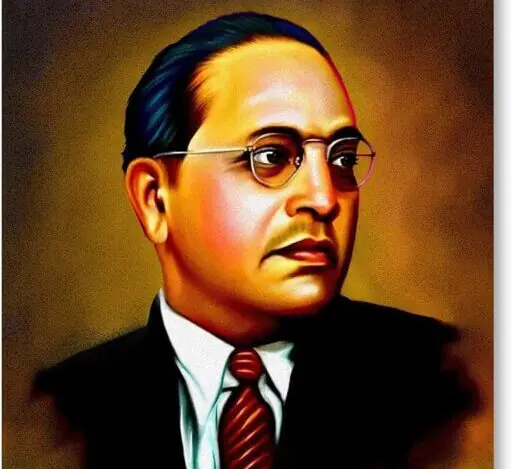
He founded the BSP (Bahujan Samaj Party) on April 14th, 1984 to commemorate the birth anniversary of Dr. Babasaheb Ambedkar and organized it under the umbrella of the Bahujan Samaj (Welfare party of the majority). He also organized other movements such as BAMCEF and DS4. This movement is a combination of ideas of many people like Jotirao Phule, Shahu Maharaj, the Buddha and Babasaheb Ambedkar. Our biography page covers Ambedkar.
The Bahujan Samaj Party
The Bahujan Samaj Party (BSP) is a political party founded by Kanshi Ram in 1984 (Elections.in). It claims to represent Scheduled Castes, Scheduled Tribes, OBCs, and Religious Minorities (Elections.in). It is largely active in the state of Uttar Pradesh where Mayawati has served as its Chief Minister for four terms (The Civil India, “Bahujan Samaj Party”). This report will explain the word ‘Bahujan’ and will not discuss the party’s electoral politics or its current status.
Why the word matters
For an audience outside of India, ‘Bahujan’ illustrates political identity formation of people of differing historical backgrounds. It also illustrates the convergence of Dalit, Adivasi and OBC movements. (Documenting and publicizing one’s history is crucial to a community’s survival. For communities that do not have the means to publicize their history, the Ambedkarite Educational Program (AEP) offers skills in blogging, using AI tools, email marketing and other digital media.)
Takeaway
‘Bahujan’ means ‘the majority’ or ‘the many’ and has its roots in Buddhism. It is a term coined by Jyotiba and Savitribai Phule and Kanshi Ram. In practice, it comprises of Scheduled Castes, Scheduled Tribes and OBCs, and often Religious Minorities. ‘Bahujan’ is often used interchangeably with ‘Dalit’, but ‘Dalit’ emphasizes the experience of being oppressed while ‘Bahujan’ covers the experience of being politically marginalized. Kanshi Ram built the Bahujan Samaj Party, BAMCEF and DS4, establishing a vigorous social and political movement for the advancement of the Lower Castes and OBCs.
Frequently Asked Questions
What does Bahujan mean?
In Sanskrit, “bahu” means “many” or “majority.” In India it means the oppressed castes and classes that represent the majority of the population.
What is the Bahujan Samaj?
It refers to the majority of the population in political discourse and includes Scheduled Castes, Scheduled Tribes and Other Backward Classes and in some cases, religious minorities.
What is the difference between Dalit and Bahujan?
“Dalit” refers to people, especially to the “untouchables”. “Bahujan” includes Scheduled Castes, Scheduled Tribes and Other Backward Classes. “Dalit” has also been expanded to include Bahujan people by the Dalit Panthers in 1973.
Who started the Bahujan Samaj Party?
Kanshi Ram started it on the birth anniversary of Dr. B. R. Ambedkar, on April 14, 1984.
Where does the word Bahujan come from?
It is found in Hindu and Buddhist texts including the dictum bahujana hitaya bahujana sukhaya which is said to be by the Buddha. It has also been used in social and political movements by Phule and Kanshi Ram.
Understanding caste is step one. Building digital independence is step two.
A growing number of Ambedkarite communities across the world are using AI, blogging and email marketing to build digital platforms that can’t be blocked to identify and address their issues of discrimination.
The Ambedkarite Educational Program teaches the exact same skills for life for just ₹297 (~$4 USD). Or you can join the Movement for free.
SOURCES
- Forward Press, “Indian renaissance and Bahujan heroes,” February 2019
- Wikipedia, “Bahujan Samaj Party”
- Wikipedia, “Bahujana sukhaya bahujana hitaya cha”
- Wikipedia, “BAMCEF”
- Vajiram & Ravi, “Bahujan Samaj Movement”
- Sociology Group, “Bahujan Movement: Meaning and History of Bahujan Samaj Party”
- Elections.in, “Bahujan Samaj Party (BSP)”
- The Civil India, “Bahujan Samaj Party (BSP)”
- Samajweekly, “Dalit Panthers: History, Role and Impact on Dalits”
- People’s Archive of Rural India, Report of the Backward Classes Commission