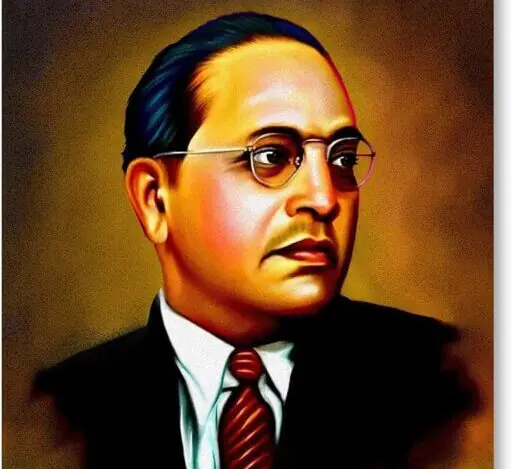

Navayana Buddhism is a modern offshoot of Buddhism that originated with Dr. B. R. Ambedkar in 1956, and is sometimes referred to as Neo-Buddhism or Ambedkarite Buddhism. The word “navayana” means “new vehicle” (Simple English Wikipedia, “Navayāna Buddhism”). Navayana Buddhism teaches that suffering occurs because of social injustices such as the inequality based on the caste system. This guide explains the key concepts of this school of thought, the beliefs of its adherents, the impact of Ambedkar’s conversion, and the differences with older Buddhist schools.
What is the meaning of Navayana?
“Navayana” means “new vehicle.” In Buddhism, a vehicle means a particular path or way of practice (The Ambedkarites, “Ambedkarite Buddhism (Navayana)”). The word was coined by Ambedkar. According to a 1956 press interview, Ambedkar referred to his brand of Buddhism as Neo-Buddhism or Navayana (Wikipedia, “Navayana”).
According to Ambedkar and his followers, Navayana Buddhism is not critical of the Buddha, but advocates for a restoration of the original spirit of the Buddha’s teachings that addresses the needs of suffering humanity. Our post who are the Dalits explains the community that spearheaded this movement. Our post on the caste system explains the hierarchy it sought to address.
Ambedkar’s conversion in 1956
As early as 1935, Ambedkar said he would leave the Hindu fold. The final public conversion from Hinduism occurred 21 years later (Wikipedia, “Marathi Buddhists”). On October 13, 1956, he said he would cease to be a Hindu (Wikipedia, “Navayana”). The following day, October 14, 1956, he converted to Buddhism at Deekshabhoomi in Nagpur (Wikipedia, “Twenty-two vows of Ambedkar”).
There is variability in the figures regarding the numbers of people who converted under Ambedkar’s leadership. It is said that between 380,000 to 500,000 people from oppressed castes and classes converted on October 14 and 15, 1956. The exact number may not be known, however it is known that it was a mass conversion (Wikipedia, Navayana, citing Buswell, 2013).
Before his death, Ambedkar presented his followers with the Three Jewels, the Five Precepts and the 22 vows (Wikipedia, Twentysol Vows of Ambedkar). A reference is made to the 22 vows on this website. Ambedkar died approximately two months later (Wikipedia, Marathi Buddhists). Every year on October 14, Deekshabhoomi commemorates the day as Dhammachakra Pravartan Day (Wikipedia, Navayana).
Why he turned to Buddhism
In his work, Ambedkar spoke about conversion as part of a larger plan to uplift the oppressed sections of the society. The Ambedkarites’ work states that conversion to Buddhism was a part of Ambedkar’s struggle for the rights of education, representation, the constitution, labour, and the annihilation of caste. The Secular Buddhist Network states that his conversion also represented a political and spiritual act of the members of the caste system renouncing their slave status, and embracing dignity, reason and equality. One of the works on this website gives a summary of his speech in 1936 and his work to end the caste system. His biography describes his early life. One of the works states that Ambedkar favored Buddhism over Communism/Marxism to offer a solution to socio-economic problems of India (Simple English Wikipedia).
Navayana Buddhism beliefs
Navayana focuses on ethics and social justice and more specifically, the issue of caste. Study guides explain it as being newer than other schools of thought and, therefore, more open to socialism and democracy. It is described as emphasizing less on metaphysics and more on ethics and social change (Understand UPSC, “Navayana Buddhism Movement”). Sources agree on some aspects and differ in others.
A restatement on rebirth and karma. One scholarly source states Ambedkar, in rejecting the determinism of karma and rebirth, regarded the two concepts as ethical cause and responsibility (Secular Buddhist Network). On the other hand, study guides say the practice of monasticism and other traditional practices such as karma and rebirth, samsara, and the Noble Truths, among others, were replaced (Study IQ, Prepp). Differing wording in different sources suggest that Navayana Buddhism rejects some traditional elements of Buddhism.
Emphasis on social change and ethics. The Secular Buddhist Network describes it as a humanistic tradition that prioritizes social and ethical change over metaphysical speculation.
A movement not a new school of Buddhism. Followers regard Navayana as a social movement and not as a completely new religion. Ambedkar also advised the Dalit/oppressed classes not to get involved in the existing branches (Marathi Buddhists, Wikipedia).
The 22 vows. All converts reject these and Hinduism by rejecting its Gods and Rituals and Brahmanical order (Secular Buddhist Network, citing Omvedt, 2003).
Practices vary. Virginia Hancock found Buddhism as practiced in daily life can differ from the tenets in Ambedkar’s principal book, and there are variations by place and by economic situation. Differences can range from minor interpretative changes to basic contradictions including those on karma and rebirth, meditation and social action (Virginia Hancock, 2001, summarized by INFLIBNET).
Navayana Buddhism book: The Buddha and His Dhamma
Ambedkar’s book The Buddha and His Dhamma is the main text for Navayana followers (Wikipedia, “Navayana”). It was published in 1957 (Secular Buddhist Network). According to INFLIBNET, the book was published to provide a basic text for new Buddhists, presenting the teachings of Buddhism as “sacred morality” rather than as a religion of faith. followers treat it as scripture, and Navayana shrines have images of both the Buddha and Ambedkar (Simple English Wikipedia).
Some followers read other books of Ambedkar and caste and our reading list includes a few of them.
What distinguishes Navayana from other schools of Buddhism
| Theravada and Mahayana | Navayana | |
|---|---|---|
| Central Idea | Karma and Rebirth | Reinterpreted or disregarded |
| Focus of Followers’ Life | Buddhist Monastic Order | Not emphasized |
| Role of Founder | Buddha | Buddha with Ambedkar |
| Navayana Chief Aim | Social Equality and liberation from Caste | Individual liberation |
| Main Text | Buddhist Scriptures | The Buddha and His Dhamma |
This table attempts to briefly explain some of the main ideas of Navayana. The details, however, are the subject of debate among followers and scholars. This reflects the source summaries provided earlier.
Where it Stands Now
Ambedkar’s conversion is recorded as the biggest mass religious conversion in history (Wikipedia, “Twenty-two Vows of Ambedkar”). Most of the Buddhist Marathi people are from the former Mahar community which got converted with him in 1956 (Wikipedia, “Marathi Buddhists”). Our post on the Mahar community covers the community background.
This movement is also connected to Indian laws. Article 17 of the Indian Constitution abolishes untouchability and our post on Article 17 explains it. Currently, under Indian law, people of Scheduled Caste including Buddhists, are allowed to retain their Scheduled Caste status (our post on casteism covers this in detail). The greeting that is used by followers is explained in our post on Jai Bhim.
For communities beyond India, Navayana is how identity and history is passed on to next generation. (Many Ambedkarite communities record and document their history using the the latest AI and IT tools, and several Email and WhatsApp based groups, The Ambedkarite Educational Program provides resources to learn these skills).
Takeaway
This movement began with the conversion of 500,000+ of Ambedkar’s followers to Buddhism in Nagpur in 1956. The name Navayana means New Vehicle. Its focus is on social equality and the abolition of the Caste system and treats The Buddha and His Dhamma as the main text. There is consensus among scholars that it sets aside or interprets some traditional Buddhist doctrinal ideas, but there is no consensus on how many. There is variation in practice and followers consider it more as a movement within Buddhism than a separate religion.
Frequently Asked Questions
What is Navayana Buddhism?
It is a modern, socially active form of Buddhism started by Dr. B.R. Ambedkar in 1956. The name means “New Vehicle.” It is also called Neo-Buddhism or Ambedkarite Buddhism.
When did Ambedkar convert to Buddhism?
He announced it on October 13, 1956, and converted on October 14, 1956 at Deekshabhoomi in Nagpur, along with several hundred thousand followers.
What is the main book of Navayana Buddhism?
The Buddha and His Dhamma, published in 1957 after Ambedkar’s death. Followers treat it as their main text.
How is Navayana different from Theravada and Mahayana?
It focuses on social equality and the end of caste, and it reinterprets or sets aside some traditional doctrines such as karma, rebirth and monasticism. Followers see it as a movement within Buddhism rather than a completely separate branch.
Understanding caste is step one. Building digital independence is step two.
Ambedkarite communities around the world are using AI tools, blogging and email marketing to document their experiences, challenge discrimination and build platforms that cannot be silenced.
The Ambedkarite Educational Program teaches exactly these skills: AI tools, website building, email marketing, blogging and Google AI. Lifetime access is ₹297 (~$4 USD). All future courses are included free.
Or join the Movement free to start learning today.
SOURCES
- Wikipedia, “Navayana” (citing Buswell, 2013 and others)
- Simple English Wikipedia, “Navayāna Buddhism”
- Secular Buddhist Network, “Dr. Bhimrao Ramji Ambedkar: A Secular Buddhist Vision for Liberation”
- INFLIBNET, “Navayana Buddhism” (summarising Virginia Hancock, 2001)
- The Ambedkarites, “Ambedkarite Buddhism (Navayana)”
- Wikipedia, “Twenty-two vows of Ambedkar”
- Wikipedia, “Marathi Buddhists”
- Understand UPSC, “Navayana Buddhism Movement”
- StudyIQ, “Navayana Buddhism in India”
- Prepp, “Navayana Buddhism – Art and Culture Notes”