For books about the caste system focusing on history and lived experience, this list provides some resources. It includes Ambedkar’s works, Dalit memoirs, fiction, and scholarship. The books address caste in various ways. I only include books that I could confirm exist, and the summaries are in my own words.
Where to Start
For example, if you want a bridge to the Western debate, read Isabel Wilkerson’s Caste. If you want Ambedkar’s own words, read Annihilation of Caste (annotated version). If you want a personal story, read Coming Out as Dalit or Ants Among Elephants. If you want to see caste in the world of work and society, read Caste Matters. If you want to see an example of a classic Dalit autobiography, read Joothan or Karukku. For fiction, read Untouchable by Mulk Raj Anand.
Start here: the book that brought caste to Western readers
This book first brought the concept of caste to the Western audience. It is Isabel Wilkerson’s Caste: The Origins of Our Discontents (2020). She argues that race in the US is the superstructure to a deeper caste system and compares the US to India and Nazi Germany. Dalit reviewers appreciate that she centered Ambedkar and Dalits in the book, although they say she misses key aspects of contemporary Dalit life in India (Foreign Policy, Sept. 2020). Our review of Wilkerson’s bestseller offers both perspectives. Readers approaching caste based on their concerns with race in the US will likely find value in this book.
B.R. Ambedkar, Annihilation of Caste (1936)
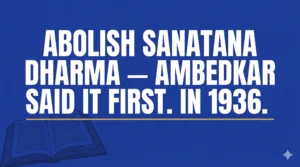
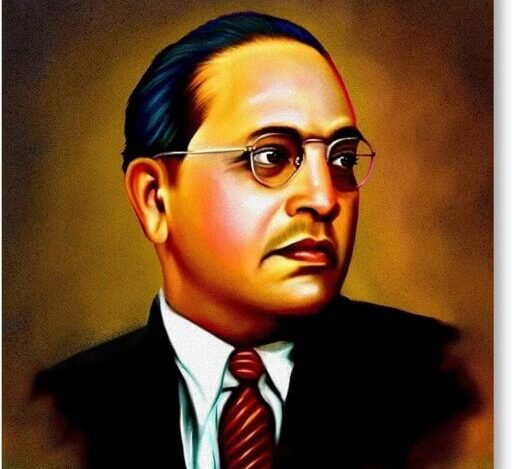
B.R. Ambedkar was a pioneer of Dalit literature. Written in the form of an essay, Annihilation of Caste (1936) was a speech prepared by Ambedkar that was never delivered. This essay presents a stinging critique of the Hindu caste system and is published with an introduction by Staughton Lynd (1991). The best recent edition is the Annotated Critical Edition, edited by S. Anand (2014). It provides footnotes that include English translations of Sanskrit verses quoted by Ambedkar (Verso).
Arundhati Roy, The Doctor and the Saint
This long essay is included with the Annotated Critical Edition of Annihilation of Caste. It is a study of the persisting system of caste in modern India, and the controversy surrounding Ambedkar’s speech and the subsequent criticism of Mahatma Gandhi (Verso). You can find background information about the speech here before reading the edited critical edition. For his life, you can read our biography page, and for his time in New York and London, you can read our post about his time in Europe.
Lived Realities of Caste: Memoirs
Yashica Dutt, Coming Out as Dalit (2019). Dutt describes being covert about her caste status to pass as upper caste in middle class India, and her eventual reclamation of her Dalit identity while working as a journalist in New York (Caste Free India; Caravan). This is a good personal account for those interested in Dalit literature.
Ants Among Elephants: An Untouchable Family and the Making of Modern India (Sabrang India, 2017). Sujatha Gidla’s memoir is a family history of the struggles of the Gidla clan to challenge caste oppression in Andhra Pradesh (India).
Omprakash Valmiki, Joothan: An Untouchable’s Life (1997). Scraps is the translation of Joothan. It reflects Valmiki’s boyhood in Uttar Pradesh in the 1950s, providing examples of teachers and other educated people in the area who continued to practice untouchability, despite the 1950 legal ban (Sabrang India; Himalayan Writing Retreat). Some consider it one of the most popular Dalit autobiographies (Caravan).
Bama, Karukku (1992) is sometimes cited as the first Dalit woman writer’s autobiography. It considers the intersection of caste, gender, class, and religion in varying degrees (Himalayan Writing Retreat). I go into greater depth on how I handled the “first” claim in the log below.
The Trauma of Caste: A Dalit Feminist Meditation on Survivorship and Abolitionist Healing by Thenmozhi Soundararajan explores feminism, caste and trauma. Soundararajan is the founder of Equality Labs. Their 2018 survey is cited in our US guide. Healing and organizing are two topics that should appeal to readers of this book.
Suraj Yengde, Caste Matters (2021) focuses on caste in globalized and transnational frameworks and in the corporate and media worlds, among other things (Caste Free India). Yengde discusses the Dalit gaze and dominant-caste shame in the book. Yengde is in the documentary Origin, as our review of Isabel Wilkerson’s book explains. To learn more about how caste intersects with the world of work in the West, see our guide to caste in employment.
Fiction
Mulk Raj Anand, Untouchable (1935). A short novel set over the course of a day and focused on Bakha, a 18-year-old sweeper (Indialogs, 2019). E.M. Forster wrote the preface to the first edition (1935) of Untouchable (National Taiwan University thesis). A version of Forster’s preface to the novel was first published in print in 1940 by Penguin Books. The same National Taiwan University thesis mentions that the novel gives three options regarding the problem of caste, namely, leaving the Hindu fold, Gandhi’s nationalism, and modern means of life, like the flush toilet. Some critics have seen Anand’s high-caste background as a restriction. Those interested in reading fiction by Dalit authors can read Joothan and Karukku along with Anand’s books.
History and scholarship
Eleanor Zelliot, From Untouchable to Dalit (1992). A scholarly account on the Ambedkar movement and the source of a claim about “Jai Bhim” that is addressed in our post on the Jai Bhim greeting.
Anand Teltumbde, The Persistence of Caste: The Khairlanji Murders & India’s Hidden Apartheid (2013), and Christophe Jaffrelot, Dr. Ambedkar and Untouchability: Analyzing and Fighting Caste (2004). Both, along with other scholarly works, have been mentioned in the praise for the annotated edition of The Annihilation of Caste published by Verso. They are of interest to readers who are keen on reading scholarly works dealing with various aspects of Ambedkar and politically engaged writing.
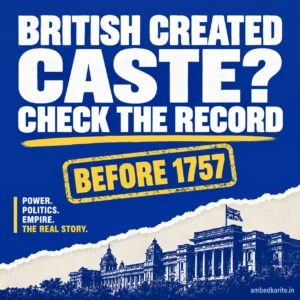
Nicholas Dirks, Castes of Mind (2001). Dirks argues that the British census hardened categorization of various castes (Nicholas Dirks, Castes of Mind, 2001). Critical writings on caste and colonialism are of special interest to readers who want to go beyond the works cited above. Our essay on the origin of Caste in India and British Myth addresses these debates.
How to choose
Only read one book? Start with Annotated Annihilation of Caste or a memoir. The former provides the argument and the latter the experience. Read scholarship later to familiarize yourself with the terminology. Our resources on caste and who Dalits are help if you are just learning the vocabulary.
(There are many ways to learn. Ambedkar and Dalit communities have blogs, use AI tools, and are on email lists. The AEP helps build the skills to interpret and analyze community resources.)
Takeaway
There are four main types of books one can read to learn about the caste system: i) works by Ambedkar, ii) Dalit memoirs, iii) fiction, and iv) scholarship. An overwhelming number of people start with Wilkerson’s Caste, but Ambedkarites say that it needs to be paired with Indian works. Next, the Annotated Version of the Annihilation of Caste and memoirs, Coming Out as Dalit, Joothan, and Ants Among Elephants are recommended. Lastly, read the book that answers your question and then read the next resource.
Frequently Asked Questions
What is the best book to start learning about the caste system?
For a Western reader, Isabel Wilkerson’s Caste is a common start. To hear Dalit voices directly, memoirs such as Coming Out as Dalit or Joothan are good choices, and Ambedkar’s Annihilation of Caste is the key primary text.
Which Ambedkar book should I read first?
Annihilation of Caste is the usual first choice. The annotated critical edition, edited by S. Anand with an essay by Arundhati Roy, adds footnotes and context.
Are there books by Dalit authors in English?
Yes. Examples include Coming Out as Dalit by Yashica Dutt, Caste Matters by Suraj Yengde, and Ants Among Elephants by Sujatha Gidla. Joothan and Karukku were written in Hindi and Tamil and are available in English translation.
Is there fiction about caste?
Mulk Raj Anand’s Untouchable (1935) is a classic short novel about one day in a sweeper’s life. Dalit-authored fiction and autobiographical novels are also widely read.
Understanding caste is step one. Building digital independence is step two.
Ambedkarite communities around the world are using AI tools, blogging and email marketing to document their experiences, challenge discrimination and build platforms that cannot be silenced.
The Ambedkarite Educational Program teaches exactly these skills: AI tools, website building, email marketing, blogging and Google AI. Lifetime access is ₹297 (~$4 USD). All future courses are included free.
Or join the Movement free to start learning today.
SOURCES
- Verso Books / Penguin Random House, Annihilation of Caste: The Annotated Critical Edition
- Indian Journal of Law and Justice, review of the annotated edition (Navayana, 2014)
- The Caravan, “Twelve books that form part of the arsenal of Dalit writing”
- Sabrang India, Dalit History Month reading list
- Caste Free India, anti-caste reading list
- Himalayan Writing Retreat, “Explore Dalit Literature”
- Indialogs, on Mulk Raj Anand’s Untouchable, 2019
- National Taiwan University, thesis on Anand’s Untouchable
- Foreign Policy, September 2020
- MIT Press Bookstore, Caste: The Origins of Our Discontents