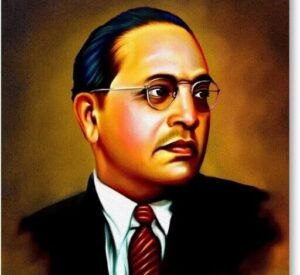
His name was Shivram Janba Kamble. He ran a printing press before Babasaheb finished school. He fought the devadasi system before anyone called it a system. And in 1927, he is the man who wrote to Ambedkar and asked him to come stand at the Koregaon pillar (Indian History Collective, citing Kumbhojkar).
Every 1 January, lakhs of people reach Bhima Koregaon. Almost nobody knows who started that tradition. 🪔
Then history forgot him. Let’s fix that.
Who was Shivram Janba Kamble?
He was born in 1875 in Pune, into the Mahar community (mr.wikipedia / MPSCExams). His father, Janba Kamble, was a vatandar Mahar of Bhamburde village — meaning the family held hereditary village duties tied to caste (mr.wikipedia). But Janba walked away from that. He took up a job with Europeans in Pune instead, and he let his son study (mr.wikipedia).
That one decision changed things. Shivram learned both Marathi and English (MPSCExams). He lived at Bhimpura 1373/6 in the Lashkar area of Pune, and he ran his entire movement out of that house (mr.wikipedia).
Academic sources list his life as 1875–1942 (Anupama Rao, The Caste Question, UC Press, Ch. 1). Marathi sources say 1940 (MPSCExams). Marathi Wikipedia just leaves the death year blank. Honestly, that gap tells you how badly this man has been documented.
Before Mooknayak, there was Somvanshiya Mitra
In 1904, Kamble founded the Shri Shankar Prasadik Somvanshiya Hitchintak Mitra Samaj in Pune and opened a reading library with it (Literary Herm journal, citing Dalit education data). Marathi sources call it the first organisation in India built to organise Dalit society (mr.wikipedia).
Then he did the harder thing. From 1908 to 1910, he published a monthly magazine called Somvanshiya Mitra (mr.wikipedia; Maharashtra Board Class 8 History, Ch. 11). He wrote it, printed it, and distributed it himself.
That makes him the first Dalit journalist, printer, publisher and editor of the pre-Ambedkar era (mr.wikipedia). Mooknayak came in 1920. Kamble was twelve years ahead.

One line from his very first issue still hits. He asked, in plain Marathi, why a man who refuses a Mahar’s touch and treats his shadow as pollution will happily touch that same Mahar after he converts to Christianity (mr.wikipedia). That’s not a complaint. That’s a trap, and he set it in print.
51 villages, one petition, zero fear
In 1903, Kamble called a meeting of Mahars from 51 villages at Saswad near Pune (Columbia University, Ambedkar timeline project). The meeting produced a petition to the Governor of Bombay. It asked for four things: government jobs, admission to public schools, entry into the police, and entry into the army (Columbia University, Ambedkar timeline). columbiacolumbia
Read that again. Schools and state employment, demanded in writing, in 1903.
He kept going. Academic work records petitions drafted by him in 1905 and 1910, both demanding that Mahars be reinstated into the British Army (Anupama Rao, UC Press, Ch. 1). In 1910 he organised a second Mahar conference at Jejuri, and that one produced a memorandum sent to the British government (Columbia University, Ambedkar timeline). The Mahar Regiment’s own record credits a Kamble petition in 1904, following Gopal Baba Walangkar’s in 1894 (en.wikipedia, Mahar Regiment). columbia
Why the army, though? Because the British had used “martial race theory” to stop recruiting Mahars, cutting off one of the few routes out of village caste economy (The Wire, 2018). Kamble argued the opposite case — that if the government gave them a chance, the Mahar community would not stay behind (mr.wikipedia).
Did the petitions actually work?
Slowly, yes. The 111th Mahars battalion was raised in June 1917 (en.wikipedia, Mahar Regiment). Then it was disbanded in 1921 (The Wire, 2018). Finally, the Mahar Regiment was raised in 1941 when the Second World War forced the British to widen recruitment (en.wikipedia, Mahar Regiment).
So the fight took nearly forty years. Kamble started it. He may not have lived to see it finish.
The devadasi fight nobody teaches you
This is the part that gets erased hardest.
Through Somvanshiya Mitra, Kamble ran a sustained campaign against the Murali, Jogtin and Devadasi system — the practice of dedicating Dalit girls to deities, which in practice meant forced sexual servitude (Maharashtra Board Class 8 History, Ch. 11). He wrote articles. He held meetings. Plus he directly appealed to families to stop offering their daughters at Jejuri to Khandoba and to Yellamma (Shaalaa, Maharashtra Board notes).
Then came the moment. A devadasi named Shivubai wrote him a long letter describing her life, and offered to marry any man willing (Shaalaa, Maharashtra Board notes). Kamble published it. His associate Ganpatrao Hanmantrao Gaikwad agreed, the marriage happened, and Kamble gave it wide publicity on purpose (Shaalaa, Maharashtra Board notes).
The result: in 1909, not a single girl was offered to Khandoba as a devadasi (Shaalaa, Maharashtra Board notes).
One man, one magazine, one year. That is what a printing press in Dalit hands can do. We’re in 2026 fighting the same battle on borrowed platforms that can ban us overnight — which is exactly why the Ambedkarite Educational Program teaches blogging, websites and email lists instead of chasing reach.
Historians note something sharper too. Kamble also pushed marriage and monogamy as the fix, which shifted power away from the panch and male household heads toward Dalit publicists like himself (Anupama Rao, UC Press, Ch. 1). Real history has edges. We’re not sanding them off.
His most uncomfortable argument — separate schools
Kamble defended separate schools for Dalit students. His reason was blunt: Brahmin schoolmasters carried caste into the classroom and reproduced it there, so mixed schools would simply relocate the humiliation (Anupama Rao, UC Press, Ch. 1).
In the first two decades of the twentieth century, separate schools and hostels for Dalit students came up in Bombay, Poona and Ahmednagar (Anupama Rao, UC Press, Ch. 1). For context, when Shahu Maharaj took the Kolhapur throne in 1894, only 234 Dalit students were in primary education. By 1921–22 that number was 27,830 (Literary Herm journal).
Separate access wasn’t the goal. Access was.
Bhima Koregaon 1927 — Shivram Janba Kamble made the call
Here’s the receipt that should be on every Bhima Koregaon post 👇
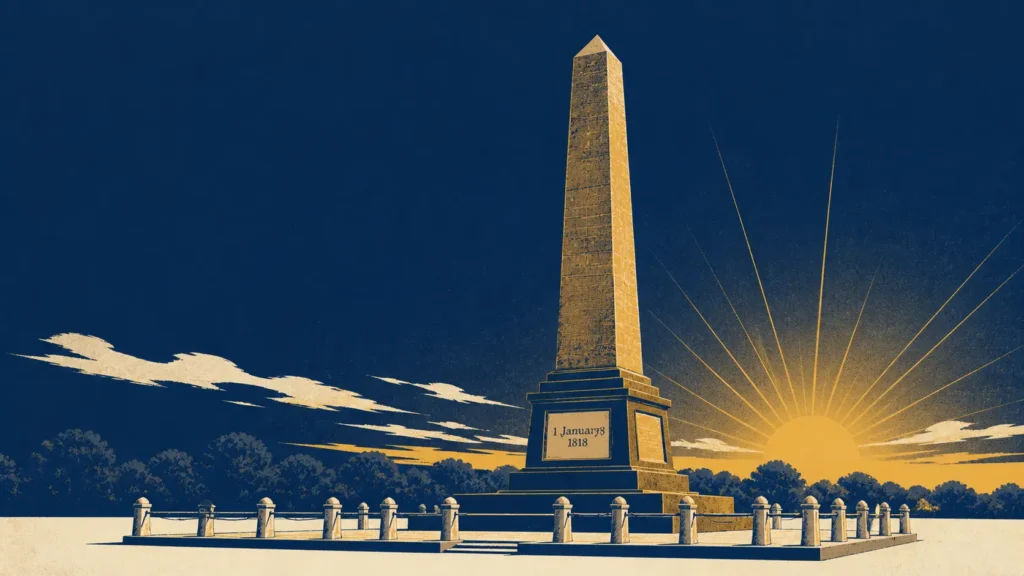
Kamble spent the first decade of the 1900s organising Mahar meetings at the Koregaon obelisk, reminding people that their ancestors fought there in 1818 (The Wire, 2020). The memorial was a focal point for early Dalit leaders like Walangkar and Kamble, who used it as proof of Mahar valour (Indian History Collective, citing Kumbhojkar).
Then, on the anniversary of the battle on 1 January 1927, it was Kamble who invited Dr Bhimrao Ramji Ambedkar to address the gathering (Indian History Collective, citing Kumbhojkar). That was Ambedkar’s first visit to the site (The Mooknayak). After that, Ambedkar returned every year and told Dalits to draw the same courage from it (The Mooknayak). themooknayakthemooknayak
In the famous photograph from that day, Ambedkar sits at the centre. Shivram Janba Kamble stands to his left, wearing a garland (The Wire, 2018).
Same year, Mahad happened. 1927 was not an accident. It was a build-up, and Kamble was part of the scaffolding.
Shivram Kamble Parvati Satyagraha, 1929
By 1929, Pune’s Dalits were far better organised than in earlier protests (The News Minute). And the shivram kamble parvati satyagraha was the test.
The Parvati temple sat on a hill, built by the Peshwas, closed to Dalits for centuries (Vajiram & Ravi, UPSC notes). On 13 October 1929, the satyagraha started under P.N. Rajbhoj, Shivram Kamble, Kadam and others (IJSRST research paper, 2020). Hundreds gathered at the base of the hill. Kamble led it, and non-Brahmin leaders plus some liberal Brahmins joined in (The News Minute).
Then 12 satyagrahis, including four women, started climbing the steps. Upper-caste Hindus assaulted them. Rajbhoj and several others were injured badly enough to need hospital treatment (The News Minute). The police and collector arrived and shut the temple down (The News Minute).
The temple committee’s defence was that the temple was private property (IJSRST research paper, 2020). The satyagraha was eventually called off on 20 October 1930 (IJSRST research paper, 2020).
They didn’t get in. But they proved who would show up, and who would swing first.
Shivram Janba Kamble information the textbooks skipped
Now the obvious question. Why is a man this central nearly invisible?
First, there is no English Wikipedia page for him — not a stub, nothing. The Marathi page exists but runs a few hundred words and literally lists his death year as unknown (mr.wikipedia). Most English-language shivram janba kamble information online today is either MPSC exam cram notes or a 2012 Hindi blog post with no citations.
Second, the serious work is locked away. There is a full 194-page Marathi biography — Shivram Janba Kamble Yanche Charitra ani Pune Parvati Satyagrahacha Sankshipta Itihas by H.N. Navalkar, Sugava Prakashan, 1997 (CiNii library record, NCID BB18158119). Almost nobody outside Maharashtra has read it.
Third, who benefits? A pre-Ambedkar Dalit press is inconvenient for two stories at once. It breaks the claim that Dalit assertion only began with Ambedkar. It also breaks the claim that caste reform was handed down by upper-caste reformers. Kamble was neither waiting nor being saved. He was printing.
Timeline at a glance
| Year | Event | Source |
|---|---|---|
| 1875 | Born in Pune | mr.wikipedia |
| 1903 | Mahars from 51 villages meet at Saswad; petition to Governor of Bombay | Columbia University timeline |
| 1904 | Founds Somvanshiya Hitchintak Mitra Samaj + library | Literary Herm journal |
| 1905 | Petition for Mahar army reinstatement | Anupama Rao, UC Press |
| 1908–10 | Publishes Somvanshiya Mitra monthly | mr.wikipedia |
| 1909 | No girl dedicated to Khandoba as devadasi that year | Maharashtra Board notes |
| 1910 | Mahar conference at Jejuri; memorandum to British government | Columbia University timeline |
| 1917 | 111th Mahars battalion raised | en.wikipedia, Mahar Regiment |
| 1 Jan 1927 | Invites Ambedkar to Bhima Koregaon | Indian History Collective |
| 13 Oct 1929 | Leads Parvati temple satyagraha, Pune | The News Minute / IJSRST |
| 1940 or 1942 | Death — sources disagree | MPSCExams vs UC Press |
What he teaches Ambedkarites in 2026
Kamble had no platform, no funding, no reach. So he built a press and a library in 1904, and inside five years he had moved an entire ritual practice (Literary Herm journal; Maharashtra Board notes).
That’s the lesson. He didn’t ask for coverage. He became the coverage.
Educate. Agitate. Organize. Reading this is Educate. Today, Agitate and Organize run on tools he didn’t have — websites, email lists, blogs, AI. Accounts get banned. Reels get throttled. The only thing nobody can shadowban is a platform you own.
That’s the whole idea behind the Ambedkarite Educational Program — Prompt Engineering, Google AI, Website Building, Email Marketing, Blogging & SEO and Canva, with future courses added free. If you can’t afford it, use the coupon KUNALLONHARE and take it free. If you can, ₹297 keeps this work running.
Or join the Movement free and start with the email list.
Shivram Janba Kamble printed his own paper because nobody would print him. A hundred and twenty years later, the printing press is free. The excuse isn’t. ✊
What’s your take? Drop a comment below and share this article with someone who still believes the myth.
FREQUENTLY ASKED QUESTIONS
Who was Shivram Janba Kamble?
He was a Dalit writer, editor and organiser from Pune, born 1875, from the Mahar community. He founded the Somvanshiya Hitchintak Mitra Samaj in 1904, published the magazine Somvanshiya Mitra from 1908 to 1910, and is described as the first Dalit journalist, printer, publisher and editor of the pre-Ambedkar period.
Did Shivram Janba Kamble invite Ambedkar to Bhima Koregaon?
Yes. Historian Shraddha Kumbhojkar’s work records that Kamble invited Dr Ambedkar to address the gathering at the Koregaon memorial on 1 January 1927. It was Ambedkar’s first visit to the site, and he returned every year after.
What was the Somvanshiya Mitra newspaper?
A Marathi monthly magazine Kamble published between 1908 and 1910. He used it to demand education and army jobs for Mahars, and to run a public campaign against the Murali, Jogtin and Devadasi dedication system.
What did Shivram Janba Kamble do against the devadasi system?
He wrote articles, held meetings and appealed to families to stop dedicating girls at Jejuri. He published devadasi Shivubai’s letter, arranged her marriage to his associate Ganpatrao Hanmantrao Gaikwad, and publicised it. As per Maharashtra Board history material, no girl was offered to Khandoba as a devadasi in 1909.
When did Shivram Janba Kamble die?
Sources disagree. Academic work by Anupama Rao gives his dates as 1875–1942. Marathi sources commonly give 1940. Marathi Wikipedia leaves the death year unrecorded. No primary record has been verified.
SOURCES
- Anupama Rao, The Caste Question: Dalits and the Politics of Modern India, University of California Press, Ch. 1 — https://content.ucpress.edu/chapters/11115.ch01.pdf
- Columbia University, Ambedkar Timeline Project, 1900–1910 — https://ccnmtl.columbia.edu/projects/mmt/ambedkar/web/timeline_files/timeline_content03.html
- Indian History Collective, “The Contesting Memories of Bhima-Koregaon” (citing Shraddha Kumbhojkar) — https://indianhistorycollective.com/the-contesting-memories-of-bhima-koregaon/
- The Wire, “The Atrocities of Nationalism Offer History Lessons Beyond Bhima Koregaon” — https://thewire.in/caste/atrocities-nationalism-offer-history-lessons-beyond-bhima-koregaon
- The Wire, “On the History and Memory of the Battle of Koregaon” — https://thewire.in/history/battle-of-koregaon-memory
- The Mooknayak, “Remembering the Brave Mahar Soldiers of Bhima Koregaon” — https://en.themooknayak.com/dalit-news/dalit-history-month-special-maharashtras-proud-legacy-remembering-the-brave-mahar-soldiers-of-bhima-koregaon
- The News Minute, “Why Dalits should boycott Hindu temples” — https://www.thenewsminute.com/news/opinion-why-dalits-should-boycott-hindu-temples
- Maharashtra State Board, Class 8 History, Ch. 11 “Struggle for Equality” — https://maharashtraboardsolutions.com/maharashtra-board-class-8-history-solutions-chapter-11/
- Shaalaa, Maharashtra Board notes, “Religious Reform Movements” — https://www.shaalaa.com/concept-notes/religious-reform-movements_15230
- Wikipedia (Marathi), शिवराम जानबा कांबळे — https://mr.wikipedia.org/wiki/शिवराम_जानबा_कांबळे
- Wikipedia, Mahar Regiment — https://en.wikipedia.org/wiki/Mahar_Regiment
- CiNii Books record, H.N. Navalkar, Shivram Janba Kamble Yanche Charitra…, Sugava Prakashan, 1997 — https://ci.nii.ac.jp/ncid/BB18158119
- IJSRST, “Contribution of Dr B.R. Ambedkar in Nation Building” — https://ijsrst.com/paper/8647.pdf
- Scroll.in, “Why lakhs of Indians celebrate the British victory over the Maratha Peshwas every New Year” — https://scroll.in/article/801298/