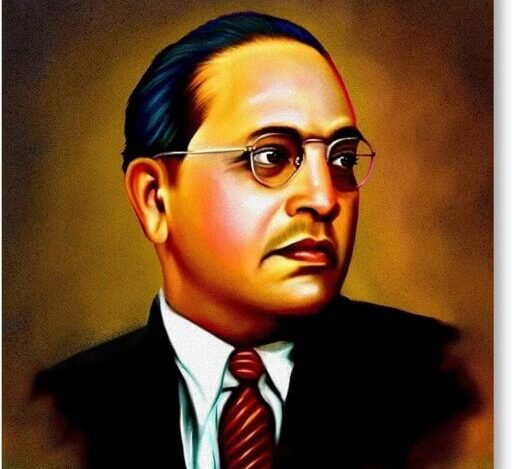
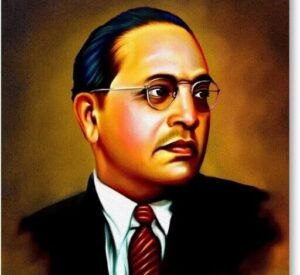
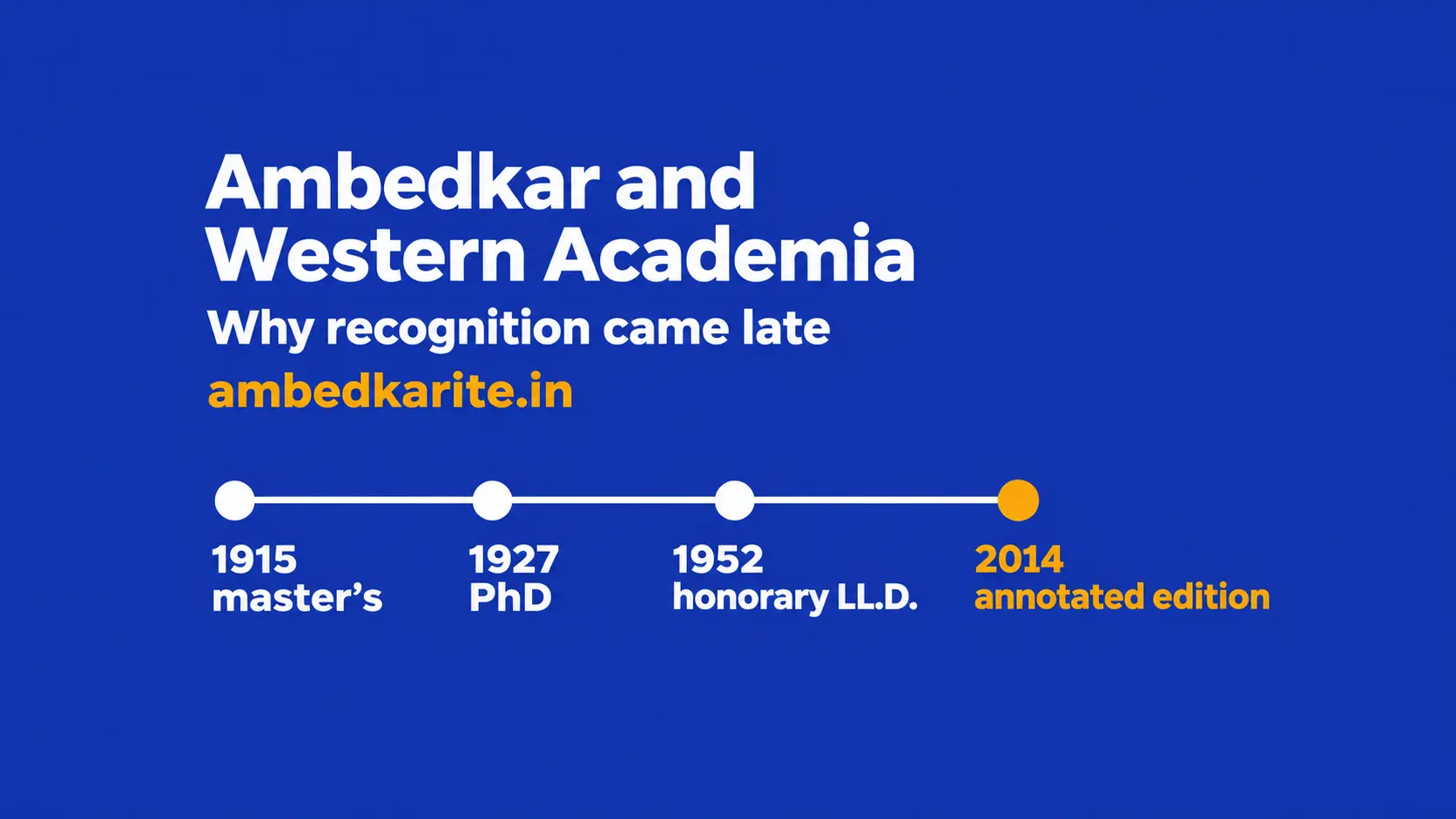
Ambedkar Western academia is a story of late attention, because scholars say his thought has only recently begun to receive recognition (Rao, 2022). Acknowledgement of Ambedkar’s work in the Western academic community has been relatively recent according to scholars (Rao, 2022). A renewed interest was sparked with the annotated version of Annihilation of Caste published in 2014 by Navayana and Ambedkar Initiative at Columbia University (Navayana, 2014). Anupama Rao of Barnard College published an article in 2022 tracing Ambedkar’s time at Columbia from 1913 to 1916 (Rao, 2022). Whether Ambedkar was ignored in the West remains a matter of debate among scholars. This study did not locate any bibliographic data to assess Ambedkar’s level of recognition at American universities. Ambedkar was awarded an honorary LL.D. by Columbia University in 1952 (Columbia University, 2026). B.R. Ambedkar (1891-1956) was a Dalit (previously known as ‘untouchable’) lawyer and the draftsman of the constitution of India (Columbia University, 2026). For further reading on these topics please consult our guides on ‘Ambedkar at Columbia’ and ‘The Annihilation of Caste’
Ambedkar Western academia: what scholars claim
A finding aid is a catalog that describes an archive’s holdings so that researchers can locate them (Rao, 2022).
Ambedkar neglected West: the reasons scholars give
Aishwary Kumar’s Radical Equality (2015) is another recent publication asserting that, post the Indian Constitution, the body of work of B.R. Ambedkar lost its critical edge and became more conformist. Rao’s The Caste Question (2009) takes Subaltern Studies to task for failing to locate and recognize the trail of anti-caste thinking.
Arundhati Roy believes that Gandhi has purposely eliminated Ambedkar from his narrative.
Of the sources cited herein, only Roy’s provides an analysis, and none of the three offer a bibliography.
Anupama Rao Ambedkar: Columbia and the archive
Anupama Rao, professor of history at Barnard, is the director of the Ambedkar Initiative at the Center of Comparative Literature at Columbia. Rao’s 2022 article ‘Ambedkar in America’ suggests Ambedkar spent his formative years at Columbia University from 1913 to 1916 and shaped his social and political views. Rao believes that to foster understanding and further critical analysis on the life and times of Ambedkar, private letters and papers pertaining to him need to be made publicly available.
Rao is also presently completing a book on Ambedkar’s first book, ‘Castes in India’ to throw more light on his American sojourn.
An archive’s finding aid lets any researcher locate a letter or photograph without visiting every box. Learning to organize sources so that readers can check them is part of the blogging and website building lessons in the Ambedkarite Educational Program.
What has recently changed with respect to Ambedkar’s recognition in the US?
In 2014, Navayana (with Verso books for UK and US) published a critical edition of Annihilation of Caste with an introduction by Arundhati Roy. According to Navayana, this edition was long overdue (2014).
Since 2012 the Ambedkar Initiative at Columbia University has sponsored an annual Ambedkar Lecture, a fellowship and research award and a course entitled “Race, Caste and the University” with publications and a website based on the archival material (Columbia University, 2026). On April 14th, 2026, they released a zine titled ‘A Speculative Map of New York City’ tracing some of Ambedkar’s presence in the area.
For further information about the increasing recognition of Ambedkar see our articles on Isabel Wilkerson’s Caste and the Maryland statue.
What has been documented about Ambedkar at US universities?
Rao’s course ‘Race, Caste and the University: B.R. Ambedkar at Columbia’ has students compose an aide memoire about Ambedkar’s time at the university using materials in the archive (Barnard College, 2022). Participants also read Ambedkar’s essay ‘Castes in India’ that he wrote for a seminar taught by Alexander Goldenweiser (Barnard College, 2022).
As part of this research, we also found no other university level courses focusing on the work of Ambedkar.
What no sources show
I could find no source showing the number of citations of Ambedkar in the West through the decades, nor the number of syllabi which include him. Thus, ‘ignored for 70 years’ is an unmeasured statement. What the sources do indicate is that Western scholars were slow to recognize his thought and those references to him increased in number over the years (Rao, 2022).
December 6, 1956, marks the death of Ambedkar. More details about this can be found in our ‘Mahaparinirvan Diwas’ article.
Ambedkar Western academia: what each source shows
| Source | What it claims or documents | What it cannot show |
|---|---|---|
| Rao, “Ambedkar in America” (2022) | Ambedkar’s Columbia years (1913 to 1916) left a mark; his thought has only recently begun to receive recognition; describes the Initiative’s finding aid | A measured rate of neglect: it is an argument and an archival account |
| Kumar, Radical Equality (2015) | The constitution-maker framing overdetermined his work and tamed its recalcitrant dimensions | Counts of citations or syllabi |
| Rao, The Caste Question (2009) | Subaltern Studies did not foreground anti-caste intellectual history | The same: an argument about a field |
| Roy, introduction to the 2014 annotated edition | The story of Gandhi has excised Ambedkar | Western scholarship specifically |
| Columbia records and Initiative | Master’s 1915; PhD 1927; honorary LL.D. 1952; Initiative with lectures, book series, course and fellowships | How many other universities teach him |
| Barnard course (2022 syllabus) | Course builds an Ambedkar finding aid from archives | Enrollment or reach |
| Citations or syllabi counts | None found | Not applicable |
Sources: Rao, 2022; CUNY, 2023; Roy, 2014; Columbia University, 2026; Barnard College, 2022. These are the scholars’ own claims as summarized by the sources.
Ambedkar and the West
In Rao’s view, Ambedkar was almost entirely neglected by the West until rather recently (Rao, 2022). As she states, the first honorary degree awarded to Ambedkar by a University in the West was given to him by Columbia University in 1952 (Rao, 2022). Other universities in the U.S. might also have awarded him an honorary degree before that, but there is no evidence to support this. Recognition of Ambedkar in the West increased following the 2014 edited volume published by Navayana (2014).
Users of this article should understand that each statement made by different scholars should be attributed to them personally. Most likely very few, if any, universities outside of Columbia University in the U.S. have taken up the cause of Ambedkar.
Readers who want to learn to read scholarship closely and write clear, sourced explainers can start with the Ambedkarite Educational Program, a lifetime-access course at ₹297 (about $4 USD) that covers blogging, website building, email marketing, AI tools and Google AI, with all future courses included. The free Movement page is another place to begin.
This article draws on Anupama Rao’s 2022 article (abstract and notes), Columbia University’s Ambedkar Initiative pages, a Barnard College syllabus, a doctoral thesis summarizing Kumar’s and Rao’s books, and the publisher’s page for the 2014 annotated edition. I did not read Rao’s article in full, and I found no count of citations or syllabi and no survey of other US universities. Each scholar’s claim is attributed to the scholar.
Last updated: November 28, 2026
Frequently Asked Questions
Who is Anupama Rao and what did she write about Ambedkar?
Rao is an academic at Barnard College who has spearheaded a number of initiatives to promote Ambedkar’s scholarship including publishing the article ‘Ambedkar in America: An Archive for our Times’ (2022).
What has been the influence of these initiatives to increase knowledge about Ambedkar in the West?
An example is the 2014 English edition of Annihilation of Caste published by Navayana in collaboration with the Ambedkar Initiative of Columbia University (2014).
Which universities in the USA incorporate Ambedkar in their curriculum?
We were unable to ascertain information on other universities in the USA to compare with (2022).
Generally speaking, there are few courses in the USA which include Ambedkar.
Sources
- Rao: Ambedkar in America: An Archive for Our Times, South Asia: Journal of South Asian Studies 45(2), 2022
- Navayana: Annihilation of Caste: The Annotated Critical Edition, 2014
- Columbia University: Ambedkar Initiative, Institute for Comparative Literature and Society, 2026
- Columbia University: ICLS Ambedkar Initiative, degrees and honorary LL.D.
- Barnard College: BC 3825, Race, Caste, and the University: B.R. Ambedkar at Columbia, syllabus, August 2022
- CUNY: doctoral thesis summarizing Kumar’s Radical Equality and Rao’s The Caste Question
- Roy: The Doctor and the Saint, The Caravan, March 1, 2014