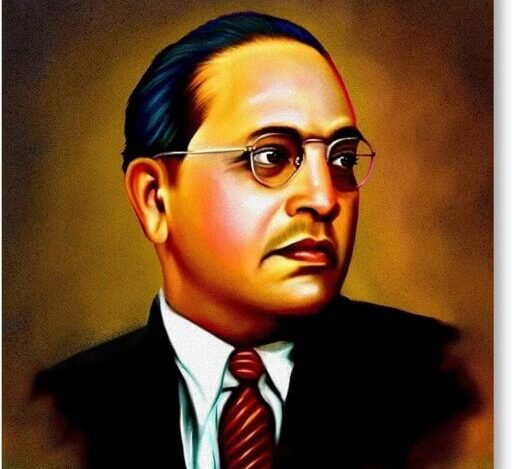

Ambedkar and Du Bois exchanged just one letter pair in 1946. In that year Ambedkar wrote to Du Bois requesting copies of a petition written by Black Americans and forwarded to the United Nations. Ambedkar was particularly interested in the case of Black Americans because, as he wrote, ‘the study of the case would be of great value to me.’ On Du Bois’s reference to untouchables in India Ambedkar wrote ‘I have every sympathy with the Untouchables of India.’ Scholars continue to debate Du Bois’ use of the term ‘color-caste’ to describe the racial condition in America. Supporters of Dalit-Black solidarity cite the 1946 correspondence as a seminal text in the creation of that solidarity, while others suggest greater caution is warranted. Dalit is the term used to describe individuals previously referred to as ‘untouchables’.
This document provides information known as of the 25th of November 2026, based on transcripts of the letters.
What the Ambedkar 1946 letter says
The National Negro Congress was a small US civil rights organization that had already sent a statement to the United Nations by July 1946 (Immerwahr, 2008).
The petition composed by Black Americans to the United Nations was being considered by India’s Untouchables to take up similarly with that body.
Ambedkar also indicated that he had previously been unaware of Du Bois’s work and would be grateful to receive two or three copies of the petition.
The reply: what was promised
Du Bois responded on July 31, 1946 including the statement of the National Negro Congress (Immerwahr, 2008). He also enclosed that the NAACP would give a more comprehensive statement to the UN at a later date (Immerwahr, 2008). Du Bois expressed that he would send them a copy of that statement when it was prepared (Immerwahr, 2008). He stated that he had heard good things about Ambedkar’s work and would be happy to help out in the future (Immerwahr, 2008).
There are no other letters written by the two men to each other in Du Bois’ papers (Immerwahr, 2008). One source claims Ambedkar wrote to Du Bois on July 2, 1946 (Forward Press, 2021).
A short letter from 1946 is known today because an archive kept it (Immerwahr, 2008). Keeping and publishing records is the work of website building and blogging, both taught in the Ambedkarite Educational Program.
Du Bois and untouchables: what he knew of India
Du Bois also had previous contact with Indian nationalists, including Lala Lajpat Rai and Mahatma Gandhi (Immerwahr, 2008). In 1932 Du Bois wrote that the Communal Award would allow members of the higher castes to create their own election constituencies, thus further disenfranchising Untouchables. (Immerwahr, 2008). Immerwahr writes that Du Bois was somewhat unfamiliar with the details of this case. (Immerwahr, 2008)
Du Bois once wrote that in India ‘the problem of color is at its most acute’ (ResearchGate, 2023). As reported in the same source, Ambedkar denied that Untouchability should be viewed as a case of racism.
Du Bois caste: the idea of color-caste
Du Bois coined the term ‘color caste’ in his Black Flame trilogy. As Suraj Yengde explains in his book Caste Matters, Du Bois also associated caste with race and color in relation to post-slavery societies (2024). According to Yengde, Du Bois used the term caste rather loosely (2024).
Spivak says that Du Bois’ use of caste had little to do with the dharma or laws of marriage in India (2018).
Ambedkar and Du Bois: the petitions in context
Regarding their petitions to the United Nations, Du Bois, along with the NAACP, prepared a petition which failed to move forward (2025). Ambedkar also failed to forward a petition to the U.N. and instead focused on work with Nehru’s government (2025).
The United States 1866 and 1875 Civil Rights Acts, which formed the basis of some of Ambedkar’s constitutional recommendations to the Scheduled Castes Federation, have been cited by various historians including Dissent (2021). During his stay in New Delhi Ambedkar met and questioned C. Vann Woodward about the condition of Black Americans (Immerwahr, 2008). Ambedkar also cited Herbert Aptheker’s The Negro in the Civil War in his 1945 essay.
Du Bois Dalit readings: contemporary uses
Suraj Yengde’s Oxford thesis takes the exchange between Du Bois and Ambedkar as the foundation of ‘Dalit-Black’ thought (Yengde, 2024). Later, as quoted by Round Table India, Ambedkar allegedly mentioned that within the US’s ‘social hierarchy of colour’ Dalits occupy the lowest rung (Round Table India, 2022).
Some critics have contended that Isabel Wilkerson’s account fails to capture reality constructionately vis-à-vis the US and South Asia (Dissent, 2021).
What the letters don’t say
According to one of Du Bois’ biographers, the letters constitute a request, a reply and Du Bois’ offer to assist Ambedkar (Immerwahr, 2008). Evidence suggested to this author that the two never met in person. None of the petitions either man wrote to the UN was ever tabled (Cambridge University Press, 2025).
Regarding Du Bois’ assessment of Indian politics of 1932, Immerwahr writes that it was ‘at best naïve’ (Immerwahr, 2008). Readers should therefore be cautious of claims that the two men were ‘close friends.’
Ambedkar and Du Bois: what the sources show
| Question | What the documents show | What is claimed beyond them | Source |
|---|---|---|---|
| The letters | One undated letter from Ambedkar (about July 1946) and one reply from Du Bois dated July 31, 1946; no other correspondence in Du Bois’s papers | A close friendship or a sustained exchange | Immerwahr, 2008 |
| Ambedkar’s request | Two or three copies of the National Negro Congress petition to the UN; his view that the two positions were so similar that studying the Black case was natural and necessary | That he sought joint action | Immerwahr, 2008; Dissent, 2021 |
| Du Bois’s reply | The statement enclosed; the NAACP would file a fuller one later and he would send a copy; sympathy with the Untouchables of India; an offer of help | That he promised a campaign | Immerwahr, 2008 |
| UN petitions | Du Bois’s NAACP petition did not reach the UN floor; Ambedkar did not follow through on his own | That the letters led to a joint petition | Cambridge University Press, 2025 |
| Du Bois on India | Close to Lajpat Rai; corresponded with Gandhi; a limited reading of the 1932 Communal Award | That he understood Ambedkar’s politics | Immerwahr, 2008 |
| Du Bois and “caste” | Scholars report he used “color-caste” for the US racial order; Yengde calls his definition fluid | That he used caste as India’s system works | Boundary 2, 2018; Yengde, 2024 |
| Ambedkar’s US sources | Civil Rights Acts of 1866 and 1875; Aptheker’s book; Woodward’s account of being questioned in New Delhi | That he took his constitutional ideas only from US sources | Dissent, 2021; Immerwahr, 2008 |
| A meeting | None found in this article’s sources | That the two men met | This article |
Sources: Immerwahr, 2008; Dissent, 2021; Cambridge University Press, 2025; Boundary 2, 2018; Yengde, 2024. The claims column describes what later writers sometimes say, not what the documents show.
Takeaway on Ambedkar and Du Bois
Only one letter each was exchanged by Ambedkar and Du Bois in 1946 (Immerwahr, 2008). Ambedkar’s letter was to request a copy of the petition Du Bois had circulated among Black Americans to present at the United Nations. Du Bois, in return, offered a copy of a later petition (Immerwahr, 2008). Du Bois expressed sympathy for the Untouchables but was limited in his knowledge of the Communal Award of 1932 (Immerwahr, 2008). Color-caste is used by Du Bois to describe the US social order and some scholars have compared it to the case system in India (Boundary 2, 2018). Supporters of Dalit studies have viewed the correspondence as evidence of the foundation of transnational solidarity among Dalits, but in actuality it was very short (Yengde, 2024).
Two short letters have carried a long argument, and clear, sourced writing helps readers separate the documents from the claims. Readers who want to learn to write and publish such explainers can start with the Ambedkarite Educational Program, a lifetime-access course at ₹297 (about $4 USD) that covers blogging, website building, email marketing, AI tools and Google AI, with all future courses included. The free Movement page is another place to begin.
This article draws on a historian’s transcript of the two 1946 letters from The Papers of W.E.B. Du Bois, scholarship on Du Bois’s use of “caste,” a Cambridge chapter on the two men’s UN petitions, and recent Dalit–Black writing. I read the letters through the transcript and the other sources in excerpts. Claims are attributed to those who made them.
Last updated: November 25, 2026
Frequently Asked Questions
What did Du Bois think about untouchables?
Du Bois replied on July 31, 1946, that he had ‘every sympathy with the Untouchables of India’ and had previously heard of Ambedkar and his work. Immerwahr suggests Du Bois’ knowledge of Indian politics was somewhat limited (Immerwahr, 2008).
What do other Dalit writers think about Du Bois?
Suraj Yengde suggests Du Bois’ letter should be seen as the first step in the establishment of Dalit-Black intellectual relationship (Yengde, 2024). Other Dalit writers have focused on the distinctions between race and castes (Dissent, 2021).
Did Du Bois ever use the term ‘caste’?
W. E. B. Du Bois allegedly used the term ‘color-caste’ to explain the US system of racial hierarchy (Yengde, 2024; Boundary 2, 2018).
I must stress that the information provided in these references should not be construed as legal advice.
Sources
- Daniel Immerwahr, Northwestern University: On B. R. Ambedkar and Black–Dalit Connections, 2008
- Dissent: What Caste Leaves Out, 2021
- Cambridge University Press: W.E.B. Du Bois, Walter White, and B.R. Ambedkar’s Quest to Address Race, Caste, and Class
- Boundary 2: Gayatri Chakravorty Spivak, Du Bois in the World, 2018
- SAGE Journals: Suraj Yengde, Race and caste in the making of US sociology, 2024
- Suraj Yengde: DPhil thesis, University of Oxford, 2024
- Forward Press: Phules, Ambedkar and Du Bois, 2021
- Round Table India: Ambedkar and Du Bois: In Common Pursuit of Equality & Justice
- ResearchGate: W.E.B. Du Bois and Ambedkar: Revisiting the Intellectual Historical Analysis of their Views on Race and Caste, 2023