
A 1972 militant anti-caste organization, Dalit Panthers, was inspired by the name and ideology of the Black Panthers in the US (Vajiram & Ravi, “Dalit Panthers Movement”). The movement impacts Dalit literature and politics in India. This article aims to illustrate the birth of the movement, its leaders, what its manifesto stated, and how it ended.
What were the reasons for the birth of the Dalit Panthers?
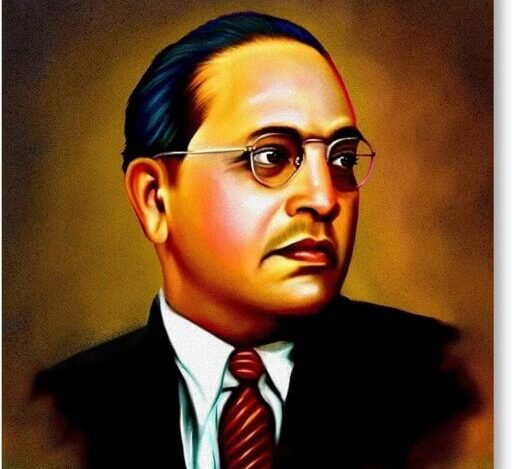
Ambedkar’s death in 1956 was the beginning of end of the national movement for Dalits. By the mid 1970s, different factions of the Republican Party of India (of which Ambedkarites were a part) had created a vacuum in Dalit Politics (Wikipedia, “Dalit Panthers”). Pawar states that in the aftermath of Ambedkar’s death, Dalit atrocities worsened and led activists like Namdeo Dhasal to start the movement (Pawar, “Dalit Panthers: Founding a Movement,” Outlook India).
The second reason was the 25th anniversary of India’s Independence. In August 1972, Dalit writer, Raja Dhale wrote a article “Black Independence Day” which was published in the Pune weekly Sadhana. The article critiqued the insensitivity of the law towards Dalits and the ‘Independence’ that was bestowed on Dalits. Pawar states the Dalit Panthers wanted to observe “Black Day” to commemorate the insensitive anniversary (Outlook India). Our article on the life of Ambedkar explains the leader that created the vacuum and how it influenced the Dalit Panthers.
Who founded the Dalit Panthers?
The usual suspects are Namdeo Dhasal, J.V. Pawar and Raja Dhale who were young Ambedkarite writers and activists (Vajiram & Ravi). They were mostly from the Mahar community of Maharashtra (Wikiwand, “Dalit Panthers”). See our post on the Mahar community for more info.
The exact date of founding is somewhat disputed. The most cited date is 29 May 1972, when Dhasal and Pawar had a walk through Bombay, and decided a militant organization was needed (Hindus for Human Rights, “Dalit Panthers: Founding, History, Manifesto”). Other sources say April 1972, or July 9, 1972, the date of the public launch (Wikipedia; Vajiram & Ravi). It is also unclear whether Dhale was a co-founder. Pawar said Dhale was invited later (Wikipedia).
Black Panther connection
They took their name from the Black Panther Party. As said by Pawar, on the streets of Bombay, he and Dhasal agreed to start a similar kind of militant movement like the Black Panthers (Outlook India). The Leaflet says the “sibling solidarity” between the Black and Dalit Panther movements was most prominent in the 1970’s (The Leaflet, “The Black Panther–Dalit Panther connection”).
This connection forms part of a longer tradition. The review of Caste covers letters written by Ambedkar and W.E.B. Du Bois in 1946. We elaborate on Du Bois’ work and where the book was successful in recognizing connections between the struggles. Caste differences were also articulated in different geographies, and the Dalit Panthers were also part of this tradition.
Namdeo Dhasal: poet and founder
Namdeo Dhasal was born on February 15, 1949 in a village near Pune. He died on January 15, 2014 in Mumbai. (Wikipedia, “Namdeo Dhasal”). He published his first book of poems titled Golpitha in the early 1970s (Wikipedia, “Namdeo Dhasal”). Some sources say the year of publication was 1972 and some say 1973. In 1973, the book won the Maharashtra State Award for Literature. (Wikipedia, “Namdeo Dhasal”).
A translation of some of his works by a critic, Dilip Chitre, has been published by Navayana. It’s titled Namdeo Dhasal: Poet of the Underworld, Poems 1972-2006. His works are associated with the revival of Dalit literature. We have other Dalit literature works on the reading list.
1973 Manifesto
In 1973, the Dalit Panthers published a manifesto. It was an integration of a class analysis of exploitation with Buddhism. Landlords, Capitalists, Moneylenders and a government dominated by the upper castes were identified as the enemies. (The Leaflet).
Their main contribution was to broaden the definition of Dalit. They included Scheduled Tribes, Scheduled Castes, Neo-Buddhists, landless laborers, poor peasants, women and all other economically and socially exploited classes (Samajweekly, “Dalit Panthers: History, Role and Impact”). They redefined the word Dalit and gave it a broader political identity. For more details on the meaning of Dalit, refer to our post Dalit Meaning. Our article on Navayana Buddhism explains the faith followed by most members.
Decline and split
The group collapsed in 1977 due to a number of reasons (Wikipedia). Some accounts point to internal conflict among leaders and government repression as the main reasons for the collapse (The Leaflet). The Dalit Panthers were officially dissolved on 7th March 1977 (The Leaflet). However, the Bharatiya Dalit Panthers continue to operate (Vajiram & Ravi). Other sources say that most leaders of the Dalit Panthers rejected Dhale’s decision to dissolve the Panthers and continued under the name Bharatiya Dalit Panthers (Vajiram & Ravi). According to Wikipedia, the Dalit Panthers officially ceased to exist in 1988.
Books on the Dalit Panthers
Vanjara’s account is the most extensive and the book that is referenced by the search term “Dalit Panthers: An Authoritative History.” For the account of the 1972 founding by one of the founders, see the Outlook India website (Outlook India). For a discussion of the arguments against caste that the Dalit Panthers reiterated, see our article on Ambedkar’s 1936 speech.
What is important for the Western reader
The Dalit Panthers are an excellent example of Black- Dalit solidarity, a topic covered by Western discourse on caste. Furthermore, they illustrate how the term “Dalit” was broadened and politicized by the community itself. (Communities document their history by publishing their records. The Ambedkarite Educational program provides the tools to blog, design websites, and email market to assist communities in documenting their own histories.)
Takeaway
The Dalit Panthers were born in Bombay in 1972, with Namdeo Dhasal, J.V. Pawar and Raja Dhale, writing in the Ambedkarite tradition and naming the group after the Black Panthers. Their 1973 manifesto expanded the definition of “Dalit” to other oppressed groups. Their activities peaked in 1977, and the group eventually split. Contemporary sources do not agree on the exact years for either the formation or breakup of the group. Dhasal is also well known for his contributions to literature. His Poems and the Manifesto are the two most important writings of the Dalit Panthers.
Frequently Asked Questions
What were the Dalit Panthers?
A militant anti-caste organisation founded in Bombay in 1972 by young Ambedkarite writers and activists, named after the US Black Panther Party.
Who founded the Dalit Panthers?
Namdeo Dhasal, J.V. Pawar and Raja Dhale are usually named. Sources disagree on whether Dhale was an original founder or joined shortly after.
When were the Dalit Panthers founded?
Most sources say 1972. The most-cited date is May 29, 1972. Other sources give April 1972 or July 9, 1972.
What did the Dalit Panthers’ manifesto say?
The 1973 manifesto linked Marxist ideas about class exploitation with Buddhism, named landlords, capitalists and moneylenders among the enemies, and widened “Dalit” to cover Scheduled Castes, Scheduled Tribes, neo-Buddhists, landless labourers, poor peasants and women.
Who was Namdeo Dhasal?
A Marathi poet (1949–2014) and co-founder of the Dalit Panthers, best known for his poetry collection Golpitha.
Understanding caste is step one. Building digital independence is step two.
Ambedkarite communities around the world are using AI tools, blogging and email marketing to document their experiences, challenge discrimination and build platforms that cannot be silenced.
The Ambedkarite Educational Program teaches exactly these skills: AI tools, website building, email marketing, blogging and Google AI. Lifetime access is ₹297 (~$4 USD). All future courses are included free.
Or join the Movement free to start learning today.
SOURCES
- Outlook India, J.V. Pawar, “Dalit Panthers: Founding A Movement”
- Wikipedia, “Dalit Panthers”
- Wikiwand, “Dalit Panthers”
- Hindus for Human Rights, “Dalit Panthers: Founding, History, Manifesto, and Anti-Caste Legacy”
- Vajiram & Ravi, “Dalit Panthers Movement”
- The Leaflet, “The Black Panther–Dalit Panther connection”
- Samajweekly, “Dalit Panthers: History, Role and Impact on Dalits”
- Wikipedia, “Namdeo Dhasal”
- Wikipedia, “Raja Dhale”