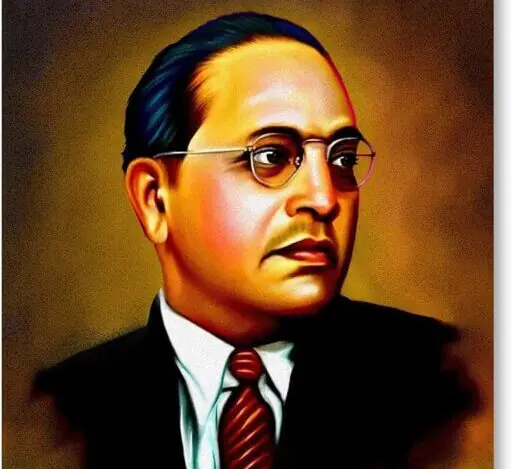

The Hindu Code Bill, proposed by Dr. Ambedkar in 1947, aimed to reform and consolidate the laws governing the personal relations of Hindus. These included marriage, divorce, inheritance, adoption and guardianship. The Bill also extended some rights to women that were met with stiff resistance. Dr. Ambedkar resigned from the cabinet in 1951, when the Bill was stalled. Its principles were eventually incorporated into four separate acts in 1955 and 1956. This brief sheds light on what the Bill contained, why it was opposed, and where it stands today.
What was the Hindu Code Bill?
Personal law covers the family’s relationships and deals with issues such as marriage and inheritance. Before any laws were enacted to reform them, various customs and practices governed these relationships for Hindus. The Bill sought to reform and consolidate these laws. It covered marriage, divorce, inheritance, adoption, guardianship and maintenance. It consisted of 139 clauses.
The roots of the Bill go back to the colonial period. In 1941, the Government of India constituted a four member Hindu Law Committee which was chaired by B.N. Rau (Pragnya IAS). The Committee prepared a draft code which was circulated widely and came to be known as the “Hindu Code Bill” (Wikipedia). Rau later became the Constitutional Adviser to the Constituent Assembly (Pragnya IAS).
Ambedkar and the Bill
Ambedkar introduced the bill on April 11, 1947 (People’s Archive of Rural India, BAWS Vol. 14, Part II). At the time he was the first minister of law and justice of India and the bill was referred to a select committee (People’s Archive of Rural India). The Constituent Assembly debated it from November 1947 to December 1950 (People’s Archive of Rural India). Our guide to the Constituent Assembly of India explains the body that heard the debate and our biography page covers the rest of his life.
Vasant Moon (the editor of the volume) mentioned that the bill was a first step towards the constitutional guarantee of equality for men and women (People’s Archive of Rural India). The Constitution of India ensures equality before the law. Scroll adds that the version of the bill that Ambedkar shaped also aimed at reducing the impact of the caste system and giving more rights to women (Scroll, “Cartoons on Ambedkar’s contribution”).
What it proposed
The reforms largely included the right to divorce, right to property and inheritance and a ban on polygamy (Scroll). A 2025 study says the reforms included the right to equality in marriage, divorce and property and inheritance (Zenodo, “Dr. B. R. Ambedkar and the Hindu Code Bill”). Our post on Ambedkar’s 1927 Manusmriti protest covers an earlier campaign for the reforms that improved the status of women.
The opposition
Hindu organisations strongly opposed the Bill, saying it was against the Hindu traditions and scriptures (The Mooknayak). Shyama Prasad Mookerjee and the Bharatiya Jana Sangh (The Wire) remained opposed to it. As reported by Scroll, during the first election (1952), some members of the Congress party suggested to Nehru to postpone the tabling of the bills till after the election. Scroll also reports that the bill was intentionally delayed to frustrate the efforts of Ambedkar.
Why Ambedkar resigned
In February 1951, the cabinet decided to table the bill. However, it was again postponed (The Wire). On September 22, 1951, the second part of the bill was dropped (The Wire). Ambedkar said the bill was “killed and buried, unwept and unsung after four clauses were passed” (The Wire; Ambedkar).
Ambedkar resigned from Nehru’s cabinet on September 27, 1951 (Anantam IAS; The Wire; People’s Archive of Rural India). He supported Nehru’s views on nationalisation and said he would not resign on the basis of that (Scroll). However, The Wire reports that the failure of the bill was not the only reason that he resigned.
The four acts that followed
The Hindu Codes adopted in parts as four separate acts are:
- The Hindu Marriage Act, 1955
- The Hindu Succession Act, 1956
- The Hindu Minority and Guardianship Act, 1956
- The Hindu Adoption and Maintenance Act, 1956
The Hindu Marriage Act, 1955
This act codified marriage and divorce for Hindus and codified monogamy. It provided for conditions for a valid marriage, judicial separation and divorce. It recognized children born out of an invalid marriage. The Act provided for guardianship in case of minor Hindus (The Mooknayak). The Act sought to secure women’s rights on marriage and on divorce (The Mooknayak).
The Hindu Succession Act, 1956
This Act, for the first time, provided the right of inheritance to a Hindu female (The Mooknayak).
The Hindu Succession Act of 1956, in its second and third forms, provided for equal rights of inheritance to a Hindu daughter as a son. The Act, however, specified that the daughter would be entitled to the right of inheritance only on the death of her father or mother (Civilsdaily). The Act, however, denied equal rights to a daughter in coparcenary property (Conventus Law).
The Congress government amended the Act in 2005. The amendment provided daughters equal rights in coparcenary property with sons (Conventus Law). The Supreme Court held in Vineeta Sharma v. Rakesh Sharma that a daughter has the right in coparcenary property (Conventus Law; The Leaflet) whether or not her father is alive, as of the year 2005, when the amendment was made.
Remaining Acts
The Hindu Adoptions and Maintenance Act, 1956, amended the law to allow for Hindu women’s capacity to adopt, and defined the maintenance responsibilities of family members (Anantam IAS). The Hindu Minority and Guardianship Act, 1956, was concerned with the guardianship of minors (Anantam IAS).
Ambedkar and women’s rights
Because of his work on the Bill, people remember Ambedkar for women’s rights as well as caste. An article on Testbook credits his arguments for the Bill and the reasons for his resignation as a significant chapter in the history of women’s rights in the battle against the patriarchal social order (Testbook, “Hindu Code Bill”). Similar concerns ran through his other activities as well, and our article on his 1936 speech gives details. He left Hinduism a few weeks before he died, and our article on Navayana Buddhism gives details about this.
For Western readers, the case is of a government reforming family law by statute against organized religious opposition. A minister resigned when the efforts failed. (More recently, in communities preserving this history, skills in blogging, AI tools and email marketing have become essential. The Ambedkarite Educational Program was built to teach these skills.)
Takeaway
On April 11, 1947, Ambedkar introduced a 139-clause draft to reform Hindu personal law and submitted it to Parliament. Religious groups were vehemently opposed to it, and it didn’t progress. Ambedkar resigned from the cabinet on September 27, 1951. After the 1951-52 elections, most of the recommendations were enacted as four laws in 1955 and 1956, including the Hindu Marriage Act 1955, and the Hindu Succession Act 1956. The 2005 amendment to the Indian Succession Act, 1925, gave equal property rights to daughters of a joint Hindu family. In 2020, the Supreme Court struck down the provisions of the Hindu law that discriminated against daughters and made equal the rights of daughters and sons with respect to ancestral property. It is a major aspect of Dr. Ambedkar’s work on women’s rights.
Frequently Asked Questions
What was the Hindu Code Bill?
It was a draft law to reform and codify Hindu personal law on marriage, divorce, succession, adoption and guardianship. Ambedkar introduced it on April 11, 1947.
Why did Ambedkar resign over the Hindu Code Bill?
After the Bill stalled and part of it was dropped in September 1951, he resigned from Nehru’s cabinet on September 27, 1951. He indicated that he had not felt adequately supported by Nehru. Other reasons also played a part.
What happened to the Hindu Code Bill?
After the 1951–52 election, its ideas were passed as four laws: the Hindu Marriage Act 1955, and the Hindu Succession Act, the Hindu Minority and Guardianship Act and the Hindu Adoptions and Maintenance Act, all of 1956.
What did the Hindu Succession Act 1956 do for women?
It gave women the right to inherit property. A daughter had an equal right of succession with a son after the parent’s death. Equal rights in joint family property came with the 2005 amendment.
What did the Supreme Court decide in Vineeta Sharma v. Rakesh Sharma?
On August 11, 2020, a three-judge bench held that daughters have equal coparcenary rights from birth, whether or not the father was alive when the 2005 amendment came into force.
Understanding caste is step one. Building digital independence is step two.
Ambedkarite communities around the world are using AI tools, blogging and email marketing to document their experiences, challenge discrimination and build platforms that cannot be silenced.
The Ambedkarite Educational Program teaches exactly these skills: AI tools, website building, email marketing, blogging and Google AI. Lifetime access is ₹297 (~$4 USD). All future courses are included free.
Or join the Movement free to start learning today.
SOURCES
- People’s Archive of Rural India, Dr. Babasaheb Ambedkar: Writings and Speeches, Vol. 14, Part II
- The Wire, “Ambedkar: Architect of Constitution and Women’s Empowerment”
- Scroll, “Cartoons on Ambedkar’s contribution to Hindu Code Bill”
- Wikipedia, “Hindu code bills”
- Anantam IAS, “Hindu Code Bill: Ambedkar’s Reform Project and the Four Acts of 1955-56”
- The Mooknayak, “The Hindu Code Bill and Dr. Babasaheb Ambedkar’s Vision”
- Testbook, “Hindu Code Bill”
- Zenodo, “Dr. B. R. Ambedkar and the Hindu Code Bill: A Constitutional Breakthrough for Women’s Empowerment in India”
- Conventus Law, on Vineeta Sharma v. Rakesh Sharma
- The Leaflet, on the 2020 judgment
- Civilsdaily, on the 1956 Act and the 2005 amendment
- Pragnya IAS, “Constituent Assembly — Polity Notes”
- Constitution of India (link: legislative.gov.in)
- Vineeta Sharma v. Rakesh Sharma (2020) 9 SCC 1 on Indian Kanoon