The Constituent Assembly of India created India’s constitution between 1946 and 1949. It was formed as part of the Cabinet Mission Plan of 1946 and had its first session in New Delhi on December 9, 1946. The Assembly adopted the constitution on November 26, 1949. This post will give you an understanding of what the Assembly was, who wrote the constitution, Ambedkar’s contribution, and where the written assembly debates can be found.
What Constituent Assembly means
A constituent assembly is the body given the authority to write a country’s constitution. For India, it was the body formed under the 1946 Cabinet Mission Plan, with members specifically elected for that purpose. It initially had 389 members. After the 1947 Partition, some members migrated to Pakistan and it had 299 members left.
The Muslim League in India boycotted that first meeting of the Assembly, as they were demanding partition of India and the creation of Pakistan. The Assembly functioned as the Dominion Legislature from the time India gained independence in August 1947 to the year 1950.
Who led it?
The first meeting of the Assembly was opened by the temporary chairman, Sachchidananda Sinha. Rajendra Prasad was elected as the president for the entire duration of the Assembly on December 11, 1946. The assembly adopted the Objectives Resolution on January 22, 1947. This laid down the goals for the new Constitution.
Who were the main contributors to the Indian Constitution?
While the work of many people is reflected in the Constitution of India, the main contributors, and the role they played, is listed below:
- President of the Assembly: Rajendra Prasad
- Constitutional Adviser: B. N. Rau
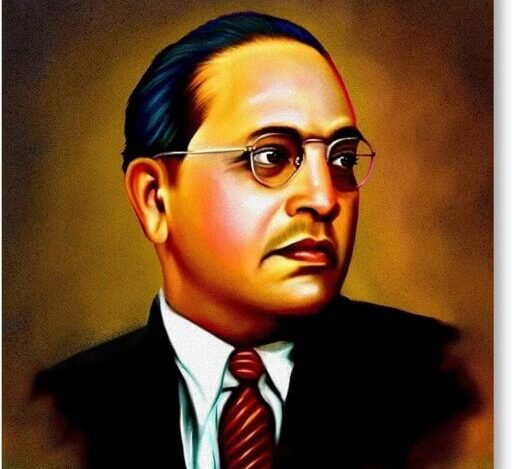
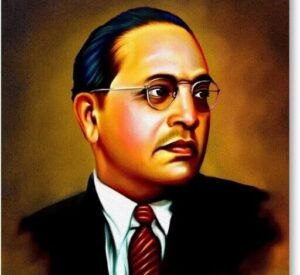
- Chairman Drafting Committee: B. R. Ambedkar
- Original Handwritten Calligraphy: Prem Behari Narain Raizada.
The roles mentioned above, of Prasad, Ambedkar, and Rau are further identified in relation to the Constitution in a Polity Guide (Pragnya IAS). As noted in an article in The Week, Rau undertook a comparative study and traveled to the drafting of constitutions in Ireland, the U.K, the U.S, and Canada, prior to preparing the first constitutions/instructions for India.
The original Document of the Indian Constitution was handwritten. The calligraphy was done by Raizada, and the illumination of the Preamble was done by Beohar Rammanohar Sinha (Pragnya IAS, Phoenix IAS).
The Drafting Committee
The Assembly constituted the Drafting Committee on August 29, 1947, with Ambedkar as Chairman, and it comprised seven other members (Vajiram & Ravi “Major Committees”). As noted in Wikipedia, Ambedkar was a member of the Assembly from December 9, 1946, and was first a member from Bengal, and thereafter from Bombay, post Partition. Following the Drafting Committee convened in 1948, Ambedkar on November 4, 1948, placed the Draft Constitution before the Assembly (Vajiram & Ravi, Pragnya IAS).
According to Wikipedia, he was the committee chairman for drafting the Constitution, based on the Assembly debates and the first draft by B. N. Rau (Wikipedia, ‘B. R. Ambedkar’). Our biography page offers a broader scope, while our Columbia and LSE article covers the kind of training he added for the job.
The debates
The Assembly met in eleven sessions from December 1946 to November 1949 (BharatDocs, ‘Constituent Assembly of India’). During the drafting stage, the Assembly examined 7,635 amendments. One of the exam prep sources stated that the Assembly moved, discussed and disposed of 2,473 amendments (Testbook). The entire process was completed in 2 years, 11 months and 18 days (Phoenix IAS; Pragnya IAS).
The official record of the repeat debates is published by the Lok Sabha (“Legislative Assembly of India”) Secretariat (Lok Sabha Secretariat, as cited in a Jindal Global Law Review paper). The debates show how particular articles were argued. For example, the Assembly debated and adopted what became Article 17, the abolition of untouchability on November 29, 1948 (constitutionofindia.net). Our article on the scope and meaning of Article 17 provides coverage of this debate. Reservation was also debated, and our article on Ambedkar and the ten years of the reservation claim also provides coverage on a particular myth.
Adoption and the final speech
The Assembly adopted the Constitution on November 26, 1949. Members signed it on January 24, 1950, and 284 signed. It came into force on January 26, 1950. The original text had 395 articles and about 145,000 words. November 26 is observed as Constitution Day, or Samvidhan Divas.
On November 25, 1949, Ambedkar gave his last speech to the Assembly as chairman of the Drafting Committee. He stated that in a little over a month, the country would enter “a life of contradictions.” In the political sphere, there would be a proclaimed equality with the institution of one-person one-vote, while in the social and economic spheres, there would still be an inequality with unequal valuation of persons. He cautioned that this would eventually jeopardize the health of political democracy.
The development economist Jean Drèze stated that the democracy Ambedkar envisioned, has actually neither flourished nor perished, and continues to be overburdened by these contradictions. Ambedkar’s further opinions on the Constitution are encapsulated in our post on his 1953 speech.
Why it matters beyond India
For many Western readers, the Assembly is an example of a diverse nation formulating a post-colonial constitution. It is also one of the few constitutions that specifically names and prohibits the practice of Untouchability. Our guide to the world’s caste laws shows how India compares to the world. The constitution text can be found on legislative.gov.in. (For the communities cataloging this history, the ability to Blog, use AI, and Email marketing are very much needed. The Ambedkarite Educational Program was created to teach these skills.)
Takeaway
The first session of the Constituent Assembly of India was on December 9, 1946, and the final constitution was adopted on November 26, 1949. It was a 389-member assembly and was later 299 after the Partition. Rajendra Prasad was the President, B.N. Rau was the Advisor, and Ambedkar was the chair of the Drafting Committee, thus many people were involved in the constitution writing. The debates are the best record of how each article was argued and Ambedkar’s last speech cautioned about the gap that existed between political equality and social equality.
Frequently Asked Questions
What is the Constituent Assembly of India?
It was the body that wrote India’s Constitution. It was formed in 1946 under the Cabinet Mission Plan, first met on December 9, 1946, and adopted the Constitution on November 26, 1949.
Who wrote the Indian Constitution?
Many people did. Rajendra Prasad presided over the Assembly, B.N. Rau prepared a preliminary draft as adviser, and B.R. Ambedkar chaired the Drafting Committee. The original was handwritten by calligrapher Prem Behari Narain Raizada.
What was Ambedkar’s role in the Constituent Assembly?
He was a member from December 1946 and chaired the seven-member Drafting Committee from August 29, 1947. He introduced the Draft Constitution on November 4, 1948.
How long did it take to write the Constitution?
Two years, eleven months and eighteen days, according to exam-prep and polity sources. The Assembly adopted it on November 26, 1949, and it came into force on January 26, 1950.
Where can I read the Constituent Assembly debates?
The Lok Sabha Secretariat publishes the Constituent Assembly Debates. The site constitutionofindia.net also summarises the debate on each article.
Understanding caste is step one. Building digital independence is step two.
Ambedkarite communities around the world are using AI tools, blogging and email marketing to document their experiences, challenge discrimination and build platforms that cannot be silenced.
The Ambedkarite Educational Program teaches exactly these skills: AI tools, website building, email marketing, blogging and Google AI. Lifetime access is ₹297 (~$4 USD). All future courses are included free.
Or join the Movement free to start learning today.
SOURCES
- Wikipedia, “Constituent Assembly of India”
- Wikipedia, “B. R. Ambedkar”
- Pragnya IAS, “Constituent Assembly — Polity Notes”
- Phoenix IAS, “Making of the Constitution”
- Vajiram & Ravi, “Major Committees of the Indian Constituent Assembly”
- BYJU’S, “Constituent Assembly of India”
- BYJU’S, “First meeting of Constituent Assembly”
- BharatDocs, “Constituent Assembly of India: How the Constitution Was Written”
- Testbook, “When was the Drafting Committee formed?”
- The Week, “Dr. B.R. Ambedkar’s final speech in the Constituent Assembly,” 2023
- Supreme Court Observer, “The doctor’s wise words on 25 November 1949”
- Deccan Herald, “Democracy in peril?”
- constitutionofindia.net, Article 17 and Assembly debate summary
- Jindal Global University, ICLR 2020 paper citing the Constituent Assembly Debates
- Constitution of India (link: legislative.gov.in)