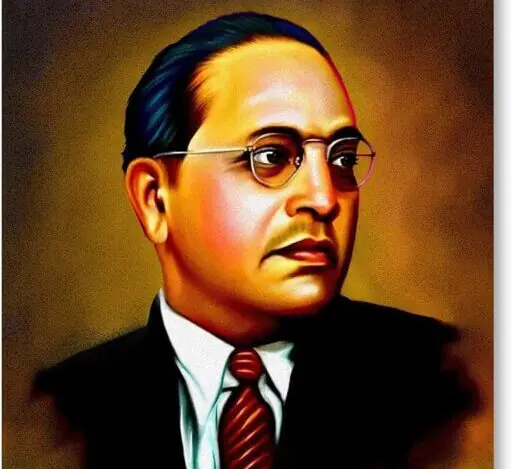
Dr. B.R. Ambedkar’s The Problem of the Rupee is a study on India’s currency, written in 1923, during his time as a student at the London School of Economics (LSE). Published as The Problem of the Rupee: Its Origin and Its Solution, this study shows he was a trained economist prior to his work in constitution-making. This post explains the main arguments of his study, the importance of his book, and its connection to the Reserve Bank of India. It provides additional information on Ambedkar’s writings on labour and the economy.
Ambedkar as an Economist
Dr. B.R. Ambedkar’s interest in Economics was prior to his Law and Politics studies. He earned his first degree in Economics and Political Sciences in Bombay, and later attended The London School of Economics (LSE History, Sue Donnelly) and Columbia University. Our post on his time at LSE and Columbia provides information on his education and personal life. The biography page provides more information on his life.
One paper suggests that by 1921 he was a professional economist (International Journal of American Research and Scholarship in Contemporary Times, “Dr. Bhimrao Ambedkar’s Thoughts on Economy Reform”). The remainder of his life was spent in politics and the study of society, making this part of his work less known.
What was the problem with the Rupee?
Rupee has been a confusing term since the British Rule on India. Towards the beginning of the 20th century India adopted a gold-exchange standard. As per this standard, the Indian rupee was a token currency and the value of the rupee was aligned against gold by keeping a reserve of gold and sterling in London (Ambedkar, The Problem of the Rupee, chapter on gold-exchange standard).
Did it work?
Ambedkar examined the workings of the system. Broadly speaking, Ambedkar argued that the system did not provide stable prices to India and favored imperial trade at the expense of Indian farmers. One summary states that the gold-exchange standard worked to further the interests of imperial trade at the expense of Indian agriculture (Anantam IAS, “Ambedkar’s Philosophy”).
What he advocated
Ambedkar supported a pure gold standard in which the rupee would be fully convertible into gold (IGNOU, Financial Management and the Problem of Rupees, unit 7). He stated that India could not afford a gold-exchange standard because that would increase the inflation and reduce the value of rupee (unit 7).
The reserve does not protect the rupee. In his thesis itself, he argued that a gold reserve cannot strengthen the gold-exchange standard (Ambedkar, The Problem of the Rupee). He also argued that the reserve, that is meant to protect against the fall in the value of rupee, is the primary cause of the fall under the exchange standard (Ambedkar).
Keynes on the other side. One paper says Ambedkar argued for a gold standard in opposition to Keynes’s suggestion that India adopt a gold-exchange standard (IJNRD, 2022). See the log for how I dealt with this.
A note on sources. Some websites say his position was in support of a gold-exchange standard. This is contrary to his thesis and to the academic summaries above, which show he criticized it.
How the thesis was accepted
Ambedkar submitted his thesis at the LSE in March 1923. His examiners rejected it. He resubmitted it in August 1923. The revised version was accepted in November 1923 (LSE History, Sue Donnelly). It is said that his examiners found it too anti-British, but LSE has said there is nothing in his student file to support this (LSE History).
The relationship with the Reserve Bank of India
In 1925, the British government appointed the Royal Commission on Indian Currency and Finance, more popularly known as the Hilton Young Commission (IJNRD, 2022). The Commission published its report in 1926. It recommended the establishment of a central bank. Based on the recommendations of this report, the Reserve Bank of India Act of 1934 was enacted. The Reserve Bank of India opened in April 1935 (Wikipedia, Reserve Bank of India).
Accounts state that he provided evidence to the Commission, and that its members each had a copy of his book when they visited India (IJNRD 2022; IGNOU unit 7). One account states that his evidence shaped the drafting of the design for a central bank (Anantam IAS). A legal commentary says that later, India adopted a fiat currency and not the gold standard he favored; however, his idea of a central bank was realized with the establishment of the RBI (Advocate Gandhi).
Hence the more cautious statement is this: his book was cited, and he was heard by the Commission; and a central bank was recommended. How much his suggestions impacted the final outcome is a question for historians. For now, “Ambedkar founded the RBI” can be stated to be an overstatement.
His work on labor
Ambedkar was a member of the Viceroy’s Executive Council as the Labor Member between 1942 and 1946 (LSE South Asia Blog, “B. R. Ambedkar and a Legacy of Labour Empowerment”). He held office for about four years (Dr. B. R. Ambedkar: The Pioneer in the Field of Indian Labour Welfare). In 1942, as he said, for the first time in the history of India, in the Tripartite Indian Labour Conference, representatives of the Employers and Workers met together (The Unknown Ambedkar, NewsClick).
He is known for decreasing factory workers’ hours to 8 a day. Sources differ on the starting point of his factory hours (12 or 14 hours) and the conference at which he announced it (IAS Gyan; NewsClick). His “Labour Charter” was presented to the Executive Council in September 1945 (LSE South Asia blog). For more information on his labour records, see the same blog.
State socialism and land
In his memo States and Minorities, for the Constituent Assembly, Ambedkar also endorsed state socialism and the nationalisation of agriculture, according to a summary by the labor movement (AICCTU, “Ambedkar and the Working Class Movement”). If, in the absence of the State, landlords and capitalists are free to raise the cost of production and cut wages, then, according to some readers, his economics leans towards welfare.
Read the book
Ambedkar’s The Problem of the Rupee is available in English, is out of copyright, and has a free online edition (Project Gutenberg). It is a technical book, and many readers start by reading a summary. Our reading list covers other books by and about Ambedkar.
Why it matters
For readers outside India, this is a reminder that Ambedkar was a scholar of labour and money, as well as caste. His economics and his caste work stem from the same concern which is how social and economic power are connected. Our summary of Ambedkar’s 1936 speech covers the caste aspect of his thought.
(Using writing, publishing and teaching your own history is one way to keep it from being forgotten. The Ambedkarite Educational Program was created to teach AI tools, blogging, website building and email marketing for this purpose.)
Takeaway
The Problem of the Rupee is Ambedkar’s 1923 study of India’s currency, written for his LSE doctorate. It criticised the gold-exchange standard and advocated for a gold standard. His book was cited when the Hilton Young Commission endorsed a central bank and the Reserve Bank of India was established in 1935. The extent of Ambedkar’s impact on the central bank’s design is debated. Outside of currency, Ambedkar was a member of the Viceroy’s Council and supported state socialism and reformed labour laws.
Frequently Asked Questions
What is The Problem of the Rupee?
It is Ambedkar’s 1923 book on the history of the Indian rupee and its monetary system, written for his doctorate at the London School of Economics.
What did Ambedkar argue in The Problem of the Rupee?
He criticised the gold-exchange standard that India used and argued for a gold standard with a convertible rupee. He said the exchange standard caused inflation and served imperial trade more than Indian farmers.
Did Ambedkar found the Reserve Bank of India?
No. The Hilton Young Commission recommended a central bank in 1926, and the RBI began in 1935. Writers say Ambedkar’s book and evidence influenced the Commission, but how much is debated.
What did Ambedkar do for labour in India?
As Labour Member of the Viceroy’s Executive Council from 1942 to 1946, he helped bring employers and workers together in tripartite conferences and is credited with the eight-hour working day. Please see the sources for the exact details.
Where can I read the book?
A free edition is on Project Gutenberg.
Understanding caste is step one. Building digital independence is step two.
Ambedkarite communities around the world are using AI tools, blogging and email marketing to document their experiences, challenge discrimination and build platforms that cannot be silenced.
The Ambedkarite Educational Program teaches exactly these skills: AI tools, website building, email marketing, blogging and Google AI. Lifetime access is ₹297 (~$4 USD). All future courses are included free.
Or join the Movement free to start learning today.
SOURCES
- Project Gutenberg, B.R. Ambedkar, The Problem of the Rupee: Its Origin and Its Solution
- IGNOU / eGyanKosh, “Financial Management and the Problem of Rupees,” Unit 7
- IJNRD, paper on Ambedkar’s rupee analysis, 2022
- IJARSCT, “Dr. Bhimrao Ambedkar’s Thoughts on Economy Reform”
- Wikipedia, “Reserve Bank of India”
- Anantam IAS, “Ambedkar’s Philosophy”
- Advocate Gandhi, legal and economic analysis
- LSE History, Sue Donnelly, January 2016
- LSE South Asia blog, “B. R. Ambedkar and a Legacy of Labour Empowerment,” January 2025
- ResearchGate, “Dr. B.R. Ambedkar: The Pioneer in the Field of Indian Labour Welfare”
- NewsClick, “The Unknown Ambedkar: India’s First Labour Minister”
- IAS Gyan, on Ambedkar and labour legislation
- AICCTU, “Ambedkar and the Working Class Movement”