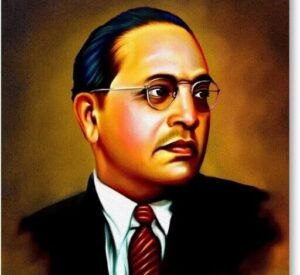
The record of Ambedkar’s work regarding labour rights is more extensive than the eight-hour work day. He led a labour party in the 1930s and later served as Labour Member of the Viceroy’s Executive Council, in effect, India’s labour minister, from 1942 to 1946 (The Leaflet, “The unknown Ambedkar: India’s first labour minister”). The following explains, with the help of sources, what the sources say regarding hours, unions, women workers, wages and what popular claims are disputed and/or overstated.
1936 Independent Labour Party
Ambedkar established the Independent Labour Party (ILP) in 1936 and drafted a detailed workers’ rights manifesto (The Leaflet). In 1937, the party described itself as a labour organization which worked for the interests of the labour classes and supported state ownership and management where necessary (The Leaflet). Frontier, a weekly magazine, gives the year of establishment of the party as 1936 (Frontier, Saji Narayanan C K, “Ambedkar, the Architect of India’s Labour Laws”). Our post on the Jai Bhim greeting mentions L.N. Hardas, a leader of this party.
Labour Member of the Viceroy’s Executive Council, 1942-1946
Ambedkar was appointed Labour Member by a Royal Warrant dated July 20, 1942 (The Leaflet). As Labour Member, he was part of the Viceroy’s Council. Therefore, he is referred to as the first Labour Minister of India. Some sources say that he held this office until April 1946, while others say he resigned from the office when the council was reconstituted in 1946 (The Leaflet). The next step in his career is detailed in our article on Dr. Ambedkar and the Constituent Assembly, while his life is covered in our Ambedkar biography.
On 7 August 1942 Ambedkar, then Labour Member of the Viceroy’s Executive Council, addressed the Fourth Tripartite Labour Conference in New Delhi (The Leaflet). The Tripartite System gave the representatives of the employees and the employers a voice in the framing of the labour policy. Many sources give the number of the Conference as 6th.
Ambedkar: 8 hour work day – the record is clear
It is believed that Ambedkar was the first to introduce the 8 hour work day, and announce it at the 7th Session of the Indian Labour Conference on 27 November 1942 (The Leaflet; The Mooknayak, “Dalit History Month”). Most of them say working hours were reduced “from 14 to 8,” while one of them says “from 12 to 8” (Vajiram & Ravi).
More details are provided below about the legal changes. During his time as Labour Member, the Factories Act of 1934 was amended three times (The Mooknayak, “May Day Special”). The 1946 amendment fixed a limit of 48 hours a week and 9 hours a day, and replaced the existing 54 hours a week and 10 hours a day, for all factories which operated throughout the year (The Mooknayak). As for the seasonal factories, it replaced 60 hours a week and 11 hours a day with 50 hours a week and 10 hours a day (The Mooknayak). A trade-union weekly writes that the legal 8-hour day in India came with the 1946 amendment, which was introduced by Ambedkar (Janata Weekly, “May Day: 12-hour Working Day Notifications”). Thus, the 1946 Act would more correctly be described as a 48-hour week with a 9-hour daily limit. So, the “14 hours” figure indicates what most workers did, and not what the legal limit was, prior to 1946.
Ambedkar trade unions: the 1943 bill
On 8th November, 1943, Ambedkar presented the Indian Trade Unions (Amendment) Bill in the Central Legislative Assembly, with a view to provide statutory recognition to trade unions (Round Table India, Pardeep Attri; IAS Gyan). I couldn’t find any sources on what happened to this bill, and hence this post makes no claims regarding the same. Our post on caste discrimination at work deals with a different, recent question, on workplace fairness.
Ambedkar and the welfare of women workers
Prior to Ambedkar, maternity law was formulated in India in 1929 and 1934 (The Mooknayak, ‘May Day Special’). The Mines Maternity Benefit Act was formulated in 1941 (IAS Gyan) prior to Ambedkar becoming the Labour Member in July 1942. Some sources claim that he “enacted” this legislation, which isn’t correct considering the dates. It is said that, as Labour Member, he brought about amendments and extensions in the Act to provide improved maternity benefits to mine workers (Frontier; AICCTU, ‘Ambedkar and the Working Class Movement’). The Act was later implemented by all States and thereby consolidated as the Maternity Benefit Act, 1961 (The Mooknayak; AICCTU).
Prior to maternity laws, Ambedkar had investigated working conditions of mine workers in the Dhanbad coalfields (Frontier). He is credited for banning women’s employment for underground work in the coal mines, but there is ambiguity in the sources. Some say he removed the ban (The Leaflet; AICCTU), and others say he restored the ban (Frontier). We will have to wait for clarification in the history of the Mines Act. Our account on the Hindu Code Bill covers his later works for improvement of women’s legal rights.
Insurance, wages and welfare funds
Several sources say he started the Employees’ State Insurance (ESI) scheme. Frontier says he introduced the bill that became the Employees’ State Insurance Act, 1948 (Frontier), but the Act was passed after his term, so the safest wording is that he initiated the legislation process. On wages, Frontier says he drafted the Minimum Wages Act of 1942 that was passed in 1948 and that he moved the Payment of Wages (Amendment) Bill in 1944 (Frontier). Another source says he influenced the Minimum Wages Act of 1948 (Countercurrents, 2026).
The Mica Mines Labour Welfare Fund was started in 1946, and the bill for it was introduced by Ambedkar on April 8, 1946 (The Mooknayak; Round Table India). It funded the construction of workers’ welfare facilities including a water supply (Round Table India). The Labour Investigation Committee, 1944, was the first of its kind in India (Vajiram & Ravi).
What is overstated or disputed
- The date and session of the eight-hour announcement. Most sources say the seventh session, November 27, 1942; a few say the fourth session (Frontier; NewsBharati).
- “From 14 hours to 8.” The change in the law in 1946 was to reduce the working week in year-round factories from a 10-hour, 54-hour week to a 9-hour, 48-hour week.
- The Mines Maternity Benefit Act is from 1941, prior to his appointment.
- Credit for acts passed after he left. The Employees’ State Insurance Act and Minimum Wages Act were passed in 1948.
- Ban on women’s underground work. Sources debate whether he lifted or restored it.
Advocacy publications, exam prep, and magazines are the majority of sources, not primary sources. See log. Our article on the Problem of the Rupee and our guide on Bonded Labor cover his economic policies and contemporary forced labor.
Why it matters to Western readers
Western readers know the eight-hour day as a labor movement achievement. Ambedkar’s role in the Indian version shows that he worked on class and caste as a labor leader and as a leader of the Dalit movement. Who are the Dalits describes the community he represented. (For communities documenting their own history, blogging skills, AI tools and email marketing have become essential. The Ambedkarite Educational Program was built to teach these skills.)
Takeaway
Ambedkar labour rights cover three phases: the Independent Labour Party in 1936, the tripartite conferences from 1942, and the 1942–1946 legislation as Labour Member. The best-supported achievement is the 1946 Factories Act amendment, which set a 48-hour week and a 9-hour day, and the Mica Mines Labour Welfare Fund of 1946. Some popular claims are overstated: the 1941 maternity law predates him, and the Employees’ State Insurance and Minimum Wages Acts passed after he left. The record is strong, but it should be stated carefully.
Frequently Asked Questions
Did Ambedkar introduce the eight-hour working day in India?
He announced a reduction in hours at the Indian Labour Conference on November 27, 1942, according to several sources, and the 1946 Factories Act amendment set a 48-hour week and a 9-hour day. Please note that earlier limits were already 10 hours a day.
What was Ambedkar’s role in labour law?
He was Labour Member of the Viceroy’s Executive Council from July 1942 to 1946, and earlier founded the Independent Labour Party in 1936.
What is the Independent Labour Party?
A political party Ambedkar formed in 1936 that described itself as a labour organisation advancing the welfare of labour classes.
Did Ambedkar create maternity leave in India?
Not alone. The Bombay Presidency passed a Maternity Benefit Act in 1929, and the Mines Maternity Benefit Act dates from 1941. Sources say he worked to amend and extend maternity benefits as Labour Member.
Did Ambedkar create the Minimum Wages Act?
One source says he drafted a Minimum Wages Act in 1942, which was enacted in 1948 after he left office. Others say his ideas influenced the Act.
Understanding caste is step one. Building digital independence is step two.
Ambedkarite communities around the world are using AI tools, blogging and email marketing to document their experiences, challenge discrimination and build platforms that cannot be silenced.
The Ambedkarite Educational Program teaches exactly these skills: AI tools, website building, email marketing, blogging and Google AI. Lifetime access is ₹297 (~$4 USD). All future courses are included free.
Or join the Movement free to start learning today.
SOURCES
- The Leaflet, “The unknown Ambedkar: India’s first labour minister”
- The Mooknayak, “May Day Special”
- The Mooknayak, “Dalit History Month: The Living Conditions in a Chawl”
- Janata Weekly, “May Day: 12-hour Working Day Notifications”
- Frontier, Saji Narayanan C K, “Ambedkar, the Architect of India’s Labour Laws”
- AICCTU, “Ambedkar and the Working Class Movement”
- Round Table India, Pardeep Attri, Labour Day article
- IAS Gyan, “How Ambedkar laid the foundations of India’s modern labour legislation”
- Vajiram & Ravi, “Ambedkar Labour Laws”
- NewsBharati, “Dr Ambedkar, the Architect of India’s Labor Reforms”
- Countercurrents, “Dr. Ambedkar’s Historical Role in Labour Welfare,” 2026